Space, science, and the human mind. Since 1995.
Lachlan Brown
Writer at Space Daily

Lachlan Brown

Editor-in-Chief

Lachlan Brown is a co-founder of Brown Brothers Media and one of Space Daily's two publishers. He is the author of several books on Buddhism, mindfulness, and relationships, and oversees content operations and publishing strategy across the network. At Space Daily, Lachlan focuses on the Mind & Meaning pillar — the psychology of ambition, isolation, and meaning under extremes.

Profile on Brown Brothers Media →

Tech Space

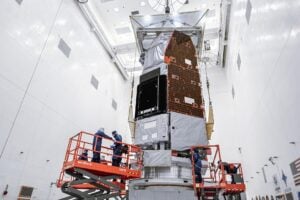
Sending a kilogram to orbit cost roughly $55,000 in the Space Shuttle era. Reusable rockets have brought the theoretical cost down to a few thousand dollars today. If Starship eventually achieves rapid full reusability, some projections put the figure below $100/kg — potentially turning access to orbit from an extraordinary expense into something approaching ordinary transportation.

Launch cost has fallen dramatically, but Shuttle, Falcon and Starship figures measure different things. The sub-$100/kg case still depends on full reuse, cadence and full payloads.

Science

Solar power disappears every night, but a data centre cannot. That engineering mismatch is turning Google, Amazon and other technology giants into some of the world’s most important buyers of battery storage, financing gigawatt-scale systems to keep increasingly power-hungry AI infrastructure supplied around the clock.

AI data centres need electricity after sunset. Google and Amazon are helping finance gigawatt-scale storage, but duration, firm generation and flexible demand still matter.

Science

The Pentagon has now released five batches of UAP files since May 2026 as part of a rolling declassification effort — and despite investigating hundreds of reports, its own UAP office says it has found no verifiable evidence that a single one involved extraterrestrial beings or technology. Hundreds remain unresolved, however — which means unknown, not necessarily explained.

Five Pentagon UAP file releases expand the public record, while AARO's own figures show why unresolved cases are evidence gaps rather than verified extraterrestrial technology.

Space Scopes

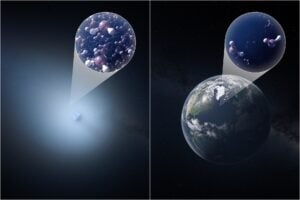
On Earth, dimethyl sulfide is produced overwhelmingly by life in the oceans and escapes into the atmosphere. JWST has now picked up a tantalising possible signature of the same molecule around K2-18 b, 120 light-years away — but the detection remains disputed, and scientists are still trying to determine whether non-biological chemistry could produce it.

Webb's possible DMS signature on K2-18 b survives as a disputed candidate, while 2026 chemistry and retrieval studies show why neither the molecule nor its origin is settled.