Space, science, and the human mind. Since 1995.
Lachlan Brown
Writer at Space Daily

Lachlan Brown

Editor-in-Chief

Lachlan Brown is a co-founder of Brown Brothers Media and one of Space Daily's three Co-Publishers. He is Space Daily's Editor-in-Chief and the author of several books on Buddhism, mindfulness, and relationships, and oversees content operations and publishing strategy across the network. At Space Daily, Lachlan focuses on the Mind & Meaning pillar — the psychology of ambition, isolation, and meaning under extremes.

Profile on Brown Brothers Media →

Science

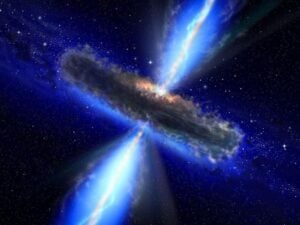
The James Webb Space Telescope has found an object from just 660 million years after the Big Bang that looks remarkably like a star but shines with roughly 100 billion times the Sun’s luminosity — far too bright to be powered by normal stellar fusion. The best explanation is a growing black hole wrapped in an extraordinarily dense hydrogen envelope spanning roughly the size of the Solar System.

MoM-BH*-1 emits roughly 100 billion Suns' worth of power. Webb measured the spectrum; the Solar-System-scale hydrogen envelope comes from the model that best fits it.

Science

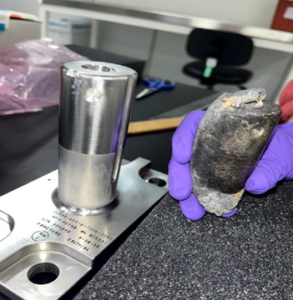
In 2024, a piece of a 5,800-pound battery pallet jettisoned from the International Space Station survived re-entry and punched through a Florida family’s roof and two floors — exposing an awkward feature of space law: the treaties governing falling space objects hold launching nations responsible, rather than giving victims a direct international claim against the private companies involved.

A NASA battery-pallet fragment struck a Florida home, revealing how international space law routes liability through launching states while victims rely on diplomatic or domestic claims processes.

Tech Space

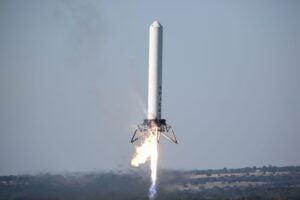
Sending a kilogram to orbit cost roughly $55,000 in the Space Shuttle era. Reusable rockets have brought the theoretical cost down to a few thousand dollars today. If Starship eventually achieves rapid full reusability, some projections put the figure below $100/kg — potentially turning access to orbit from an extraordinary expense into something approaching ordinary transportation.

Launch cost has fallen dramatically, but Shuttle, Falcon and Starship figures measure different things. The sub-$100/kg case still depends on full reuse, cadence and full payloads.

Science

Solar power disappears every night, but a data centre cannot. That engineering mismatch is turning Google, Amazon and other technology giants into some of the world’s most important buyers of battery storage, financing gigawatt-scale systems to keep increasingly power-hungry AI infrastructure supplied around the clock.

AI data centres need electricity after sunset. Google and Amazon are helping finance gigawatt-scale storage, but duration, firm generation and flexible demand still matter.