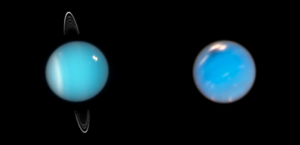
Neptune sits more than a billion kilometres farther from the Sun, yet parts of…
Uranus reaches a lower atmospheric minimum than more distant Neptune, but two 2025 studies revised the old claim that Uranus releases no internal heat at all.
Writer
Lachlan Brown writes for Space Daily across Space and Missions, Universe, Earth and Life, Science and Engineering, and Human Factors.

Uranus reaches a lower atmospheric minimum than more distant Neptune, but two 2025 studies revised the old claim that Uranus releases no internal heat at all.

Aug 8, 2026

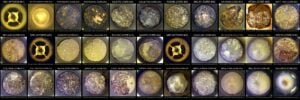
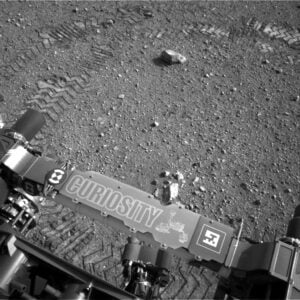
Curiosity’s JPL Morse-code wheel marks double as visual-odometry references, helping the rover compare commanded wheel rotation with its actual movement across difficult terrain.
Aug 8, 2026

The world's greatest meteorite collection exists not because Antarctica attracts space rocks, but because the continent's ice and wind are nature's most efficient sorting machines.
Aug 8, 2026

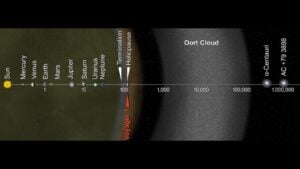
Voyager 1 crossed the Sun's plasma boundary in 2012, yet it remains thousands of years from the gravitational edge of the solar system.
Aug 8, 2026

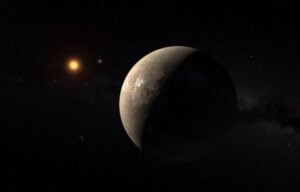
Proxima Centauri b and the newly confirmed GJ 887 d occupy nearby habitable zones, but neither is known to have an atmosphere, ocean or life.
Aug 7, 2026

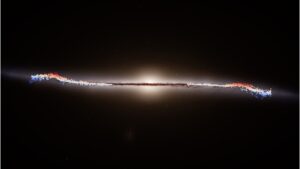
Gaia has revealed a vast stellar ripple travelling through the Milky Way's outer disc. Its scale is extraordinary, but its origin remains unknown.
Aug 7, 2026

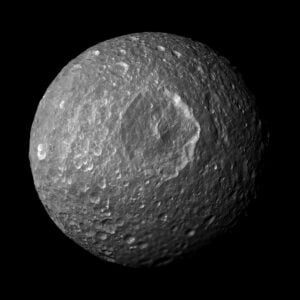
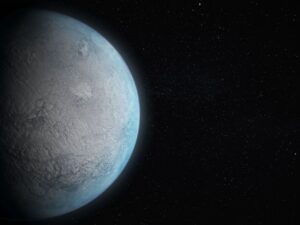
Mimas looks frozen and geologically quiet, yet Cassini's measurements point to a young global ocean beneath 20 to 30 kilometres of ice.
Aug 7, 2026

The discovery suggests a chemical compound exists on two frigid, geologically alien worlds—yet remains unknown to science.
Aug 7, 2026

Congress has ended support for the existing Mars Sample Return programme. Perseverance's carefully documented collection now waits on Mars with no approved retrieval mission.
Aug 7, 2026

Textbook diagrams enlarge asteroids until the belt looks packed. NASA's own scale estimates show why spacecraft cross it safely and why planned flybys require precise targeting.
Aug 7, 2026

The Sun's outer atmosphere reaches millions of degrees while the surface below is far cooler. Waves, reconnection and new spacecraft measurements explain parts of the paradox, but not yet all of it.
Aug 7, 2026

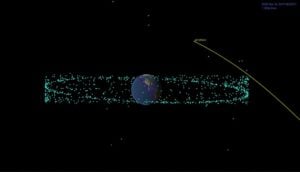
Apophis will pass inside geostationary altitude in April 2029, giving OSIRIS-APEX a rare chance to inspect how Earth's gravity changed it.
Aug 7, 2026

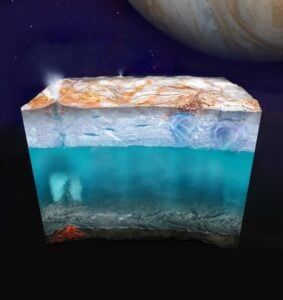
Europa Clipper is following a 1.8-billion-mile route to Jupiter, where 49 close flybys will test whether Europa's hidden ocean could support life.
Aug 6, 2026

Helium escaping from LHS 1140 b has provided the first firm atmospheric detection for a rocky planet in a habitable-zone orbit, while leaving its surface conditions and lower atmosphere unresolved.
Aug 6, 2026

For the first time, a lunar impact comes with a complete history, tracked from Earth to moon.
Aug 6, 2026

The Saturnian moon's rapid retreat from its planet rewrites theories about how it formed and where it has spent its 4.5-billion-year history.
Aug 6, 2026