Space, science, and the human mind. Since 1995.
Deep Field
A Space Daily column

Deep Field

Astronomy and cosmology

Deep Field covers astronomy and cosmology. Telescopes and what they find, planets near and far, and the strange physics of the deep universe, traced back to the journal papers and observatory data behind the headlines.

Constellations

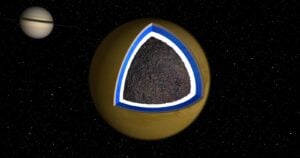
Titan is the only world besides Earth known to have rivers, lakes, seas, clouds and rain — except its “water” is methane and ethane, flowing across a surface frozen to minus 179 degrees Celsius. And in June 2026, scientists held the first Humans to Titan Summit, beginning to map what a crewed mission to Saturn’s largest moon would actually require.

Titan, the largest moon of Saturn, is the only world besides Earth known to have rivers, lakes, seas, clouds and rain.

Constellations

Scientists expected Pluto to be a frozen, ancient world scarred by billions of years of impacts. But when New Horizons finally arrived in 2015, it found something stranger: smooth young plains with almost no craters, signs of flowing nitrogen ice, possible ice volcanoes, and a layered blue haze in an atmosphere no one expected to look so complex

Before New Horizons reached Pluto, the safest expectation was age. At nearly 40 times Earth's distance from the Sun, Pluto seemed like the kind of world that should preserve scars.

Constellations

Carl Sagan spent years trying to persuade NASA to take a picture many saw as scientifically pointless: Earth from more than 6 billion kilometres away, reduced to a pale blue dot smaller than a pixel. Voyager 1 finally captured it in 1990 — and that tiny speck became one of the most haunting images in human history.

In 1990, with its tour of the outer planets finished, Voyager 1 turned its camera back the way it had come and photographed the Earth from about six billion kilometres away.

Space Scopes

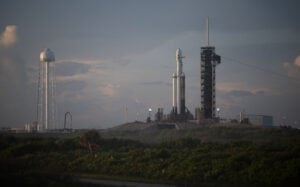
In June 2026, a SpaceX Falcon 9 first stage designated B1085 lifted a 15,400-pound SiriusXM broadcasting satellite off a Cape Canaveral pad on its seventeenth flight — the same booster that had carried Crew-9 to the space station, Firefly’s Blue Ghost lander toward the Moon, and nine separate Starlink batches into orbit

On the night of June 28, 2026, a Falcon 9 first stage that had already lifted off and landed sixteen times pushed a 15,400-pound SiriusXM broadcasting satellite away from Cape Canaveral.

Constellations

In 2025, astronomers found one of the largest spinning structures ever reported in the universe: a cosmic filament roughly 50 million light-years long, containing nearly 300 galaxies. Many of its galaxies appear to rotate in sync with the filament itself — a vast, coordinated motion that challenges current models of how galaxies gain their spin.

In 2025, astronomers reported one of the largest rotating structures ever found: a cosmic filament some 50 million light-years long, holding close to 300 galaxies, with many of them turning in step with the filament as a whole.

Constellations

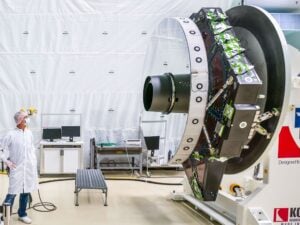
Euclid, the European telescope built to map the dark universe billions of light-years away, spent a single 26-hour stretch staring into the crowded center of the Milky Way and resolved more than 60 million stars, handing NASA’s Roman mission a reference map for the planet hunt it begins after launching in late August

The European Space Agency's Euclid telescope has captured a highly detailed image of the visible light at the center of the Milky Way, resolving more than 60 million individual stars in a region so crowded that most instruments see only a glowing blur.

Constellations

In 2008, Cassini skimmed past Enceladus’s south pole and flew straight through a plume of icy material erupting from cracks in the moon’s surface. The encounter lasted only minutes, but nearly two decades later, data from that flyby is still revealing new organic chemistry from an ocean hidden beneath the ice.

Cassini's 2008 plume crossing at Enceladus is still yielding chemistry, with fresh ice-grain data revealing additional organics linked to the moon's hidden ocean.