Space, science, and the human mind. Since 1995.
Deep Field
A Space Daily column

Deep Field

Astronomy and cosmology

Deep Field covers astronomy and cosmology. Telescopes and what they find, planets near and far, and the strange physics of the deep universe, traced back to the journal papers and observatory data behind the headlines.

Outer Planets

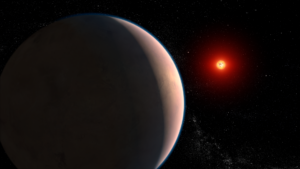
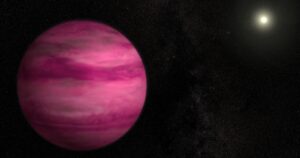
Astronomers at Cambridge have proposed that the galaxy may contain a vast and previously unrecognised population of habitable planets, characterised by a global liquid water ocean beneath a hydrogen atmosphere, that exist across a far wider range of stellar conditions than Earth-like worlds and that may be substantially easier to detect signs of life on than the Earth analogues that astronomers have been searching for over the past three decades

For most of the past sixty years, the search for life beyond Earth has been a search for places like Earth.

Constellations

In 1995, astronomers aimed the Hubble Space Telescope at a tiny patch of sky that looked almost empty — a dark spot near the Big Dipper no wider than a pinhead held at arm’s length. After 10 days of exposures, the darkness resolved into roughly 3,000 galaxies, hiding in a place where the human eye saw nothing at all.

The Hubble Deep Field began as a ten-day stare into an apparently empty patch of sky near the Big Dipper and became one of astronomy's defining images.

Constellations

Webb has confirmed a galaxy, MoM-z14, whose light left just 280 million years after the Big Bang, after travelling about 13.5 billion years. The shock was not that one galaxy shone 100 times brighter than expected, but that JWST is finding bright galaxies from this era far more often than pre-Webb models predicted, and MoM-z14 even shows unusual nitrogen enrichment, hinting that star formation and chemical evolution were already moving faster than astronomers expected.

A Webb-confirmed galaxy at redshift 14.44 adds to the evidence that bright, chemically active galaxies were present earlier and more often than many pre-Webb models predicted.

Constellations

Jonathan McDowell has been tracking every object in orbit since 1989 — a one-person catalog that started as a weekly email newsletter and became the source governments and newsrooms cite when they need to know how many Starlink satellites are actually up there

Harvard astronomer Jonathan McDowell has tracked every object in orbit since 1989 from a personal database — and as Starlink crossed 10,600 active satellites in June 2026, his private catalog became the number governments, reporters, and regulators cite.

Deep Space

The closest star to our Sun, a small red dwarf named Proxima Centauri, is approximately 4.2 light-years from Earth — which means if you set out at the sustained cruise speed of the fastest space probes humanity has ever sent on a one-way trajectory out of the solar system, you would arrive at the nearest neighbouring star roughly 73,000 years from now, long after every civilization currently on Earth has ended

Light leaves the surface of Proxima Centauri and arrives at Earth approximately 4.24 years later.

Solar Daily

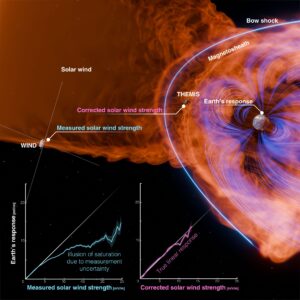
A coronal mass ejection weighs roughly a billion tons and races from the sun at millions of miles an hour, yet takes one to three days to reach Earth — giving us a warning window too short to rebuild anything

A coronal mass ejection carries roughly a billion tons of magnetized plasma from the Sun at millions of miles per hour, yet takes one to three days to reach Earth — leaving forecasters a warning window measured in hours, not the years it would take to harden a power grid.

Constellations

The Cosmic Microwave Background, the faint afterglow of the Big Bang detectable across the sky, contains a strange Cold Spot — a region measurably cooler than its surroundings — and while some physicists have wondered whether it could be the scar of a collision with another universe, others argue it may be a rare statistical fluctuation or the imprint of enormous cosmic structure.

The Cosmic Microwave Background is the oldest light there is, the faint heat left over from the Big Bang, released when the young universe first cooled enough to turn transparent.