

Earth & Life
Spiders consume as much prey annually as humanity eats meat and fish
The planet's spiders consume as much prey annually as humanity eats meat and fish—yet we barely notice them working.

The planet's spiders consume as much prey annually as humanity eats meat and fish—yet we barely notice them working.

Scientists are only now mapping the ingenious engineering that lets an elephant wield a trunk strong enough to topple trees yet precise enough to pluck a single blade of grass.

The Amazon doesn't just dwarf every other river on Earth—it moves more water than all of them combined, reshaping climate and biology on a continental scale.

Four major datasets agree that upper-ocean heat content set another record in 2025, although their estimates of the precise one-year increase differ.

In Brazil's threatened dry forests, researchers documented stone-tool use in blonde capuchins for the first time, expanding what we thought possible for this critically endangered species.

Scientists have caught the world's rarest wild cats doing something no carnivore has ever been seen doing before: systematically drowning their prey before eating it.

Researchers found lipid evidence of living or recently active microbes in cores whose sampled porewater reached pH 9.4; nearby vent fluids have been measured at pH 12.3.

A dramatic shift in ancient river channels may explain why the world's highest peak refuses to stop climbing.

Carbon monoxide kills at 1,000 parts per million in a snowbound car, but the same three atoms are manufactured inside human cells by heme oxygenase as a signalling molecule regulating inflammation and blood flow. The gap between the two doses is roughly six orders of magnitude — and it is the entire story.

The Smithsonian’s estimate of 10 quintillion living insects is an extraordinarily rough global figure rather than a census.

Force a living sea sponge through a fine mesh and it separates into single cells. Hours later those cells crawl back together and rebuild a functioning sponge — a trick, first demonstrated in 1907, that appears to be unique in the animal kingdom.

Two samarium-neodymium chronometers date a crosscutting intrusion in Quebec’s Nuvvuagittuq belt to the Hadean, setting a minimum age for its older host rocks.
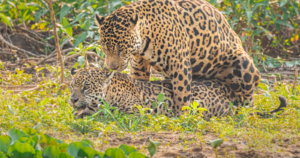
A hidden camera meant to count jaguars captured something far rarer: a melanistic female and spotted male mating in the Amazon—a first-ever record of black jaguars breeding in the wild.

A genetic reconstruction dates the last universal common ancestor to about 4.2 billion years ago, implying life emerged before that complex anaerobic ecosystem.
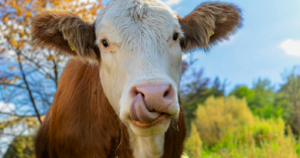
The discovery challenges what scientists thought they knew about which animals can adapt tools to different tasks—a cognitive ability previously seen only in primates and a handful of other species.
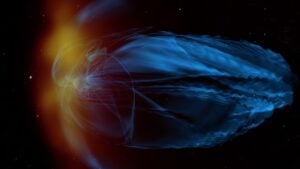
A 2026 proton-irradiation experiment adds laboratory support to the idea that the active young Sun helped warm early Earth while driving nitrogen chemistry relevant to life's origins.