Rocks in remote Quebec are Earth's oldest intact fragment from its first 500 million years
Two samarium-neodymium chronometers date a crosscutting intrusion in Quebec’s Nuvvuagittuq belt to the Hadean, setting a minimum age for its older host rocks.
Nature and earth science
Life Signs is where Space Daily looks down instead of up. Animals, ecosystems, and Earth science, with a bias for peer-reviewed studies over press-release hype. The living world turns out to be at least as strange as anything in orbit.

Two samarium-neodymium chronometers date a crosscutting intrusion in Quebec’s Nuvvuagittuq belt to the Hadean, setting a minimum age for its older host rocks.
Aug 27, 2026

A genetic reconstruction dates the last universal common ancestor to about 4.2 billion years ago, implying life emerged before that complex anaerobic ecosystem.
Aug 27, 2026

A 2026 proton-irradiation experiment adds laboratory support to the idea that the active young Sun helped warm early Earth while driving nitrogen chemistry relevant to life's origins.
Aug 26, 2026

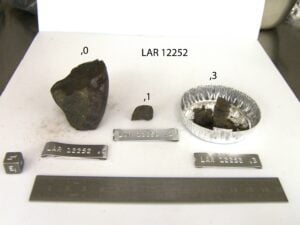
Hydrogen bonded to sulphur in the EH3 meteorite LAR 12252 supports a native source for Earth’s water, though later asteroid contributions and volatile losses remain unresolved.
Aug 26, 2026

Zircons interpreted as co-deposited volcanic ash date the Bhitardari chert to 3,497 ± 5 million years; layered kerogen and δ13C of −30.9‰ underpin the authors’ biosignature claim.
Aug 26, 2026

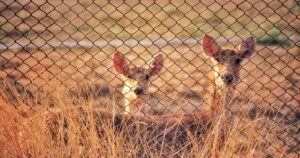
A demilitarized zone meant to keep humans out has become a sanctuary for wildlife—but studying it requires remote cameras, military checkpoints, and clearance that can be revoked without warning.
Aug 26, 2026

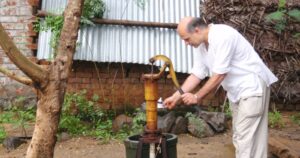
Three specimens, one of them intact, came out of two hand pumps in Bihar in January 2025. The team that described them says the animal is a new genus as well as a new species, and says in the same paper that confirming the genus rank will take DNA from the rest of the family, most of which has no comparative sequence data at all.
Aug 25, 2026

A two-century-old suspicion finally caught on film: scientists recorded sperm whales ramming each other head-on, though the whales were sub-adults, not large males, and the behaviour's purpose remains unsettled.
Aug 25, 2026

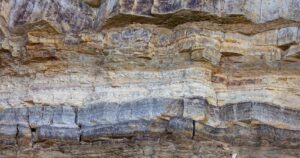
When an ancient sea vanished, its return was so catastrophic that it reshaped geology itself—yet scientists still debate exactly how violent the deluge truly was.
Aug 25, 2026

Humans outweigh all wild land mammals combined by a factor of twenty, a humbling reminder of how thoroughly we have reshaped the living world.
Aug 25, 2026

Our planet is ninety-nine-point-ninety-eight percent rock and metal—we just can't see it from orbit.
Aug 25, 2026

Closely matched seismic paths from Mururoa tests changed by up to 0.2 seconds between 1977 and 1995, revealing rapid outer-core variation while leaving the responsible material open to interpretation.
Aug 24, 2026

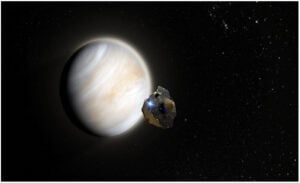
The five-minute Venus Life Finder probe has an instrument and heat shield, but no confirmed launch date. Its fluorescence test could find organics, not prove life.
Aug 22, 2026

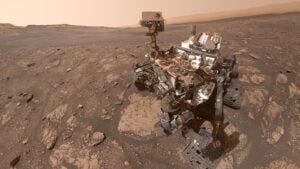
Curiosity's first possible nitrogen heterocycle is chemically relevant to pathways toward RNA and DNA, but the instrument's imperfect match and reactive reagent keep the result well short of evidence for life.
Aug 21, 2026

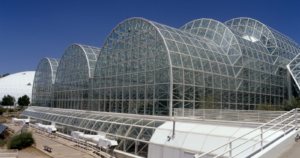
When scientists sealed eight people inside a artificial Earth, they discovered that the creatures they didn't want thrived while the ones they needed to survive mysteriously vanished.
Aug 21, 2026

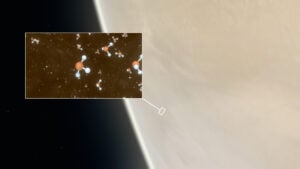
New JCMT-Venus observations have recovered the candidate phosphine signal with far more data, but overlapping teams, instrumental systematics and unknown chemistry keep the result contested.
Aug 21, 2026