

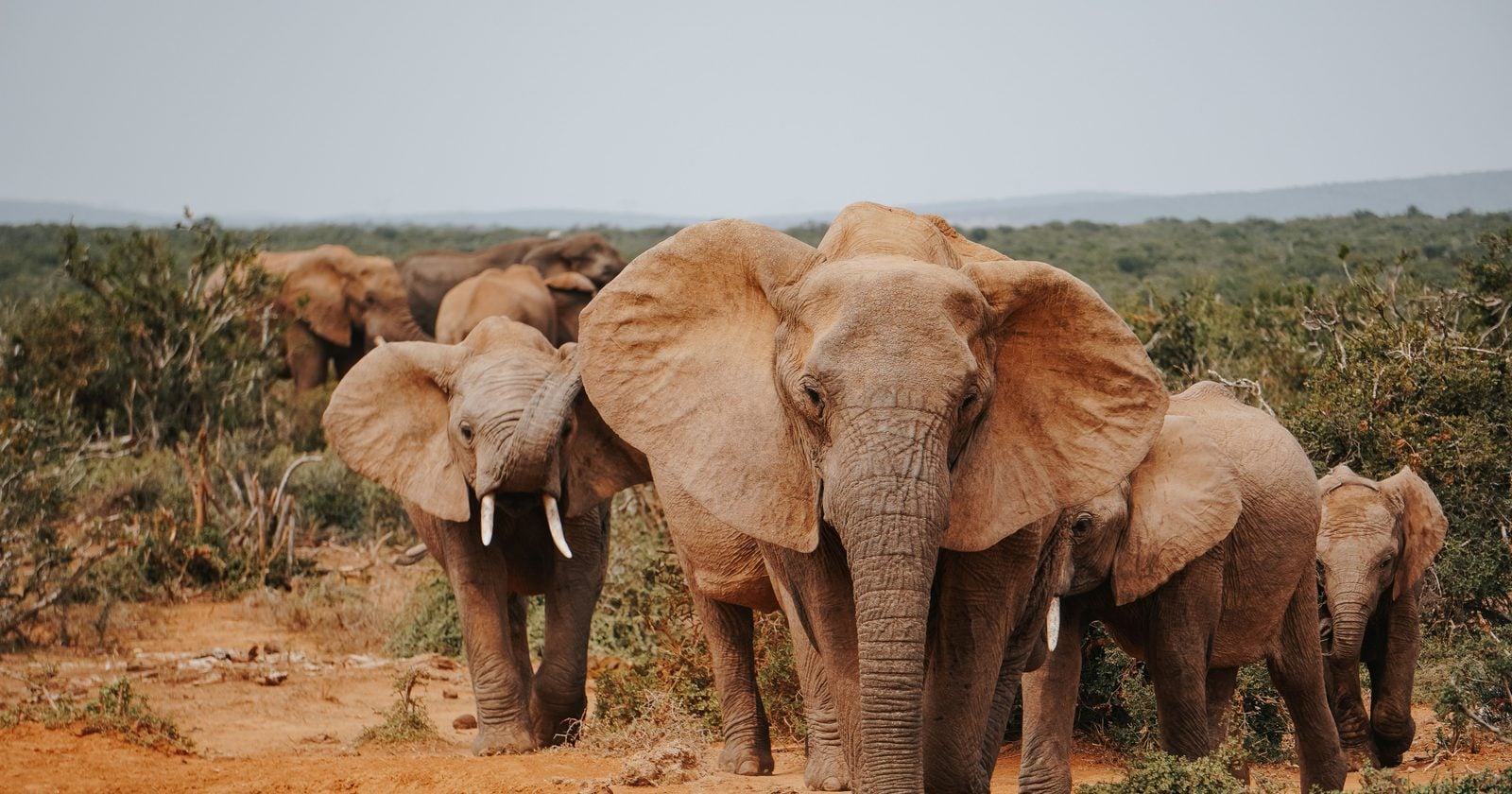
Add up every wild land mammal alive today, every elephant, wolf, red deer, field mouse and cave bat, and the total weight is smaller than you would probably guess.
A 2023 study put the combined weight of all wild land mammals at a total wet biomass of about 20 million tonnes. That works out to roughly three kilograms (6.61 pounds) per person on Earth.
Now set that against the weight of all the people. The research group at the Weizmann Institute of Science estimated humanity’s combined weight at roughly 390 million tonnes. So all the wild land mammals together come to less than a tenth of us. As study head Ron Milo put it, “the weight of all remaining wild land mammals is less than 10 percent of humanity’s combined weight, which amounts to only about 6 pounds of wild land mammal per person.”
How solid the figure is
Before leaning on any of this, it helps to be honest about where the number comes from. This is one study, and the thing it measures is hard to pin down. Nobody has weighed the world’s mice. The team had direct count data for only about half of the total, and estimated the rest with a computer model trained on what they did know. Read 20 million tonnes as a careful estimate with real uncertainty around it, not a figure carved in stone.
Also note that we are not ecologists, and this is our reading of one paper rather than a settled scientific consensus. What makes the number worth attention is not the exact tonnage but the ratio, which holds up even at the extreme ends of the range. Even if the true wild figure were double the estimate, it would still be dwarfed by us and by the animals we raise.
Why weigh a species instead of counting it
A headcount can mislead. By sheer number of individuals, bats are one of the most abundant wild mammals going, but weight tells a different story. Bats make up roughly two-thirds of all wild mammals by number, yet only about a tenth of the total wild weight. A lot of small bodies still adds up to very little.
Weighing everything instead puts an elephant and a shrew on the same scale, so you can compare one species against another honestly. Milo makes the case that focusing on the sheer variety of species can hide the trend underneath. As he framed it, “The dazzling diversity of various mammal species may obscure the dramatic changes affecting our planet.”
Who the 20 million tonnes really is
The wild total is not spread evenly across thousands of species. It leans heavily on a handful of large plant-eaters. In the study’s ranking, white-tailed deer carry the most weight of any wild land mammal, followed by wild boar, then African elephants. The deer and boar family alone make up roughly half of the whole wild land total.
The concentration goes further. Just ten species account for around 40 percent of all wild land mammal weight: wild boar, warthog, five kinds of deer, two kangaroos, and the African bush elephant. A big share of the world’s remaining wild mammal weight rides on animals that are, on the whole, doing relatively well. The rarer and smaller creatures barely register on the scale.
The line about livestock that catches people off guard
The comparison that tends to stop people is not humans versus wild animals. It is the animals we breed and keep. The study estimated livestock at about 630 million tonnes, with cattle alone at 420 million tonnes. That is roughly 30 times the weight of every wild land mammal combined.
Zoom in on single species and it gets stranger. The paper found that the world’s pigs outweigh all wild land mammals combined by nearly two to one, and that domestic dogs alone roughly match the entire wild total. Milo’s read of the picture was blunt. The census, he said, “lays bare the dominance of humanity and its livestock over the far smaller populations of remaining wild mammals.”
What we take from three kilograms per person
What strikes us about the three-kilogram figure is how ordinary that weight feels. A little more than a bag of flour. Spread across every human alive, the entire wild mammal inheritance of the planet comes to about that much each. That framing does something a species count never could: it makes the scarcity easy to picture.
We would be careful not to push the number too far. A weight tally says nothing about which species are thriving and which are vanishing, nothing about whole ecosystems, and nothing about the outsized role a small predator can play. A world could hold a healthy 20 million tonnes of wild mammals or a hollowed-out one, and the scale would read the same. The figure is a starting point for a conversation, not the verdict.
Still, co-lead author Lior Greenspoon frames the value of the work in a way that seems right to us. A clearer picture of the human-shaped world, he argued, “can help set conservation goals and afford us perspective on long-term global processes.”