

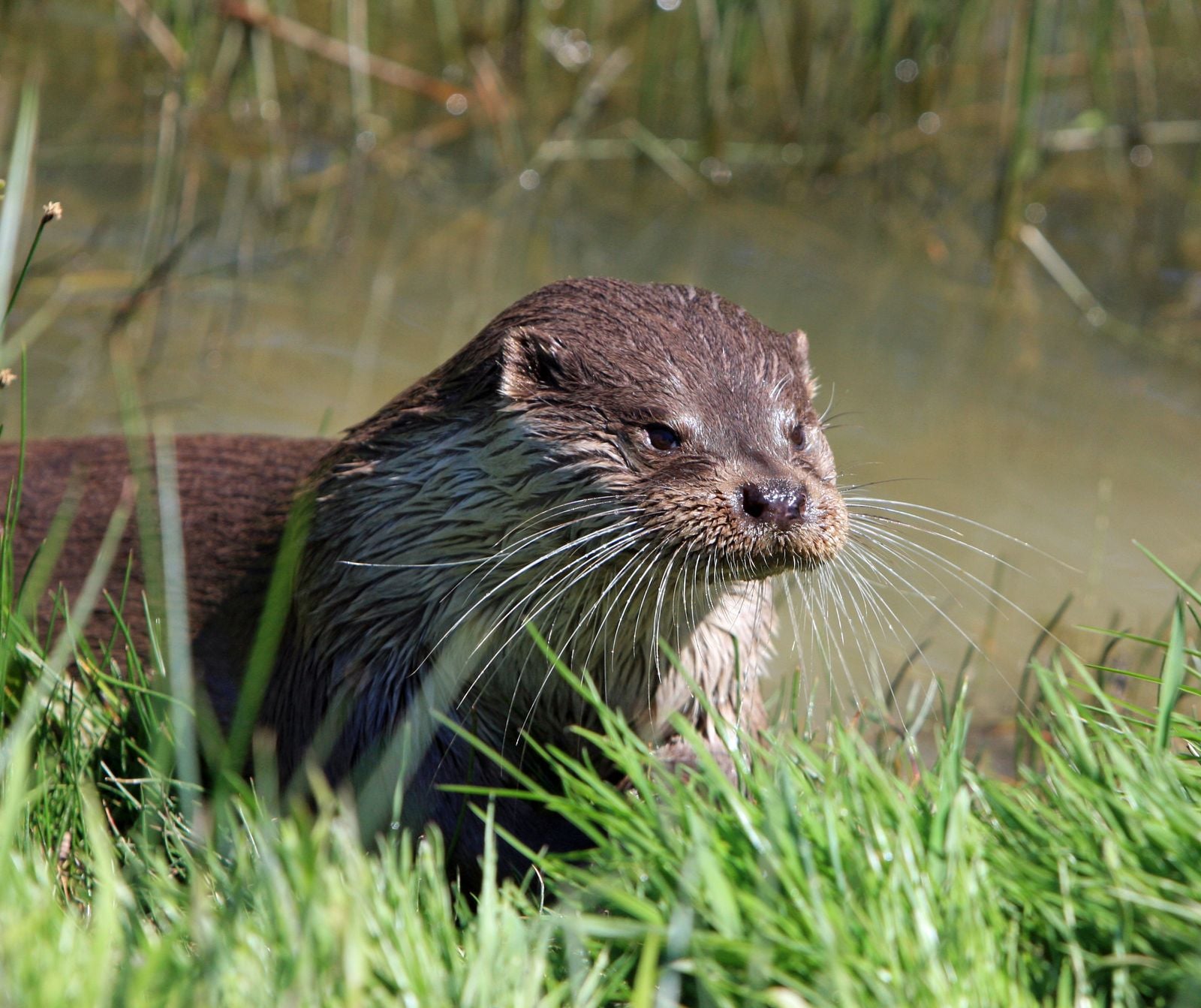
A sea otter floating on its back off the California coast is wearing the densest fur of any mammal on Earth. Its coat can reach roughly one million hairs per square inch, and that density matters because sea otters lack the insulating blubber used by whales and seals. The U.S. Fish and Wildlife Service notes that the trapped air in the coat keeps cold water away from the skin and that losing that insulation can quickly lead to hypothermia.
For scale, the same Fish and Wildlife Service page compares one square inch of sea otter fur with the roughly 100,000 hairs on an entire human head.
The coat is only half of the thermal system. Sea otters also maintain a very high metabolism and routinely eat about a quarter of their body mass each day to keep generating heat.
That makes grooming a survival behavior, not decoration. Every roll, rub and burst of air worked into the pelt is maintenance on the insulation that separates warm skin from cold Pacific water.
How the coat actually works
Sea otter fur is built from guard hairs, intermediate hairs and underhairs. A 2023 Journal of Morphology study found that the species has the densest fur of any animal and that the shape and cuticular structure of its hairs help trap air when the coat is submerged.
The insulation comes from that air. Laboratory work on southern sea otter pelts found that the fur can hold a stagnant air layer near the skin even underwater, while the overlapping hairs restrict water penetration. The thermal-function study also showed why the layer is not permanent: it compresses under water, can lose air during a dive, and has to be restored by grooming.
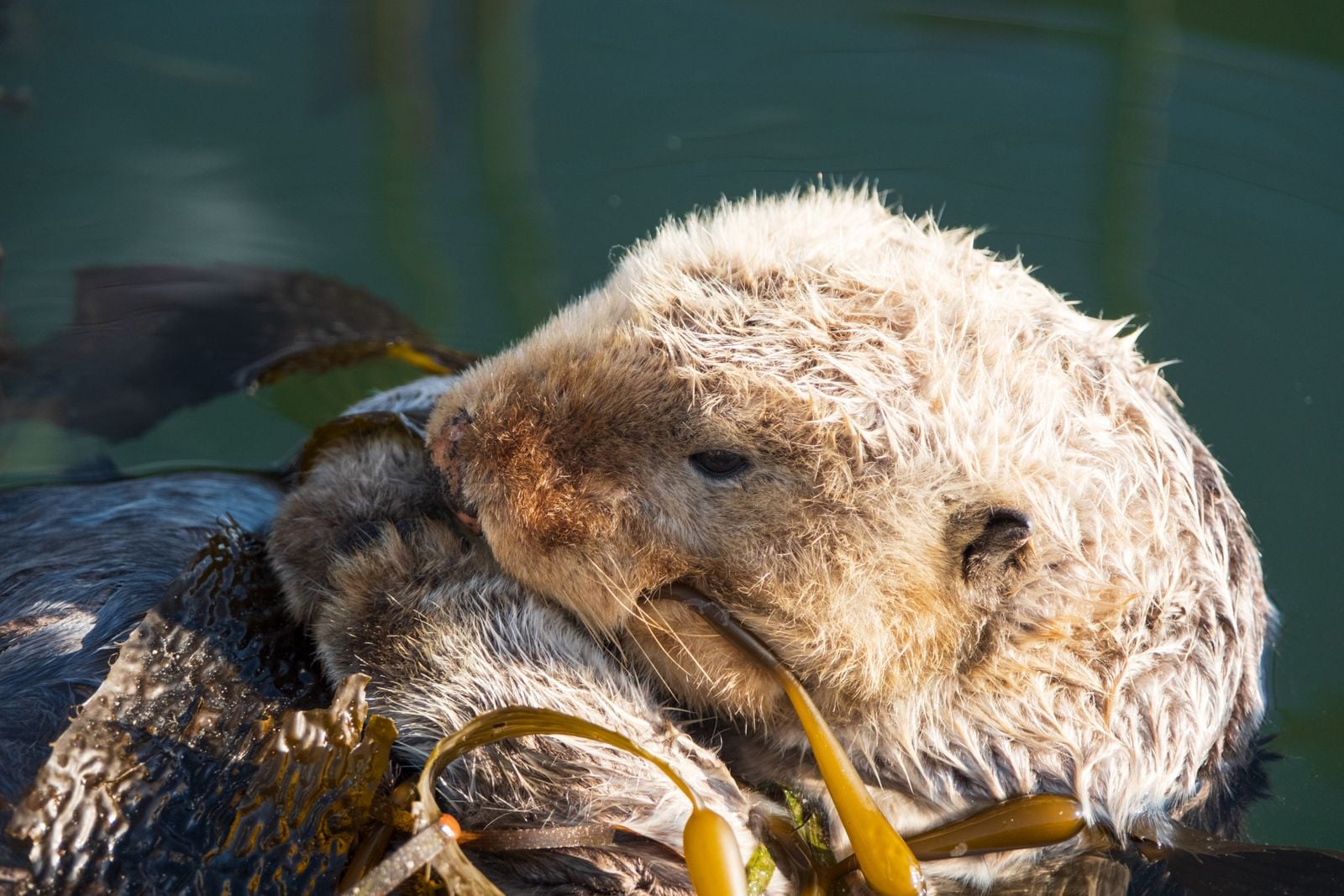
When an otter grooms, it cleans and rearranges the coat while working air back into it. The effect is a dense, water-resistant mat with dry air held close to the body.
The same physics has attracted engineers interested in fur-like wetsuit materials. Hair spacing and geometry help determine how deeply water penetrates and how much air remains trapped as the surface enters water.
Why an otter has to eat so much
Sea otters are small for marine mammals, which gives them a high surface-area-to-volume ratio and makes heat loss unusually costly. They compensate with both the air-filled coat and a metabolic rate far above what body size alone would predict.
In 2021, Traver Wright and colleagues reported in Science that sea otters have a basal metabolic rate about three times the predicted rate for a mammal of their size. Their muscle-physiology study found unusually high thermogenic leak in skeletal muscle that could account for that hypermetabolism.
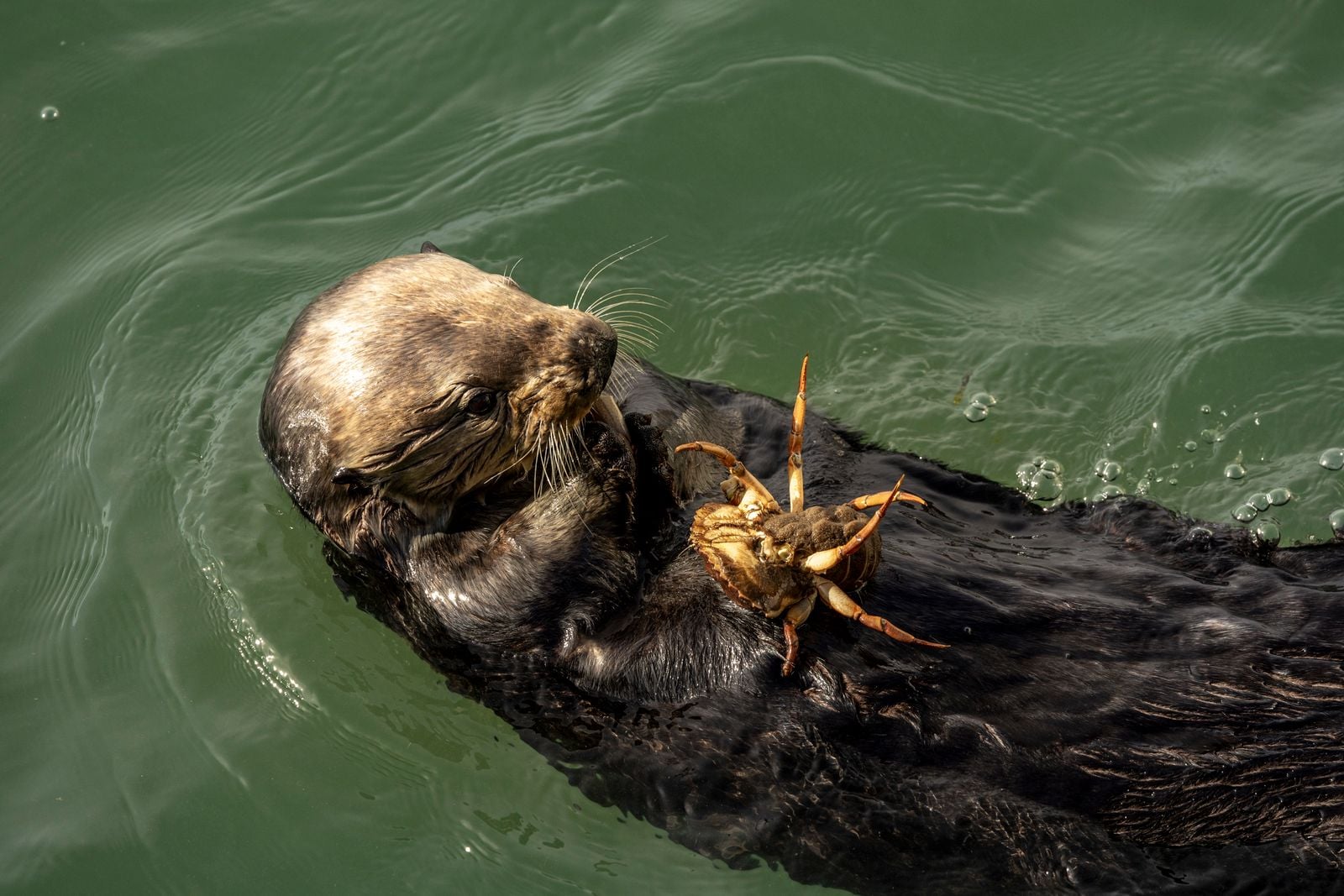
The fuel bill is visible at the surface. A 25-kilogram otter eating 25 percent of its body mass in a day would need about 6.25 kilograms of prey, including clams, mussels, crabs, snails, urchins and other invertebrates.
That appetite reshapes habitat. In kelp forests, sea otters suppress sea urchins that graze kelp; in estuaries, their predation on crabs can help release other grazers that benefit seagrass.
In January 2025, NPR reported on research from Elkhorn Slough linking a healthy sea otter population with lower numbers of invasive European green crabs. The same feeding machinery also explains why rock use and shell-cracking matter so much to an animal that cannot afford to stop eating for long.
The pelt that nearly ended the species
The coat that keeps a sea otter alive also made the animal extraordinarily valuable to the maritime fur trade. Hunting expanded across the North Pacific in the 1700s and pushed the species close to extinction.
The U.S. Fish and Wildlife Service reports that by the time the International Fur Seal Treaty was ratified in 1911, only 13 remnant populations remained, each estimated at roughly 10 to 100 animals.
The survivors were scattered across what had once been a continuous North Pacific range. Protection allowed major recoveries in some regions, but modern populations still occupy a fragmented version of that former distribution.
In California, one of the strangest limits on expansion comes from white sharks. The sharks bite sea otters, often fatally, even though sea otters are not considered their prey.
Predators can change the kelp forest without eating the otter
A USGS-backed study of 1,870 California sea otter carcasses found a sharp rise in white-shark bite mortality after 2003. The researchers emphasized that southern sea otters are not considered prey for white sharks, which helps explain why a lethal bite may end without consumption.
In the Aleutian Islands, the pattern is different and the causal language has to stay cautious. USGS researchers documented an abrupt sea otter decline during the 1990s; the researchers described the pattern as consistent with increased predation rather than proof of a single confirmed cause.
The ecological consequence is larger than the missing otters themselves. When sea otter numbers fall, urchin grazing can rise, and kelp forests can shift toward urchin-dominated barrens.
What happens when the air layer fails
Oil is the clearest demonstration of how little margin the coat provides. When the Exxon Valdez ran aground in Prince William Sound on March 24, 1989, it spilled about 11 million gallons of crude oil; NOAA estimates that 2,800 sea otters were killed.
Hypothermia was one mechanism, but not the only one. Oil can destroy the coat’s insulating function, while inhalation and ingestion of petroleum compounds can also injure or kill an animal.
Experimental work on sea otter pelts helps show the physical damage. Oil removed the trapped air layer and cut thermal resistance roughly fivefold compared with intact fur; earlier studies cited in the same paper found about a 70 percent loss of insulation after oiling.
The point is visible in the fur itself. A clean coat is not a passive blanket: it is a structure that has to hold air, survive compression and be rebuilt after disturbance.
What you are seeing when an otter grooms
An otter floating with paws or hind flippers lifted clear of the water is managing heat as well as resting. Smithsonian magazine notes that lifting the paws and back flippers out of the water helps sea otters stay warm, while rolling and rubbing help maintain the coat.
Young pups make the dependence even more obvious. Fish and Wildlife Service biologists describe mothers grooming pups constantly and blowing air into their fur to keep them warm and buoyant.
For the first weeks, that fluffy coat makes a pup so buoyant that it cannot dive. The mother keeps grooming it, leaves it floating while she forages, then returns to a small animal whose warmth depends on millions of hairs holding a thin layer of air where cold seawater would otherwise be.