

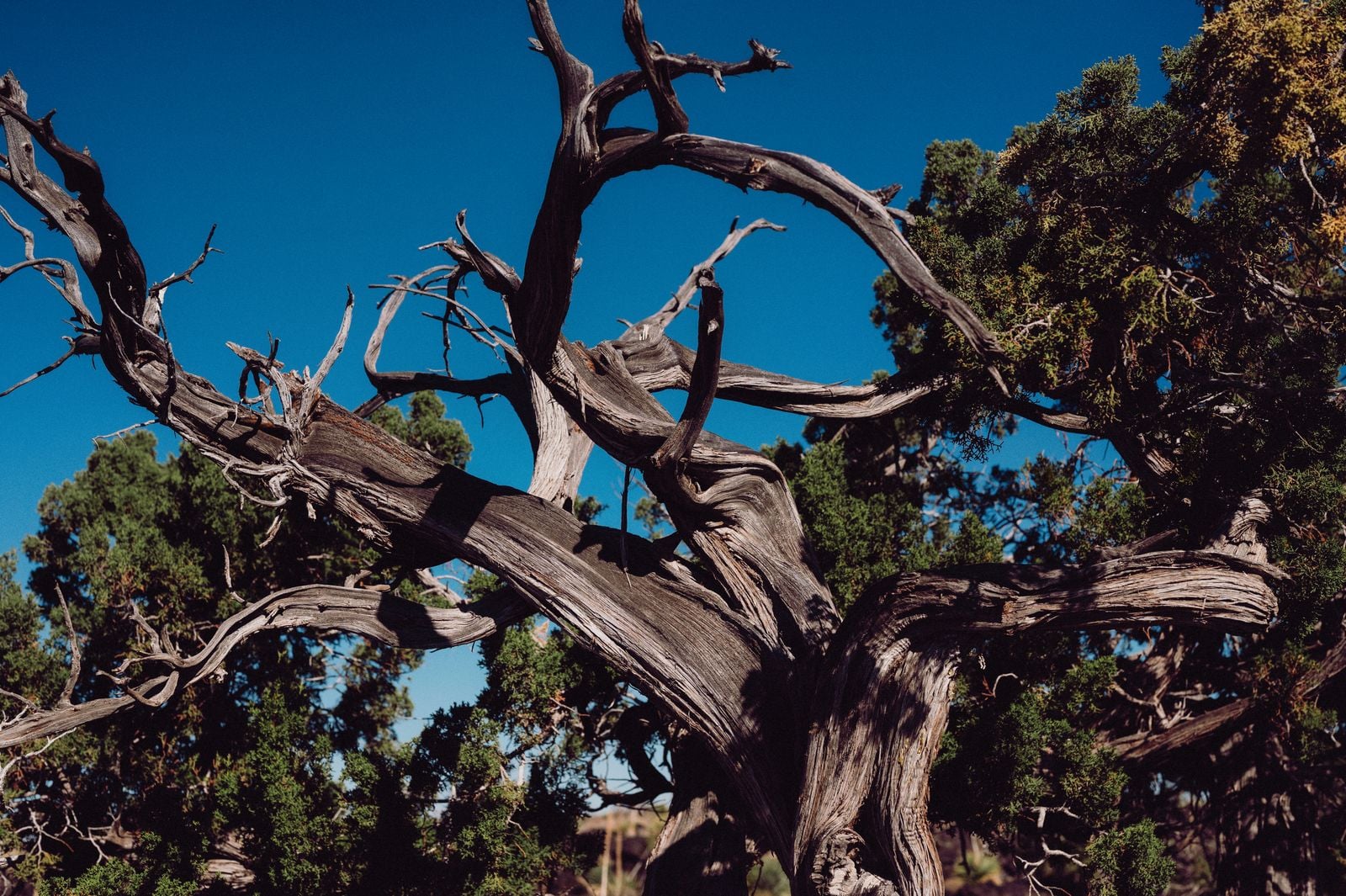
High in California’s White Mountains, above 3,000 metres, a Great Basin bristlecone pine is quietly finishing another growing season. Its needles are stubby, blue-green, and clustered in fives. Its trunk is mostly dead wood, twisted like rope wrung out and left to dry. According to samples reported by the tree-ring researcher Tom Harlan and later described by dendrochronologist Peter M. Brown, one individual in this grove was estimated at 5,062 years old in 2010, giving it a germination date around 3050 BCE.
That means it was already about 500 years old when the first limestone blocks of the Great Pyramid at Giza were being quarried around 2560 BCE.
It is still putting out needles this year.
What the number actually rests on
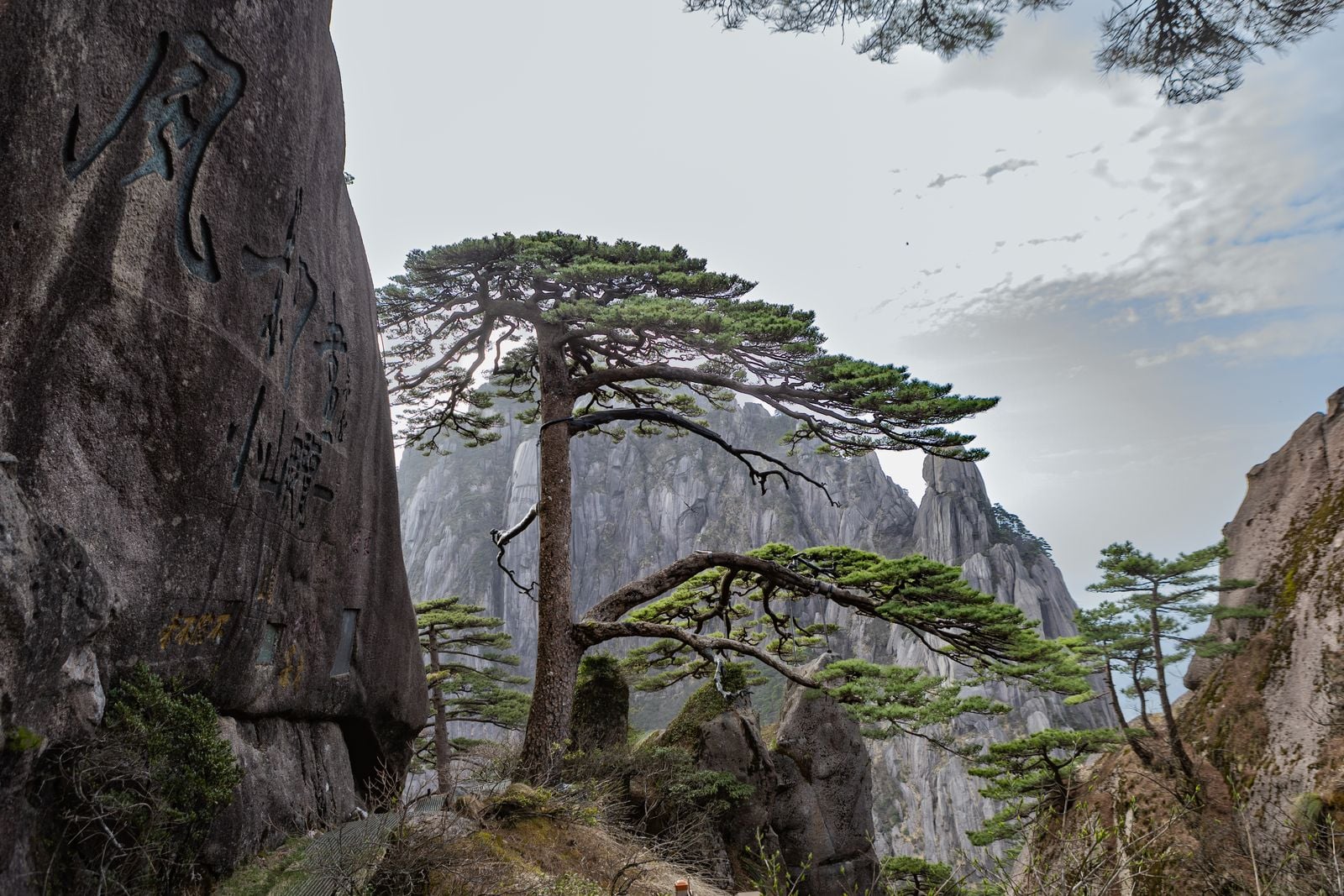
The claim of 5,062 years is not a rumour. It comes from a core sample examined by Harlan, a researcher at the Laboratory of Tree-Ring Research at the University of Arizona, working through material collected decades earlier by Edmund Schulman, the dendrochronologist who first identified the White Mountains bristlecones as the oldest known individual trees on Earth in the 1950s.
Harlan died in 2013. The specific core he identified as the oldest has not been relocated in the collection since, and no independent researcher has re-verified the count on that particular sample. Brown, who runs the OldList database of ancient trees, has noted the ambiguity plainly: Harlan reported the age, the tree was said to be still living, but the physical sample and the tree’s coordinates were not passed on. The BBC Wildlife Magazine’s summary of the OldList record treats the 5,062-year figure as the working estimate for the oldest known non-clonal individual on Earth.
Methuselah, the more famous bristlecone in the same grove, has a firmer paper trail. Its core, dated by Schulman and confirmed by later cross-dating, gives a germination around 2833 BCE — an age of roughly 4,858 years in 2026. Space Daily has covered the Methuselah story in detail, including the Forest Service’s refusal to disclose its location.
So there are two overlapping facts in the same grove. Methuselah, verified, around 4,858 years old. And a second, less-publicised tree that Harlan believed was older by about two centuries, still standing but effectively anonymous.
What was happening on Earth when it germinated
Around 3050 BCE, the Nile Valley was in the final centuries before dynastic unification under Narmer. Sumerian scribes at Uruk were pressing wedge-shaped marks into wet clay in what is now southern Iraq — the earliest cuneiform. Stonehenge was still a simple earthwork henge; the sarsen stones would not arrive for another five centuries. The Indus Valley cities of Harappa and Mohenjo-daro had not yet been built.
A seed the size of a rice grain lodged in the dolomite scree of a mountain slope in what is now Inyo County. It sprouted.
By the time Egyptian workers began cutting stone for Khufu’s pyramid around 2560 BCE, the seedling was a five-hundred-year-old tree, already gnarled, already stunted by wind and cold and the near-absence of water.
Why these trees do not die on schedule
Great Basin bristlecone pines, Pinus longaeva, are endemic to the high desert ranges of eastern California, Nevada, and Utah. They grow between roughly 2,900 and 3,600 metres, in soils so poor and thin that almost nothing else survives there. The dolomite substrate reflects sunlight, keeping root temperatures low. Precipitation averages under 30 centimetres a year.
Everything about the environment is hostile. That is the point.
A bristlecone at this elevation might add less than a tenth of a millimetre of ring width in a bad year. The wood it produces is extraordinarily dense and heavy with resin, which makes it almost impervious to fungal rot and insect attack. A fallen bristlecone log on the same slope can remain intact for another 5,000 years after the tree itself dies.
The trees also do something called strip-barking. When drought, lightning, or wind kills a section of cambium, the tree simply routes its living tissue around the damage — a narrow ribbon of bark and phloem climbing up a spiral of dead wood to a single surviving branch. A bristlecone can be 95 per cent dead wood and still alive, still producing cones, still pushing out needles each spring.
What the genome revealed
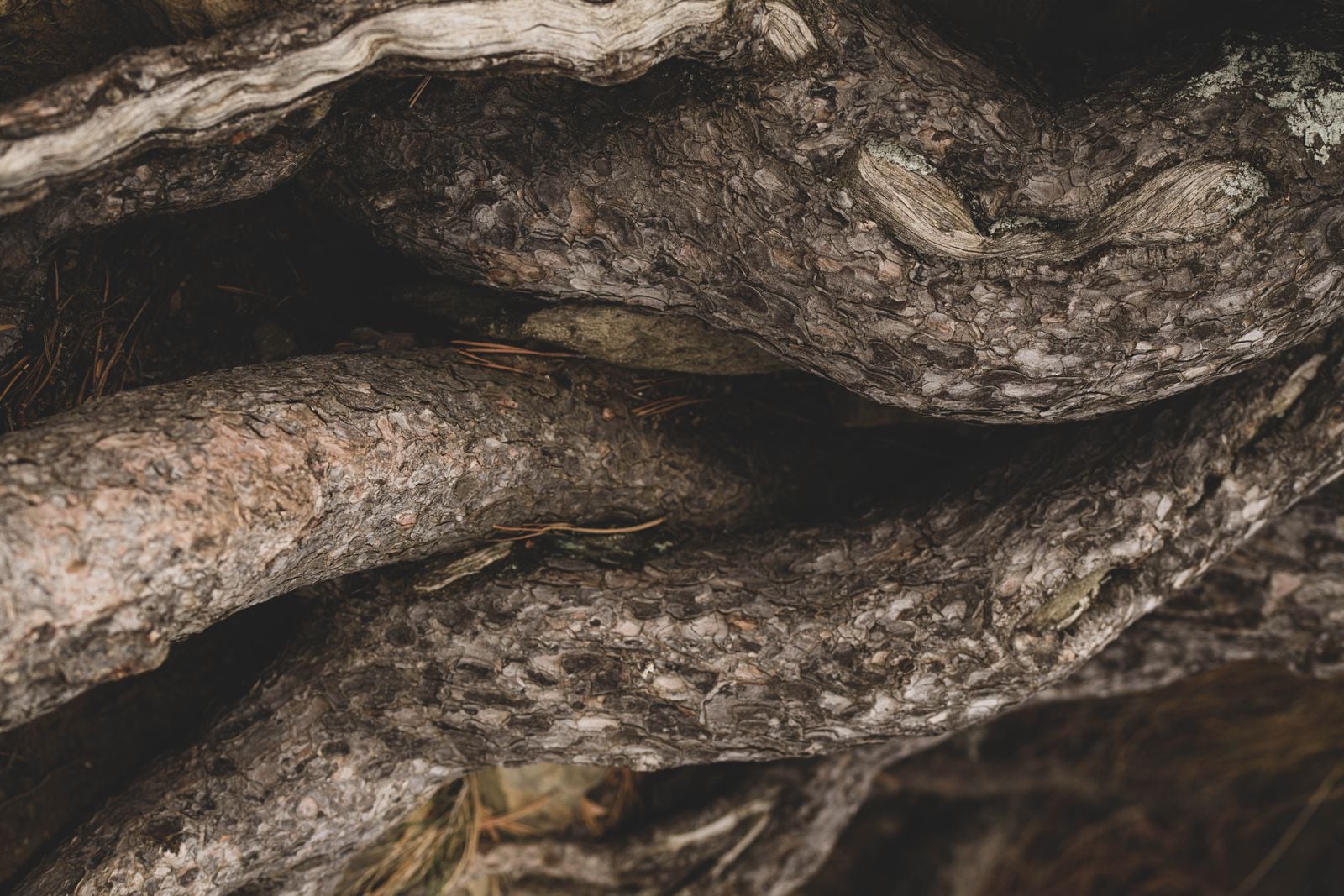
In 2026, a team coordinated by David Neale, a plant sciences professor emeritus at UC Davis, published the first complete reference genome for Pinus longaeva in the journal G3: Genes|Genomes|Genetics. The sequencing effort was led at Johns Hopkins by Steven Salzberg, working from tissue samples collected under permit from a White Mountains bristlecone.
The genome is 24 billion base pairs — eight times the size of the human genome. Most of it is repetitive non-coding sequence. The protein-coding gene count came in at 21,364, only slightly more than in humans.
Two findings stood out. The bristlecone carries an unusually strong complement of disease-resistance genes, particularly against fungal pathogens. And its telomeres — the protective caps on the ends of chromosomes that shorten each time a cell divides — are longer than those of comparable conifers.
Longer telomeres, in most organisms studied, correlate with slower cellular ageing.
Neale has been careful in interviews not to overstate what a single genome shows. “Sequencing one tree does not give us clear insights as to the genetic basis of longevity,” he said in the UC Davis release. It gives a reference — a parts list. What each part does, and whether any of it maps onto ageing in short-lived organisms like humans, is the work of the next several decades.
Do bristlecones age at all?
One question the genome touches, without answering, is whether bristlecones biologically senesce. In most trees, older tissue accumulates damage, growth slows, reproduction falls off. In bristlecones, the pattern is faint or absent. A 4,000-year-old tree produces pollen and seeds that appear morphologically indistinguishable from those of a 300-year-old tree in the same grove.
Neale has addressed this caution directly, noting that ideas of complete non-ageing are overstated, yet the longevity forces the thought when you look at something that can live that long.
The distinction matters. A bristlecone dies eventually, but almost always from an external cause — a lightning strike that ignites the resinous wood, a landslide, a slow drought that finally severs the last living strip of bark from the last living root. Not, as far as anyone can measure, from the accumulated failure of its own cells.
The tree that was cut down by accident
In 1964, a graduate student named Donald Rusk Currey was studying glacial climate history on Wheeler Peak in eastern Nevada. He asked the U.S. Forest Service for permission to cut down a bristlecone pine — designated WPN-114, later nicknamed Prometheus — to count its rings.
The permission was granted. The tree was felled. When Currey counted the rings in a cross-section back at his lab, the total came to at least 4,862, and possibly older, since the innermost portion was damaged. Smithsonian magazine’s account notes the several conflicting versions of why the chainsaw came out — a broken increment borer, a bureaucratic misunderstanding, a decision Currey later regretted for the rest of his life.
At the moment of the cut, Prometheus was almost certainly the oldest known non-clonal tree on Earth.
The event is one reason the Forest Service now guards the coordinates of Methuselah and the older, unnamed tree so closely. Not vandalism, exactly. Just the possibility that a well-meaning person with a saw could end a life that started before the wheel was invented.
What secrecy actually looks like
Visitors to the Ancient Bristlecone Pine Forest in Inyo National Forest can walk the Methuselah Trail, a four-mile loop that passes through the grove. The path is unmarked at the crucial points. There is no sign, no plaque, no arrow. Rangers do not tell you which tree is which.
Photographs of Methuselah were once published in field guides. The Forest Service has since asked that they be withdrawn, and most reputable sources comply. If you have seen a photograph purporting to show Methuselah in the last decade, it is almost certainly a different tree.
The older individual, the 5,062-year candidate from Harlan’s sample, is even more thoroughly hidden. Its coordinates were, by Brown’s account, never recorded in any public database. Whether it will ever be independently re-cored — or whether it has already fallen in the intervening years — is not something the Forest Service will confirm.
What the age does not tell you
A 5,000-year-old tree is not a large tree. Bristlecones at this elevation rarely exceed nine metres, and many are shorter than an adult human. The canopy is sparse. The living tissue is often a single narrow strip.
If you walked past one without knowing, you would probably not notice it. The oldest individuals do not look grand. They look barely alive.
The age also does not confer immunity to the present. Bark beetles, whose ranges are expanding upslope as high-altitude winters warm, have begun killing bristlecones that survived every previous climate excursion of the Holocene. Constance Millar, an ecologist with the U.S. Forest Service’s Pacific Southwest Research Station and a coauthor on the genome paper, has noted that the White Mountains populations have persisted for roughly 11,000 years since the last ice age. Whether the next century’s warming is within that envelope, or outside it, is not yet clear.
A perspective on time
A human life, measured in the same units as this tree, is about two per cent of its age. Fifty human generations have lived and died in its shadow. The written record of civilisation — cuneiform, hieroglyphs, alphabets, printing, the internet — fits entirely within its lifespan, with room at the beginning for a few centuries of prehistory.
Life Signs has looked before at organisms that appear to break the rules of how life on Earth is supposed to work, and at the ways deep time hides inside small living things. The bristlecone belongs in that catalogue. It is not exotic. It is not extremophile in the way a thermal-vent microbe is. It is a pine tree, growing in dirt, in the sun, on a mountain you can drive to.
It has just been doing it for longer than any other individual on the planet.
This autumn, its needles will yellow slightly and drop. New buds are already set for next spring. Somewhere in the grove — the Forest Service will not say where — a tree that began growing when the Sahara was still a savannah is quietly preparing for its 5,078th winter.