

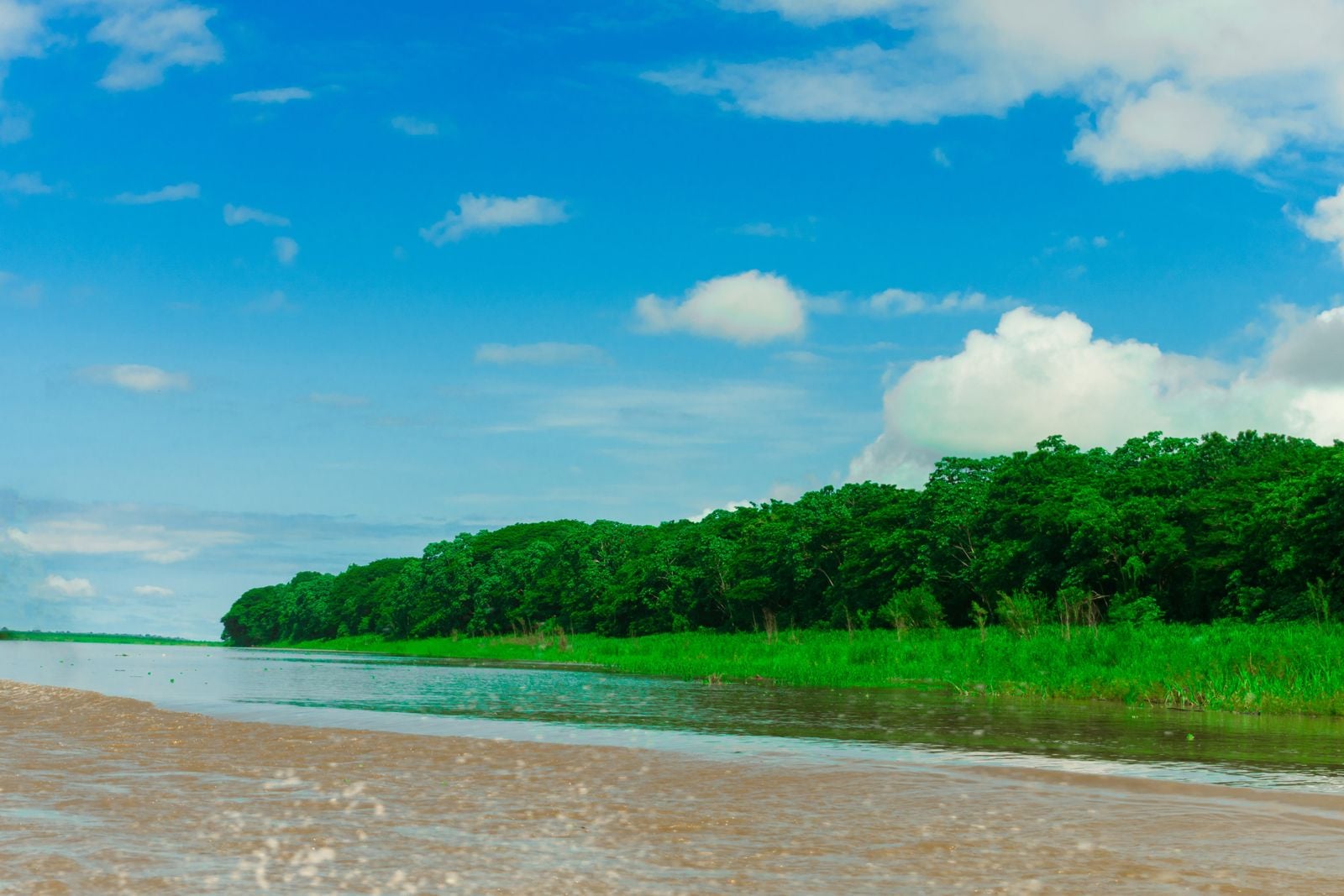
Along a six-kilometre stretch of the Peruvian Amazon, a river runs so hot that a frog falling in cooks to death in seconds. The water peaks at around 86 degrees Celsius, according to measurements reported by the BBC, and the nearest active volcano sits more than 700 kilometres away.
Locals call it Shanay-Timpishka. Roughly translated: boiled with the heat of the sun.
The name is poetic, but the mechanism is geological. Rainwater falling on the Andes seeps down through cracks in the rock, travels several kilometres underground, warms against hot rock at depth, and rises back through a system of faults into a tributary that eventually joins the Amazon. No magma chamber. No volcanic vent. Just water taking the long route home.
What the temperature actually is
The headline figure — 86 degrees Celsius — is an average across the hottest stretch. The peak measurement, taken by the geothermal scientist Andrés Ruzo, exceeds 90 degrees Celsius. In parts, the water approaches boiling at that altitude.
For scale: a hot cup of black coffee leaves a domestic kettle at around 85 to 90 degrees. A commercial dishwasher’s rinse cycle runs cooler than sections of this river.
Ruzo, who first mapped the temperature profile, described the effect on skin bluntly. “You stick your hand in, and you will see second or third degree burns in a matter of seconds,” he told researchers cited by Earth.com. Small animals that slip in — frogs, lizards, the occasional bird — die almost immediately. Their eyes cloud first. Then the flesh cooks from the outside in.
The hot stretch runs about six kilometres, roughly four miles. The river widens to around six metres across in places. The steam it throws off is thick enough to hide the far bank on cool mornings.
Why there is no volcano involved
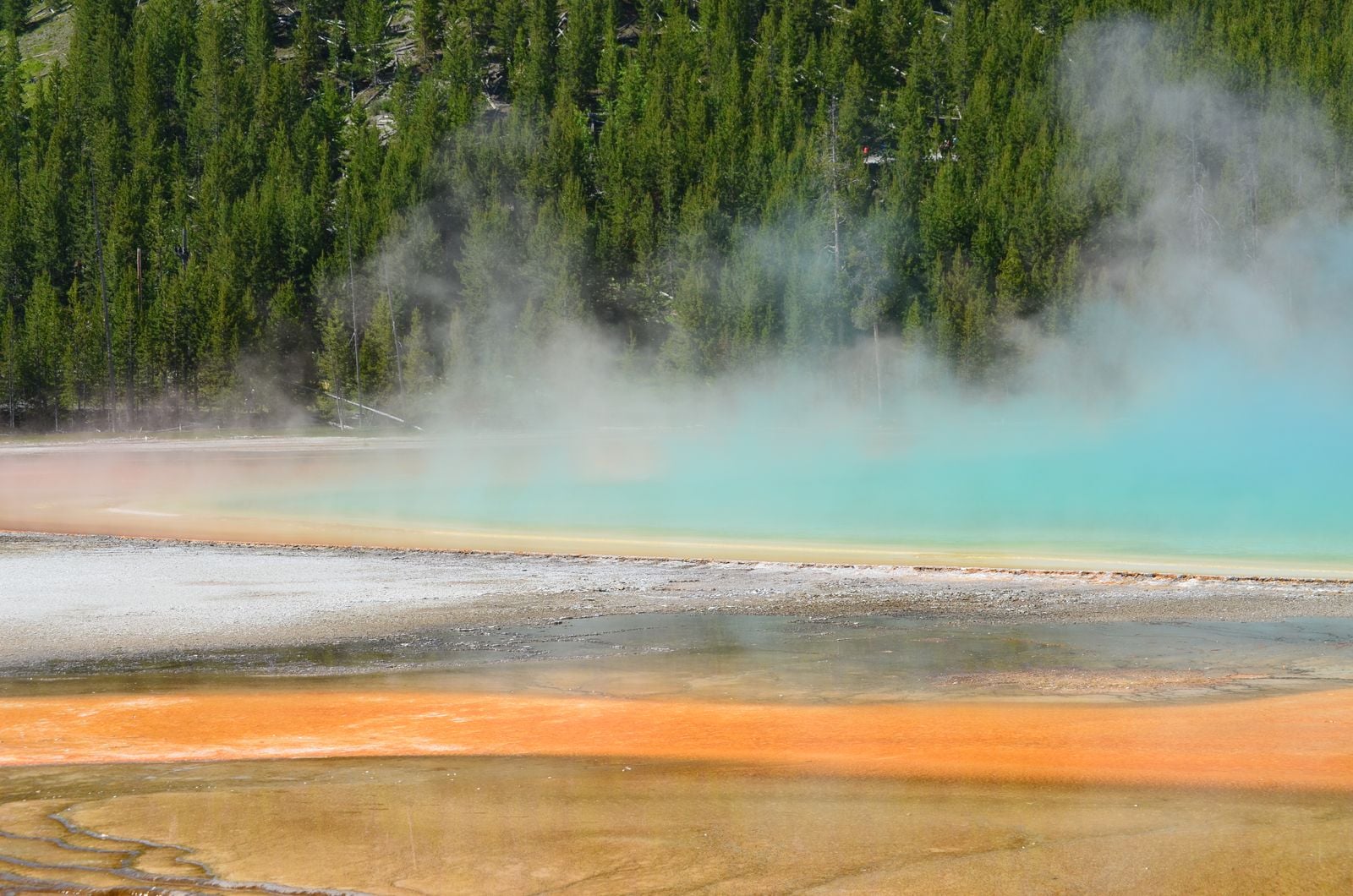
Most rivers this hot sit near volcanic systems. Yellowstone’s thermal features draw heat from a magma chamber a few kilometres beneath the surface. Iceland’s hot rivers ride on the mid-Atlantic ridge. New Zealand’s Waimangu system sits inside a caldera.
Shanay-Timpishka has none of that. The Peruvian Amazon is not a volcanic province. The Andes’ active arc lies far to the west and south. As The Times of India summarises, the nearest active volcano is more than 700 kilometres from the boiling stretch.
The geological explanation, on the current reading, is that the river sits above a fault system that acts like a plumbing loop. Rain and river water in the highlands drain into fractures in sedimentary rock, work their way down over kilometres, absorb heat from the geothermal gradient — the ordinary warming of rock with depth that occurs everywhere on Earth — and are forced back up through another set of faults. By the time the water resurfaces, it has spent long enough at depth to be scalding.
The National Geographic interview with Ruzo describes the fault-fed model in more detail. It is not exotic geology. It is ordinary geothermal circulation, working at a scale and geometry that happens to deliver near-boiling water to the surface.
The number that matters is depth
Earth’s crust warms with depth at roughly 25 to 30 degrees Celsius per kilometre in stable continental settings. To heat water from an ambient temperature of about 25 degrees to over 90 degrees, without any volcanic assistance, requires the water to reach a depth of roughly two to three kilometres — and to spend long enough there to equilibrate with the surrounding rock.
Two kilometres is not a trivial descent. It is deeper than most mining operations. It is the depth at which the temperature stops being a curiosity and starts being a hazard for anything drilling into it.
The Shanay-Timpishka is not the only place on Earth where non-volcanic geothermal water surfaces. It may be the hottest example known outside a volcanic province.
How the river was studied
For most of the twentieth century the boiling river was known to local Asháninka communities and to a handful of oil prospectors who scoured the region in the 1930s. Western science barely engaged with it. Ruzo, whose grandfather had told him stories about the river as a child, began measuring it in earnest in the 2010s.
The most recent ecological study, led by Riley Fortier of the University of Miami and Alyssa Kullberg of EPFL in Lausanne, was published in Global Change Biology. The team placed 13 temperature-logging devices along a 2-kilometre transect running from cooler forest into the hottest stretches. They logged a year of air temperature data.
The averages ranged from 24 to 25 degrees Celsius in the cooler forest to 28 to 29 degrees in the warmest zones. The hottest air readings, taken close to the steaming water in a handful of spots, approached 45 degrees Celsius.
That is air temperature. The water is far hotter.
Fortier, quoted by IFLScience, described the fieldwork bluntly: “It’s like doing fieldwork in a sauna.”
What lives near it, and what does not
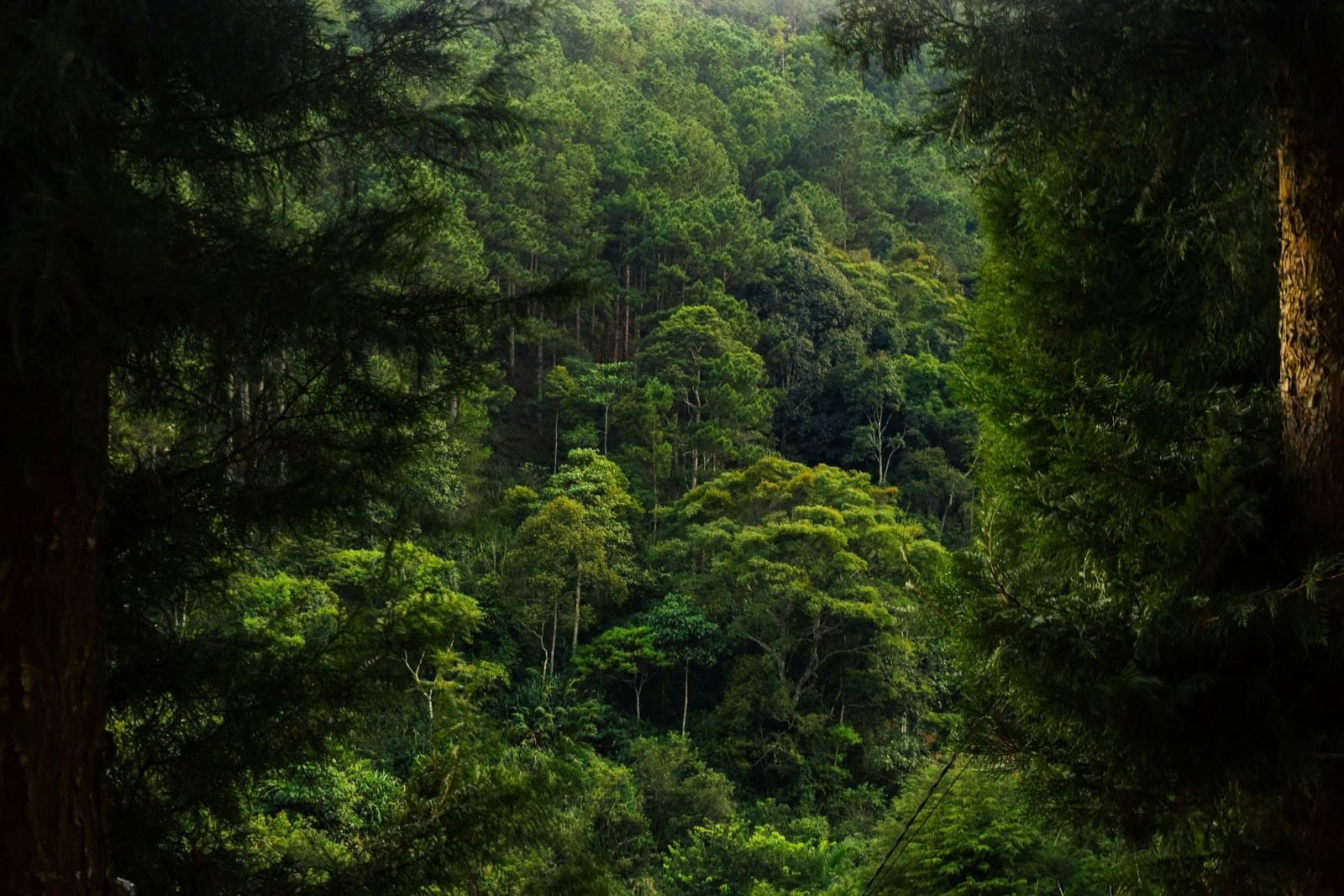
The team mapped tree and understorey species across 70 sites. The pattern was sharp. For every 1 degree Celsius rise in average temperature, biodiversity dropped by roughly 11 per cent.
Large evergreens such as Guarea grandifolia, which can grow to 50 metres, struggled near the hottest parts. Understorey vegetation thinned out. Leaf litter turned crunchier and drier. The canopy became patchier.
Not every plant suffered. The giant Ceiba tree, Ceiba lupuna, which stores water in its swollen trunk, proved unusually resilient — the botanical equivalent of a camel. Small drought-tolerant species crept in as the larger trees dropped out. The forest did not disappear. It simplified.
Kullberg noted the surprise was how quickly the shift happened across space. “Over the course of dozens of miles, you might expect to see dramatic changes like that,” Fortier said, “but in the small sampling area that we had, you typically wouldn’t see such a clear change in composition.”
The whole transition — from ordinary Amazon forest to something scrubbier and drier — happens over a stretch shorter than an easy afternoon walk.
Why the river matters beyond itself
The reason plant ecologists care about Shanay-Timpishka is that it is a natural experiment nobody could design. You cannot artificially heat a section of Amazon rainforest to see how it responds to warming. You can only find a place where nature has already done it.
“It really provides us a window into the future,” Fortier told his university’s researchers, “because the Amazon will get hotter whether we like it or not.”
The Global Change Biology paper does not claim the river’s ecology mirrors what the whole Amazon will look like in fifty years. The steam alone makes the local microclimate unusual, and rainfall patterns across the basin will shift in ways this one tributary cannot capture. Rodolfo Nóbrega at the University of Bristol, quoted in the BBC coverage, points out that the Amazon spans more than 6.7 million square kilometres across nine countries. One 2-kilometre stretch cannot stand in for all of it.
But the direction of the effect — biodiversity thinning, canopy simplifying, drought-tolerant species advancing — matches predictions from broader tipping-point studies. Chris Boulton of the University of Exeter, a co-author on the 2023 global tipping points report, told the BBC the natural-experiment framing was a “clever thing to do”.
Water that has been underground for a long time
One detail of the river that rarely gets stated plainly: the water coming out of the ground is old.
Geothermal circulation of the kind proposed for Shanay-Timpishka is slow. Rainwater falling in the Andes and eventually emerging as scalding flow in the lowland forest may have spent decades or centuries underground. The river you see steaming today is fed, in part, by rain that fell before the invention of the transistor.
That is not unique to this river — most deep groundwater is old — but it changes how you look at it. The heat is not being generated in real time by some fast process. It is being extracted from rock that has been quietly warm for millions of years, by water taking a slow underground detour.
Ocean worlds in the outer solar system rely on comparable logic, on a completely different scale. Space Daily has looked at how Uranus’s moons Titania and Oberon may keep liquid water oceans warm through radioactive decay in their deep interiors, and how Europa hides a saltwater ocean beneath roughly 29 kilometres of ice. The heat sources differ. The pattern is the same: water finds warmth at depth, and does not need a sun to stay liquid.
Life Signs has written before about Enceladus and what a habitability search that returns nothing would mean. The Peruvian boiling river is not an ocean-world analogue in any strict sense — the chemistry, the pressures, the geology are all different — but it is a working example of geothermal water surfacing without a volcano, on a continent that is not supposed to have one.
What the science does not settle
The exact plumbing under Shanay-Timpishka is still being mapped. The fault geometry, the recharge zones, the residence time of the water underground — these are being estimated rather than measured directly. The current geological reading, summarised in the popular coverage and in Ruzo’s own accounts, is a fault-controlled hydrothermal system without volcanic input. That is the best-supported explanation on the available evidence. It is not a fully constrained model.
The ecology paper is more limited still. It measures air temperature and plant composition. It does not measure insect populations, though Fortier suspects the steam deters flying insects. It does not measure how much groundwater is available to the roots of the trees near the hottest zones — a variable Nóbrega thinks may matter more than the air temperature alone.
The 11-per-cent-per-degree biodiversity decline is a correlation across sites, not a controlled experiment. What it tells you is what the local forest has settled into after long exposure to elevated temperature. It does not tell you exactly how a cooler forest would respond if you slowly warmed it up.
Standing at the edge
Kullberg, on her first visit in 2022, described cresting the ridge and seeing the steam rising from the trees below. Fortier remembered the ground-level detail: leaf litter that crunched underfoot, a canopy that opened where the water ran hottest, a stillness where large animals should have been.
Somewhere below their feet, rainwater from years ago was working its way up through a fault, warming as it climbed, and delivering the last of that heat to a tributary of the Amazon at 86 degrees Celsius.
The frog that falls in tomorrow will meet water that fell as rain before the researcher watching it was born.