Science Everything you have ever touched — every mountain, ocean, star, and galaxy visible through any telescope — is made of the 5% of the universe that physicists can actually account for. The other 95% has no name beyond 'dark', and no confirmed identity at all. By Deep Field · Aug 12, 2026
Science There is a spot in the South Pacific Ocean, 2,688 kilometres from the nearest land in every direction, where more than 263 decommissioned spacecraft lie on the ocean floor — and the closest humans to it are usually astronauts passing 400 kilometres overhead By Mission Notes · Aug 12, 2026
Psychology A growing population of women over 40 are choosing to stay single, and many are not treating it as a temporary gap between relationships — surveys find older single women are far less likely than men their age to be looking for a partner at all By Ainura Kalau · Aug 12, 2026
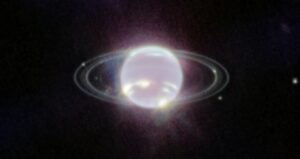
Space Scopes Neptune's largest moon Triton travels around its planet backwards, orbiting in the opposite direction to Neptune's rotation — strong evidence that this frozen world probably formed somewhere else before Neptune captured it. By Ainura Kalau · Aug 12, 2026
Psychology A man in a Batman costume stood silently on a Milan train, a few metres from a woman who appeared pregnant, and never once interacted with her or anyone else — yet his presence alone was followed by a jump in the share of passengers who offered her a seat from roughly one in three to two in three By Daniel Moran · Aug 12, 2026
Outer Planets Titan is the only world besides Earth with an active liquid cycle: clouds form, rain falls, rivers carve channels and seas fill and evaporate — but the rain is liquid methane and the ground beneath it is water ice frozen hard as stone. By Lachlan Brown · Aug 12, 2026
Asia News South Korea's full-time gender wage gap was 29.3 per cent in 2023, but a new study puts the conditional gap among recent college graduates at around four per cent. By Space Daily Editorial Team · Aug 12, 2026
Aerospace In January 1961, a chimpanzee named Ham was strapped into a Mercury capsule and launched on a suborbital arc that overshot its target by roughly 240 kilometres, and when the hatch was opened aboard the USS Donner, he was found alive, slightly dehydrated, somewhat exhausted, and carrying a small abrasion across his nose By Mission Notes · Aug 12, 2026
Human Behaviour Wellness retreats are sold as a break from your life. What a 2025 neuroimaging study found is that after seven days, the brain network responsible for that constant inner narrator went about as quiet as it typically does on psilocybin, and nobody in the study had taken anything By Nato Lagidze · Aug 12, 2026
Psychology Hundreds of people wrote to a Bristol newspaper in the 1970s about a hum they could feel more than hear — a warehouse fan was blamed, the warehouse closed, the reports continued, and fifty years later the same complaint has been filed across continents by people who have never met By Human Element · Aug 12, 2026
Culture Most people assume the Dutch have always cycled, but in the 1960s the Netherlands was rebuilding its cities for cars — in 1972, 3,264 people died on its roads By Mal James · Aug 12, 2026
Deep Space For 72 seconds in August 1977, an Ohio radio telescope picked up a signal thirty times stronger than the background hum of space, sitting almost exactly on the frequency scientists had guessed an alien civilization would choose — and it has never been heard again By Space Daily Editorial Team · Aug 12, 2026
Solar Science NASA’s ensemble forecast named the minute an August solar eruption would reach Earth, but its 22-hour uncertainty window shows why one perfect hit does not solve space weather By Deep Field · Aug 12, 2026
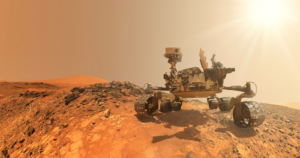
Marsdaily Of the roughly 400 Martian meteorites ever found on Earth, none has been dated to the window between 600 million and 2.4 billion years ago — until a rock found in Algeria in 2019 was confirmed this month as 1.273 billion years old, sitting precisely in the gap By Lachlan Brown · Aug 12, 2026
Deep Space NASA’s Roman telescope could find hundreds of planets without suns, but the number is a forecast with enormous uncertainty and each detection may last only hours By The Daily Orbit · Aug 12, 2026
Exo Life A 500-year microbiology experiment stores 800 sealed vials of dormant microbes in two oak boxes; researchers sample them every two years until 2038, then every 25 years until 2514 By Life Signs · Aug 12, 2026