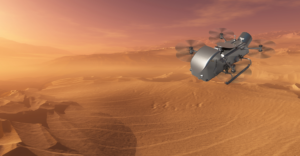
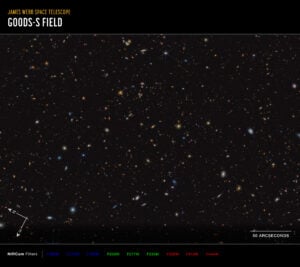
Deep Space NASA’s Roman telescope could find hundreds of planets without suns, but the number is a forecast with enormous uncertainty and each detection may last only hours By The Daily Orbit · Aug 12, 2026
Exo Life A 500-year microbiology experiment stores 800 sealed vials of dormant microbes in two oak boxes; researchers sample them every two years until 2038, then every 25 years until 2514 By Life Signs · Aug 12, 2026
Aerospace In September 1983, a Soyuz rocket caught fire on the pad with two cosmonauts strapped in above it, and the flames burned through the cables carrying the abort command. Saving them came down to two controllers pressing their buttons within five seconds of each other By Mission Notes · Aug 12, 2026
Marsdaily A rock blasted off Mars is not a comet and is only a meteor for seconds; in space it is a meteoroid, and on the ground it becomes a Martian meteorite By The Daily Orbit · Aug 12, 2026
Human Behaviour In 1966, a 10-year-old girl in Wales woke up and told her mother she had dreamed her school vanished under something black; her mother had no time to listen, and 24 hours later a coal tip collapsed onto the building, killing 116 children in one of the most chilling recorded premonitory dreams in modern history By Ainura Kalau · Aug 12, 2026
Bio Fuel Brazil answered the oil shocks of the 1970s by running its cars on sugarcane alcohol, and by the mid-1980s almost every new car sold there ran on it — then the ethanol-only market collapsed By Space Daily Editorial Team · Aug 12, 2026
Marsdaily NASA proposed Mars in the 1980s and Europe once aimed for 2033; today NASA says its architecture is not a mission or manifest, which explains why no landing date is official By The Daily Orbit · Aug 12, 2026
Spacemart In 2014, Blue Origin patented the idea of landing a rocket vertically at sea, before it had launched a single orbital rocket, then used the patent to try to block SpaceX from doing exactly what SpaceX was already attempting to do By Mission Notes · Aug 12, 2026
Earth News About 70 million years ago, a year had roughly 372 days, which means each day ran about half an hour shorter than yours. The figure was read from the growth layers of a single fossil clam from the mountains of Oman By Space Daily Editorial Team · Aug 12, 2026
Outer Planets In 1989, Voyager 2 measured winds up to 2,100 kilometres an hour circling an Earth-sized storm on Neptune; by 1994, when Hubble looked again, the storm had simply vanished, unlike Jupiter's Great Red Spot, which has raged for more than a century By Mission Notes · Aug 12, 2026
Space Travel In 1958, spooked by the Soviet Sputnik launch, the US Air Force secretly commissioned a study to detonate a nuclear weapon on the surface of the Moon, visible from Earth, purely as a show of force; the plan was ultimately shelved over fears the fallout would ruin the Moon for future scientific study By Ainura Kalau · Aug 12, 2026
Science People newly in love show the same serotonin levels as OCD patients — a chemical state that tends to fade within 12 to 18 months, which is exactly when the real question about what love actually is begins By Ainura Kalau · Aug 12, 2026
Political Economy Much of the familiar story of Dutch tulip mania traces back to one Scottish journalist writing in 1841, and much of his account ultimately came from satirical pamphlets written to mock the speculators. The drowned investors, the widespread ruin, the sailor jailed for eating a bulb — Goldgar found no archival evidence for them. By Space Daily Editorial Team · Aug 12, 2026
Marsdaily Mars can snow carbon dioxide at its poles, while some of its warmest summer landscapes grow dry-ice frost overnight that vanishes back into gas after sunrise By The Daily Orbit · Aug 12, 2026
Early Earth A zircon crystal small enough to sit on a fingertip, found in the Jack Hills of Western Australia, has been dated to 4.404 billion years old, right around the same moment a 2025 study says the Moon itself finished crystallizing By Life Signs · Aug 12, 2026
Human Behaviour Googling a headache rarely settles anything — a Microsoft study found it escalates common symptoms into fear of rare diseases, and of the quarter of searchers it pushed into a doctor's appointment, most turned out not to need one By Human Element · Aug 12, 2026