

On the morning of 5 May 1961, Alan Shepard had been strapped into a capsule the size of a phone booth when he finally keyed the microphone and told the launch team he needed to urinate. The Mercury-Redstone 3 flight — America’s first crewed spaceflight — was designed to last only 15 minutes from liftoff to splashdown. Nobody had built a way to relieve a pilot inside the pressure suit, because nobody had expected the pilot to be inside it for hours before the rocket even left the pad.
The engineers on the loop debated it, worried briefly about shorting the biomedical sensors taped to his chest, and then told him to go ahead. Shepard urinated inside his silver pressure suit. The cotton undergarments soaked it up, the pure-oxygen atmosphere of the cabin dried it, and roughly an hour later Freedom 7 lifted off Pad 5 at Cape Canaveral and carried the first American into space.

How a 15-minute flight became a four-hour wait
Shepard’s suborbital hop faced multiple delays before finally launching on the morning of 5 May 1961. He was in the capsule before sunrise. The countdown was held for weather. It was held for a small inverter problem. It was held again while engineers rechecked a pressure reading on the Redstone booster.
By the time the rocket actually lit, Shepard had been sealed inside Freedom 7 for more than four hours. The capsule carried him on a suborbital arc that took him to space before splashing down in the Atlantic about 15 minutes after liftoff.
The mismatch was almost comic. Four hours of waiting for fifteen minutes of flying. And the suit had been engineered around the flying, not the waiting.
Why the suit had no plumbing
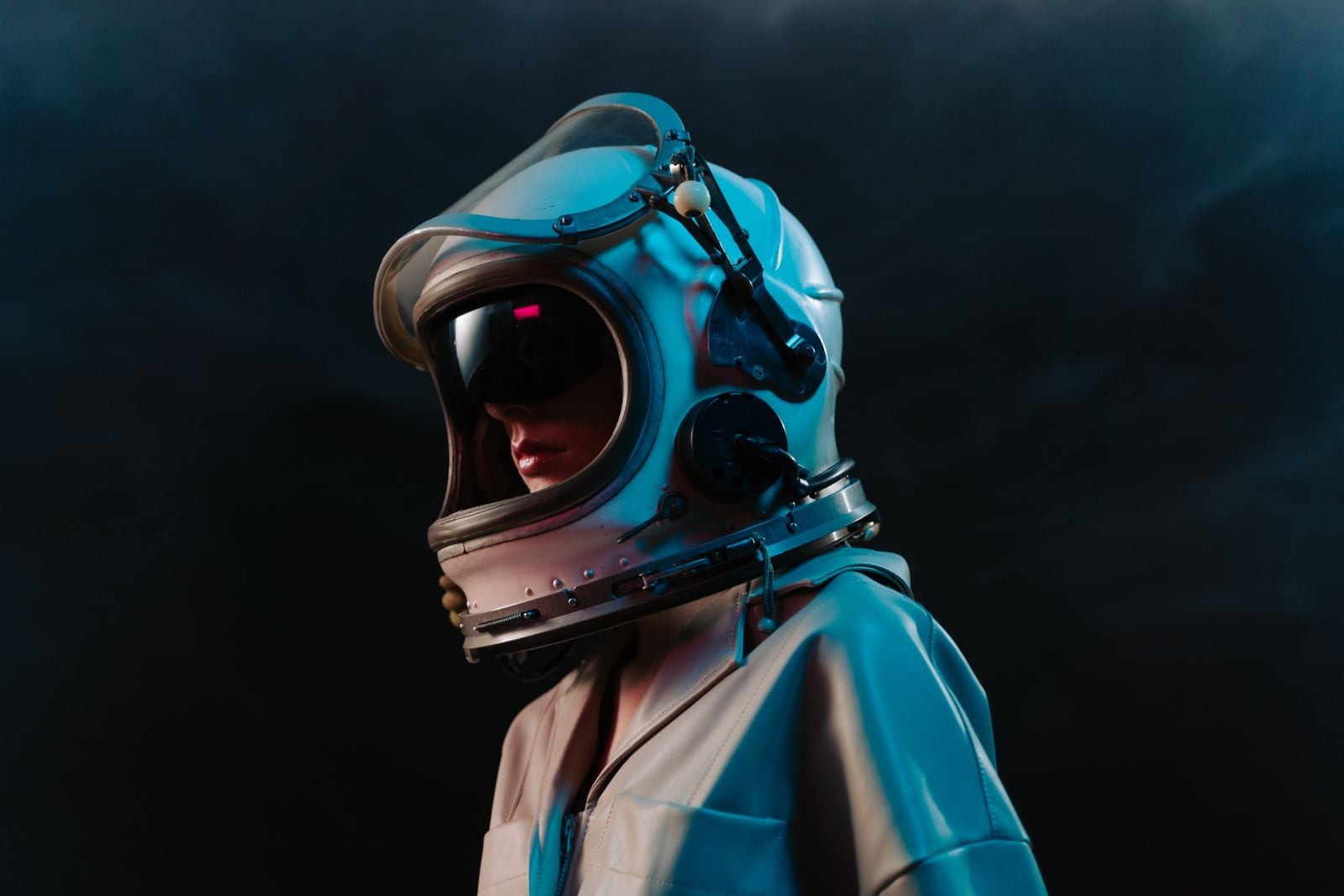
The Mercury pressure suit was a modified Navy high-altitude flight suit. It was aluminised, sealed at the neck and wrists, and fed with pure oxygen. It had biomedical leads taped to Shepard’s chest to track his heart rate and respiration. It did not have a urine collection device, because the mission profile did not require one.
Project Mercury planners had reasoned it out on paper. A suborbital lob lasts a quarter of an hour. A pilot voids before he suits up. There is no need for the added mass, complexity, or leak risk of a plumbing system on a flight shorter than a lunch break.
The reasoning was sound for the flight. It was not sound for the countdown.
The exchange on the loop
Accounts from the launch team, later collected in NASA oral histories and retold in National Geographic’s history of the flight, agree on the essentials. Shepard, growing uncomfortable, asked to be let out to use the bathroom. He was told that unsealing the hatch and unsuiting him would cost hours and probably scrub the launch. He suggested the obvious alternative. The engineers hesitated because his medical sensors sat directly in the path of anything that would run down his torso.
The flight surgeons worried about the electronics. Shepard, by his own later telling, ended the debate by pointing out that he was going to do it either way.
The medical team switched off the sensors. Shepard urinated. The suit’s cotton liner absorbed most of it. The pure-oxygen environment dried the rest quickly enough that by the time the countdown resumed, the sensors were switched back on and reading cleanly.
What the incident actually changed
The story is often told as a punchline. It is also the moment human spaceflight acquired its first plumbing requirement. Engineers at NASA and its suit contractors soon developed urine collection devices for subsequent missions, including the orbital Mercury missions that followed.
The problem never really went away. It got bigger. Apollo added faecal containment bags that astronauts describe, in the transcripts, as some of the worst hardware they ever used. The Shuttle brought the first proper zero-gravity toilet. The International Space Station now runs a urine-recycling water system that recovers most of what the crew produces.
And plumbing is still one of the hardest problems in human spaceflight. Artemis II’s crew capsule includes a new zero-gravity toilet designed for the Orion vehicle; earlier design iterations of the Universal Waste Management System reportedly ran to around $23 million in development costs and hit their own malfunctions along the way. Sixty-five years after Shepard’s soaked undergarments, engineers are still fighting the same fluid, the same seals, the same failure modes.
What Shepard actually flew
The flight itself, once the Redstone finally lit, went almost exactly to plan. Shepard experienced powered flight, weightlessness, and significant g-forces during re-entry. He splashed down in the Atlantic and was picked up by a helicopter from the carrier USS Lake Champlain.
Yuri Gagarin had orbited the Earth 23 days earlier. Shepard’s flight was suborbital, shorter, and, by any technical measure, less ambitious. But it was broadcast live on American television. The Gagarin-Shepard sequence set the emotional stakes for everything that followed, including Kennedy’s speech committing the United States to a Moon landing before the decade was out — delivered just 20 days after Shepard came home.
Shepard would fly again a decade later on Apollo 14, walk on the Moon, and, famously, hit two golf balls across the lunar surface with a modified six-iron head. Florida Today’s 50th anniversary write-up of that mission notes that even Apollo 14 was itself delayed on the pad by weather — Shepard’s career bookended by launch holds.
Why the small stuff decides missions
The Mercury planners assumed a stable countdown. The countdown was not stable. A single inverter reading, a bank of clouds over the Cape, a sensor twitch on the upper stage — any of these can add an hour, and an hour changes what the human body inside the suit needs.
The pattern still holds. NASA’s Artemis II campaign has faced small-system trouble. Helium flow issues to the SLS upper stage have created launch delays — helium, an inert gas used to pressurise propellant lines, is not glamorous hardware. Neither is a urine collection device. But rockets do not fly without either.
The physics of the launch is not the hard part. The physics of the fluids is.
How the story got told
For years the urination incident was mentioned mostly in astronaut memoirs and NASA oral histories, and only later found its way into mainstream retellings. Tom Wolfe put a version of it in The Right Stuff in 1979. Philip Kaufman’s 1983 film adaptation dramatised it, complete with the medical team fretting over the sensors. NASA’s retrospective materials treat it as a matter-of-fact engineering lesson rather than a joke. Astronomy magazine’s day-in-history entry for 5 May 1961 records the same sequence of events.
The tellings vary on one detail: whether Shepard’s line to the loop was profane. Some accounts have him growing sharp with the launch team as the delay stretched on. Others have the exchange brisk but professional. What is not in dispute is the outcome. He went inside the suit. The sensors were briefly turned off. The flight continued.
The physiological footnote
Human spaceflight has always been, in part, a fluids problem. Sweat. Urine. Blood. Water vapour in the cabin. Coolant in the suit loop. Astronauts who spend months on the ISS lose bone density at a measurable rate — around 1 to 1.5 percent of weight-bearing bone mineral density per month — largely because the body’s fluid distribution changes in microgravity. Kidneys work differently. Urine chemistry shifts. Countermeasures have to be built around what the body actually does when it stops fighting gravity.
None of that was known in May 1961. Shepard’s flight was too short to teach any of it. What it did teach — immediately, in the first four hours of the first American mission — was that the pilot inside the suit is a biological system on a clock, and the clock does not care about the countdown.
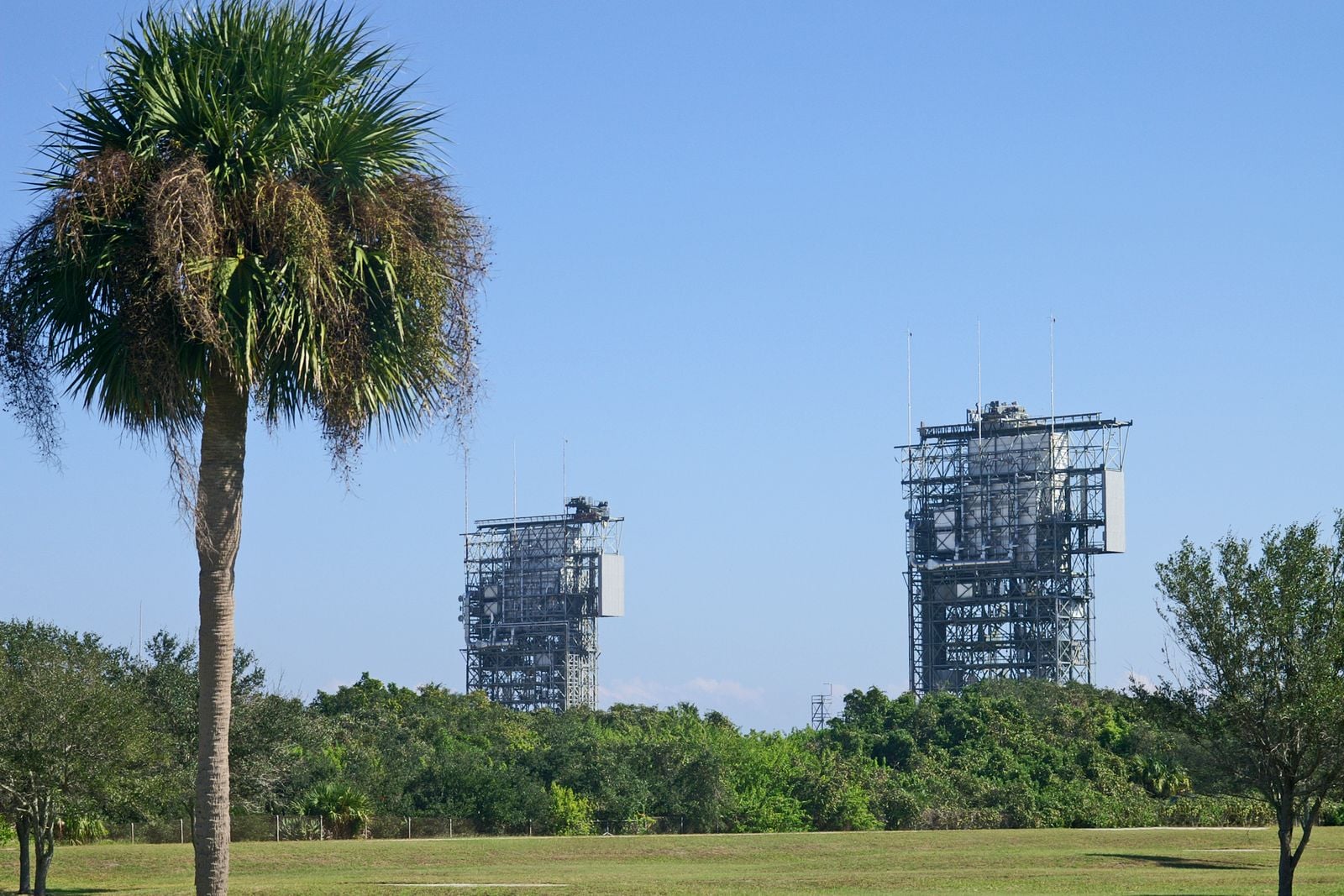
What the pad looked like that morning
Every crewed mission since has inherited the same lesson. When SpaceX’s Fram2 crew flew the first true polar human orbit in April 2025, the Dragon capsule was equipped with a waste system rated for a multi-day mission. When Artemis II eventually flies its lunar loop, Orion will carry a toilet that cost roughly the price of a small commercial aircraft. When a crewed Mars vehicle finally leaves Earth orbit, plumbing will be one of the systems the flight surgeons watch most closely.
All of it traces back, in a straight line, to a Navy test pilot lying on his back inside a silver suit on Pad 5, watching the sky lighten through a periscope, waiting for a rocket that would not launch on time, and finally telling the men in the blockhouse that they had a decision to make.
He flew about an hour after that. The suit was still damp when the recovery helicopter set him down on the deck of the Lake Champlain.