

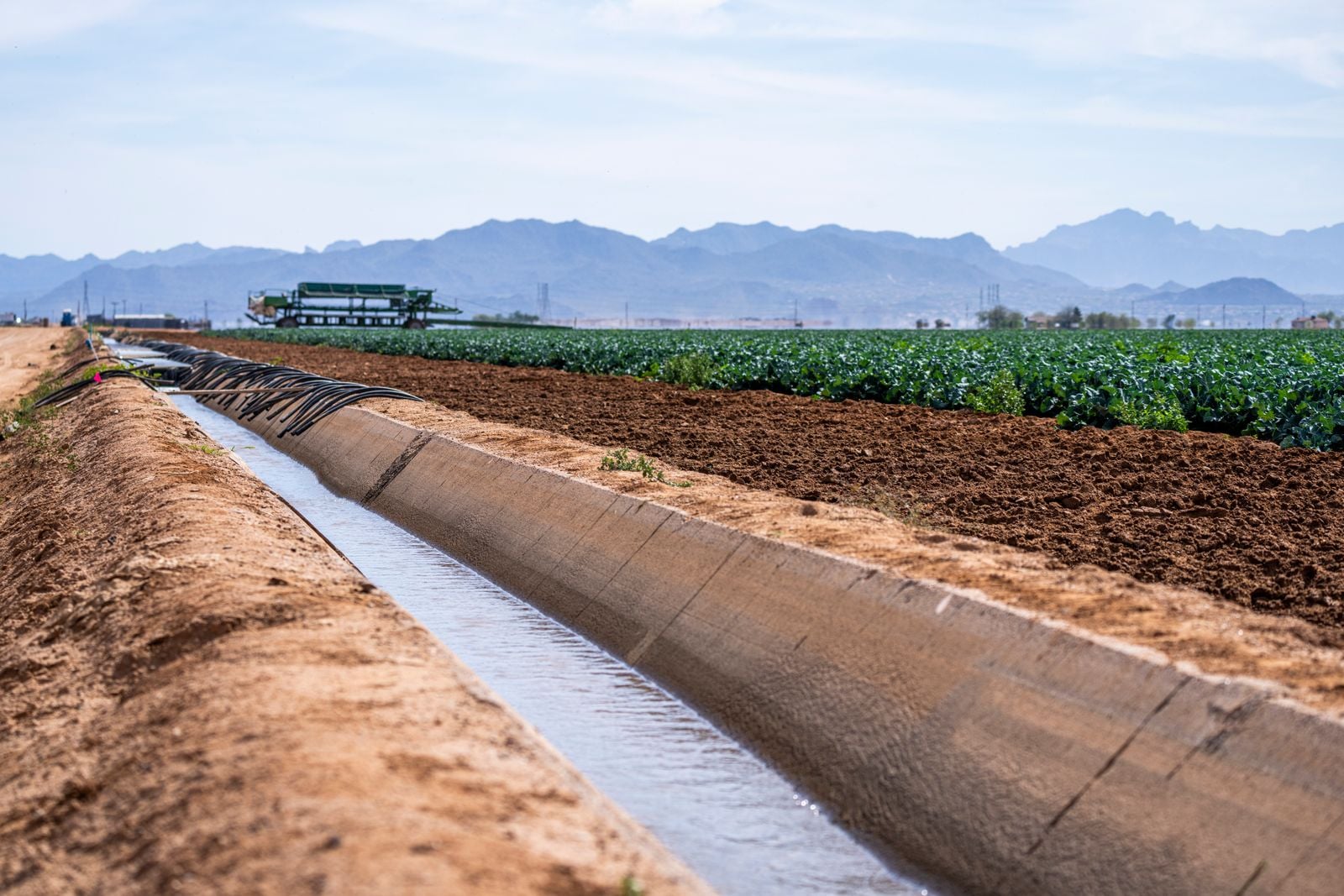
A single cotton T-shirt takes roughly 2,700 litres of water to produce, which is close to what one adult drinks in two and a half years at the standard eight cups a day. Most of that water never touches the shirt. It falls on a cotton field months earlier, in a river basin thousands of kilometres from the shop where the shirt ends up folded on a shelf.
The number is a life-cycle estimate, not a factory reading. It bundles rainfall, irrigation, dyeing, finishing and transport into one figure. The bulk of it — around 90 percent in most published assessments — is agricultural water absorbed by the cotton plant itself.
And cotton is thirsty in places that can least afford it.
Where the 2,700 litres actually goes
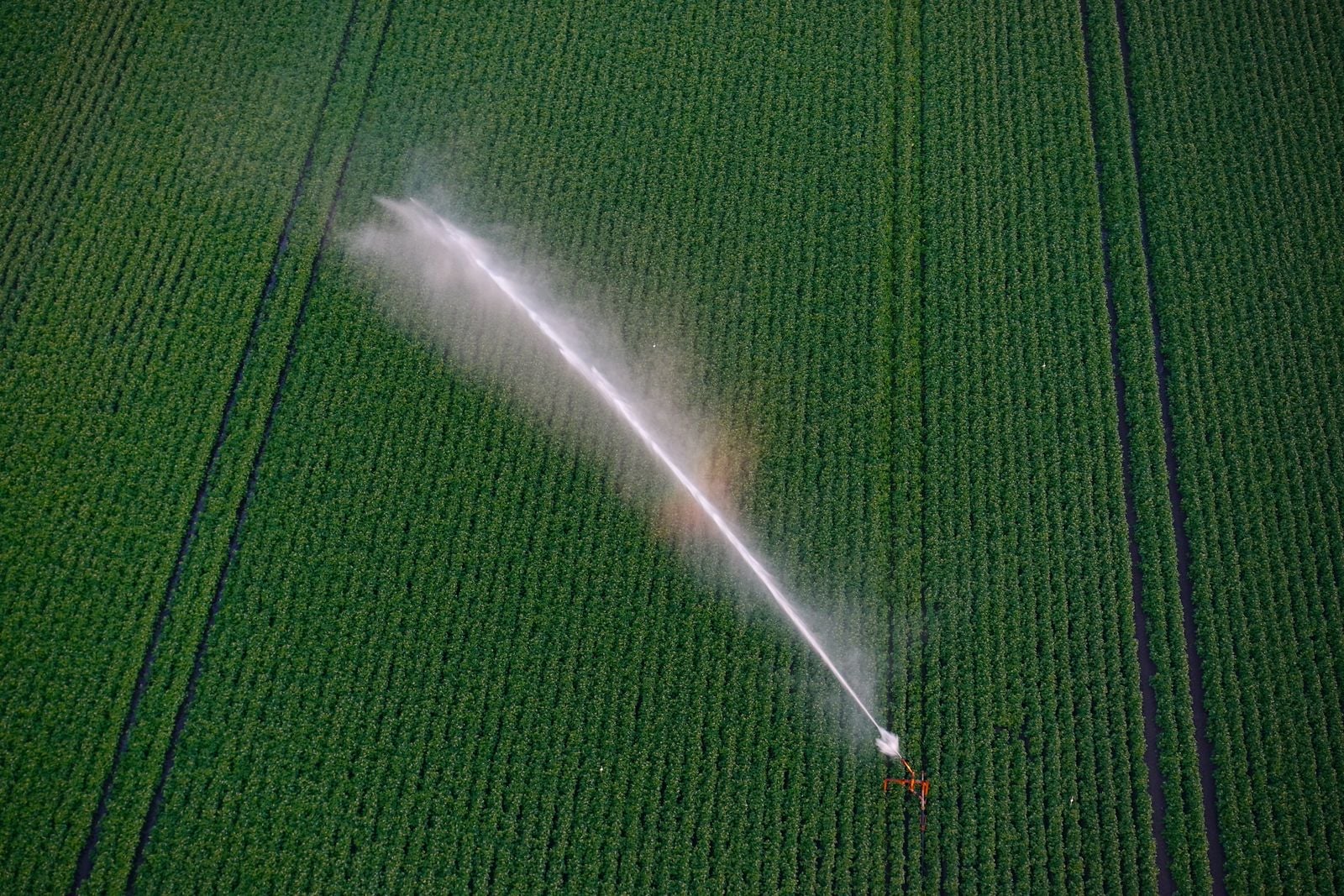
The figure traces back to work by the Water Footprint Network in the late 2000s, which broke a cotton shirt down into three water categories: green water (rainfall used by the crop), blue water (surface and groundwater diverted for irrigation), and grey water (freshwater needed to dilute the pollution from dyes and finishing). Only a small fraction of the total is the water that gets a shirt clean, dyed and shipped. The overwhelming share is what the plant drank in the field.
A mid-weight cotton tee contains around 250 grams of lint. Growing that lint requires around a kilogram of raw cotton bolls, which in turn requires the plant to be watered for roughly 160 to 200 days depending on the variety and climate. In an unirrigated field in a wet region, most of that water is rain the sky was going to deliver anyway. In an irrigated field in a dry region, it is water pumped from a river or aquifer that was doing something else — feeding a wetland, recharging a well, supporting a fishery.
The environmental accounting the industry cares about is the second kind.
The starkest illustration sits between Uzbekistan and Kazakhstan. The Aral Sea was the fourth-largest lake on Earth in 1960. By 2014, satellite imagery showed its eastern lobe had disappeared entirely. Soviet-era irrigation canals diverted the Amu Darya and Syr Darya rivers to feed cotton fields across Central Asia, and the sea they had drained into for millennia simply ran out of inflow. Uzbekistan remains one of the world’s largest cotton exporters. The country’s cotton is grown on land that would be desert without pumped irrigation from those same two rivers, which now deliver only a fraction of their historical flow to what is left of the sea.
India and Pakistan tell a slower version of the same story. The Indus basin, which supplies cotton mills across Punjab and Sindh, is one of the most groundwater-stressed river systems on Earth. Tube wells across the Punjab plains have dropped water tables by several metres over the past two decades. Cotton is not the only crop pulling on that water — rice and sugarcane are also intensive — but it is a significant share, and its water leaves the basin embedded in fabric shipped abroad.
Virtual water and the distance it travels
Economists call this virtual water: the water embedded in a traded good, moved from one country to another whenever the good is sold. When a shirt sewn in Bangladesh from Uzbek cotton is bought in Berlin, roughly 2,700 litres of Central Asian irrigation water has effectively been exported to Germany. The shirt weighs 150 grams. The water it represents weighs about 18 tonnes.
Global trade in cotton and cotton products moves an estimated 200 cubic kilometres of virtual water a year across borders. That is roughly four times the annual flow of the Colorado River.
The shirt on the shelf carries none of this on its label.
The dye house is the other half of the problem
The 2,700-litre figure includes water used in dyeing and finishing, and that fraction is small in volume but disproportionate in damage. Textile mills in Bangladesh, India, China and Vietnam use freshwater to fix dye onto fibre, then discharge much of it as effluent. A single kilogram of finished fabric can require 100 to 150 litres of process water, and untreated effluent from dye houses is one of the reasons some rivers in South Asia and southern China visibly change colour by the season.
The Buriganga in Dhaka, the Citarum in West Java, and stretches of the Pearl River delta in Guangdong have all been documented running the colour of whatever is being dyed upstream. Grey water accounting in the Water Footprint Network method tries to capture this by asking how much clean water would be needed to dilute the pollution back to safe levels. For a conventional cotton shirt, that dilution water is a significant slice of the total.
The industry as a whole uses around 79 billion cubic metres of water a year for textile production, according to figures cited by the UN Environment Programme. That is enough to fill 31 million Olympic swimming pools.
Two and a half years of drinking water, per shirt
The comparison in the headline is not rhetorical inflation. Standard nutrition guidance is around 2 to 3 litres of water a day for an adult. At the higher end, 3 litres a day for 900 days is 2,700 litres. At the lower end, closer to four years.
A pair of jeans is worse. The UN Environment Programme puts a single pair at around 3,781 litres — roughly five and a half years of drinking water for one person.
A cotton bedsheet, several tees worth. A cotton bath towel, more.
The scale becomes uncomfortable when multiplied. More than two billion T-shirts are sold globally each year according to industry estimates cited by sustainable fashion reporting. At 2,700 litres each, that is a virtual water flow of roughly 5.4 trillion litres a year attached to cotton tees alone.
Why the number is contested
Not every cotton shirt costs 2,700 litres. The figure is a global average built from a mix of rain-fed and irrigated production, and the range around it is wide.
Cotton grown in the American South-East on rainfall alone can have a blue-water footprint close to zero, because irrigation is minimal. The same shirt grown in Xinjiang or the Fergana Valley can carry a blue-water footprint many times the average. The U.S. Cotton Trust Protocol, launched in 2020, has reported a 14 percent gain in irrigation water-use efficiency and a 21 percent reduction in greenhouse gas emissions since 2015 across its participating growers, according to the Protocol’s own reporting. That is a company-adjacent industry programme, so its figures are a claim rather than an independent audit, but they point to a real dispersion in the underlying data.
Organic cotton has its own arithmetic. It avoids synthetic pesticides and fertilisers, which cuts grey water sharply, but its yields per hectare are typically lower, which means more land — and, if irrigated, potentially more water — for the same volume of fibre. Analyses by Textile Exchange and coverage in The Guardian’s reporting on organic cotton have found the water advantage is real but smaller than sometimes marketed, and it depends heavily on where the crop is grown.
Hemp and linen use less water per kilogram of fibre than cotton in most published comparisons. Recycled cotton uses very little, because the fibre has already been grown once. Polyester uses less water still, but shifts the impact to fossil feedstocks and microplastic shedding — every wash cycle of a synthetic garment releases thousands of microscopic fibres into wastewater, a pollution pathway the industry has only recently begun to measure.
2,700 litres per shirt is a headline number, and it flattens a lot of geography. Two shirts with the same water footprint can have very different consequences depending on where the water came from. A litre pulled from a rain-fed field in Mississippi is not equivalent to a litre pumped from a collapsing aquifer in the Indus basin. Water-stress weighting — used in some newer life-cycle methods — tries to adjust for this, giving a heavier penalty to water taken from stressed basins. Under those weighted methods, cotton grown in Central and South Asia can score three to five times worse than the raw litre count suggests. Cotton grown in the American South-East or in Australia’s cooler rain-fed regions can score better.
The label on the shirt does not tell you which. Traceability in cotton supply chains is improving — the Trust Protocol has mapped 1,200 fibre shipments equating to 3.4 million bales of U.S. cotton, and the Better Cotton Initiative covers a growing share of global production — but most tees on most shelves cannot be traced past the country where they were sewn.
The shirt keeps drinking after you buy it
The 2,700 litres is only the water spent before the shirt reaches the shop. A cotton tee washed weekly for two years absorbs another 300 to 500 litres in domestic laundry, depending on the machine and the wash length. That water is drawn from municipal supply rather than an irrigation canal, and in most Australian, European and North American homes it is far from any water-stressed basin. But it is still water, and it is still measurable.
The single largest lever a consumer holds is not what fabric they buy. It is how long they keep the shirt. A tee worn for five years amortises its 2,700-litre footprint across five years of use. A tee worn twice and discarded amortises it across a fortnight. The arithmetic is unforgiving in either direction.
Fast fashion’s business model — a T-shirt as a near-disposable object — inverts the maths. The environmental cost per wear rises as the number of wears falls.
The 2,700-litre estimate has held up reasonably well against newer assessments. The UN Environment Programme continues to highlight fashion’s water demand in its reporting on the environmental cost of clothing. Some updated life-cycle assessments put a conventional cotton shirt slightly lower, around 2,000 to 2,500 litres, reflecting incremental gains in irrigation efficiency. Others, when they include water-stress weighting, put the effective footprint higher.
The direction of travel matters more than the exact figure. Global cotton area has been roughly flat since 2000, while yields per hectare have crept up. That means the volume of cotton being produced is rising slowly. The volume of finished garments being sold is rising far faster — the global apparel market has roughly doubled in units since 2000 — with the gap made up by polyester, blends, and shorter garment lifespans.
The shirt has not become dramatically thirstier. There are just many more of them, worn for less time each.
What makes cotton’s water footprint unusual is the disconnect between where the water is spent and where the shirt is worn. A pair of jeans on a rack in Sydney may represent water pumped from a well in Gujarat that a farming family two kilometres away is also drawing from for their own crop. The shirt travels. The aquifer does not.
The Byrd Glacier, as Life Signs has written before, drains an area larger than California through a single Antarctic gap — a reminder that Earth’s water moves in enormous, often invisible flows. Virtual water is one of those flows. It runs through container ports and shipping lanes instead of rivers, but its withdrawals show up as dropped water tables and shrinking lakes in the places it was originally lifted from.
Two and a half years of drinking water. Folded on a shelf. Priced at whatever the shop decided.