Constellations In 1970 a Soviet probe became the first object ever to transmit from the surface of another planet, and it lasted barely 23 minutes on Venus before the heat killed it By Space Daily Editorial Team · May 22, 2026
Constellations Venus, Jupiter, and Mercury are lining up in the western sky after sunset this week — and a Blue Moon is sliding past Antares — in a run of evening sky events that won't be matched again for years By Space Daily Editorial Team · May 22, 2026
Constellations The Hubble Space Telescope was launched before Google, before the smartphone era, and before digital cameras became normal, and NASA engineers have now reconfigured it to keep observing the universe on a single working gyroscope after 35 years aloft. By Space Daily Editorial Team · May 22, 2026
Constellations The Wow! Signal lasted 72 seconds in 1977, has never been detected again, and remains the most compelling unexplained candidate in the history of the search for extraterrestrial intelligence. By Space Daily Editorial Team · May 22, 2026
Constellations Voyager 1 is still transmitting from more than 24 billion kilometres away, but in 2024 NASA had to repair it by remotely moving pieces of 46-year-old code around a failed memory chip — a software patch sent into interstellar space and confirmed nearly two days later. By Space Daily Editorial Team · May 21, 2026
Constellations When Soviet cosmonaut Sergei Krikalev launched to Mir in May 1991, the country that sent him was still the USSR; by the time he returned in March 1992 it no longer existed, his home city of Leningrad had become Saint Petersburg, and even the spaceport that launched him — Baikonur — was now inside newly independent Kazakhstan, forcing Russia to renegotiate access to the machinery of its own space program By Space Daily Editorial Team · May 21, 2026
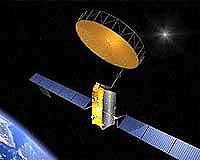
Constellations A joint European-Chinese satellite just went up on Vega-C, and the images it returns could change how scientists understand Earth’s magnetic shield By Space Daily Editorial Team · May 21, 2026
Constellations SpaceX’s IPO filing isn’t just about rockets: the prospectus points to an AI infrastructure pivot that could reshape how investors value the company By Space Daily Editorial Team · May 21, 2026
Constellations The satellite industry is betting on multi-orbit resilience, but a San Francisco startup says the real future may be switching between LEO networks instead By Space Daily Editorial Team · May 21, 2026
Constellations The FCC just gave Lynk and Anterix a small 900 MHz test from orbit, and it could redraw how utility networks reach remote America By Space Daily Editorial Team · May 21, 2026
Constellations The Hubble Space Telescope's main mirror was ground to the wrong shape by 2.2 micrometers, about one-fiftieth the width of a human hair, and the error was only caught after launch because the device used to verify the mirror on the ground had itself been built wrong By Space Daily Editorial Team · May 21, 2026
Constellations The Pioneer 10 and 11 spacecraft were found to be decelerating slightly more than gravity could explain, and for thirty years physicists wondered if Newton was wrong before realizing in 2012 that the answer was the probes' own waste heat gently pushing them backward at a billionth of Earth's gravity. By Space Daily Editorial Team · May 21, 2026
Constellations A comet drifted alone between the stars for up to 11 billion years before entering our solar system last year — and the water inside it is unlike anything scientists have ever seen in our own By Space Daily Editorial Team · May 21, 2026
Constellations The Mars helicopter Ingenuity completed 72 flights in an atmosphere less than one percent as dense as Earth's before rotor blade damage grounded it in 2024, and JPL had originally designed it for just five test flights, and the lessons from its overperformance are shaping NASA's next generation of Mars aircraft By Space Daily Editorial Team · May 20, 2026
Constellations Richard Nixon's White House had a speech prepared in case Neil Armstrong and Buzz Aldrin became stranded on the lunar surface, and the speech written by William Safire begins "Fate has ordained that the men who went to the moon to explore in peace will stay on the moon to rest in peace," and the contingency plan had NASA ending communications with the lunar module, leaving Michael Collins as the only Apollo 11 astronaut able to return to Earth. By Space Daily Editorial Team · May 20, 2026
Constellations Astronauts who walked on the moon reported that the dust tracked back into the lunar module smelled like spent gunpowder, and more than fifty years later scientists still cannot fully explain why, though the leading theory involves regolith that had sat undisturbed in vacuum for four billion years suddenly meeting oxygen and moisture inside the cabin for the first time. By Space Daily Editorial Team · May 20, 2026