
The evening sky in the last week of May 2026 is doing several things at once, none of which is, on close examination, particularly rare in isolation, but the combination of which produces a viewing window that the wider astronomy register has been characterizing as the most worthwhile evening sky configuration of the year. The events overlap each other across roughly a week. The events involve, among other things, three of the brightest objects in the solar system arranging themselves in a single visible line above the western horizon, and a full moon sliding past one of the brightest stars in the summer sky.
The cultural register of contemporary urban life has, on the available evidence, mostly forgotten how to attend to events of this kind. The events do not, in any single instance, require special equipment to observe. The events do, however, require the observer to do something the wider environment has not been calibrated to make easy, which is to step outside in the early evening, look at a specific portion of the sky, and pay attention for fifteen or twenty minutes. The doing-this is small. The doing-this is, on close examination, considerably more rewarding than the contemporary register would predict.
The planetary lineup in the western sky
The most visually striking of the events involves Venus, Jupiter, and Mercury arranging themselves in a single visible line above the western horizon shortly after sunset. The arrangement is most clearly visible on May 30 and May 31, 2026, and continues, with the planets shifting their positions slightly each evening, through the first week of June.
The feature worth attending to is the actual brightness of what is being arranged. According to the published astronomical observations for the period, Venus is currently the dominant object in the western evening sky, visible as early as 30 minutes after sunset and outshining every other starlike object in the night sky. Jupiter is the second-brightest object visible in the western sky during the period, located approximately 10 degrees to Venus’s upper left at the start of the week. Mercury, which is more difficult to observe because of its proximity to the sun, is currently visible approximately 10 degrees above the west-northwest horizon at 45 minutes after sunset, located roughly 15 degrees to Venus’s lower right.
The three planets span approximately 25 degrees across the western sky during the peak viewing window. The span is wide enough that the lineup is unambiguous to the naked eye. The lineup is also tightening through the period, as Venus moves toward Jupiter at a rate of approximately a degree per day. The two brighter planets will reach their closest approach on June 9, when they will be approximately 1.6 degrees apart, which is roughly three full moon diameters.
The feature that makes this particular lineup worth attending to, on close examination, is that the combination of Venus, Jupiter, and Mercury simultaneously visible as a lineup in the evening sky is not, by every available measure, a frequent event. The combination requires Mercury to be at the appropriate elongation from the sun to be visible in the evening sky, Venus and Jupiter to be in the same general region of the sky, and the geometry of all three relative to Earth to produce the visible arrangement. The combination of all of these conditions is, on the available astronomical records, going to be considerably less favorable for evening observation for several years after this particular window closes.
The Blue Moon and Antares
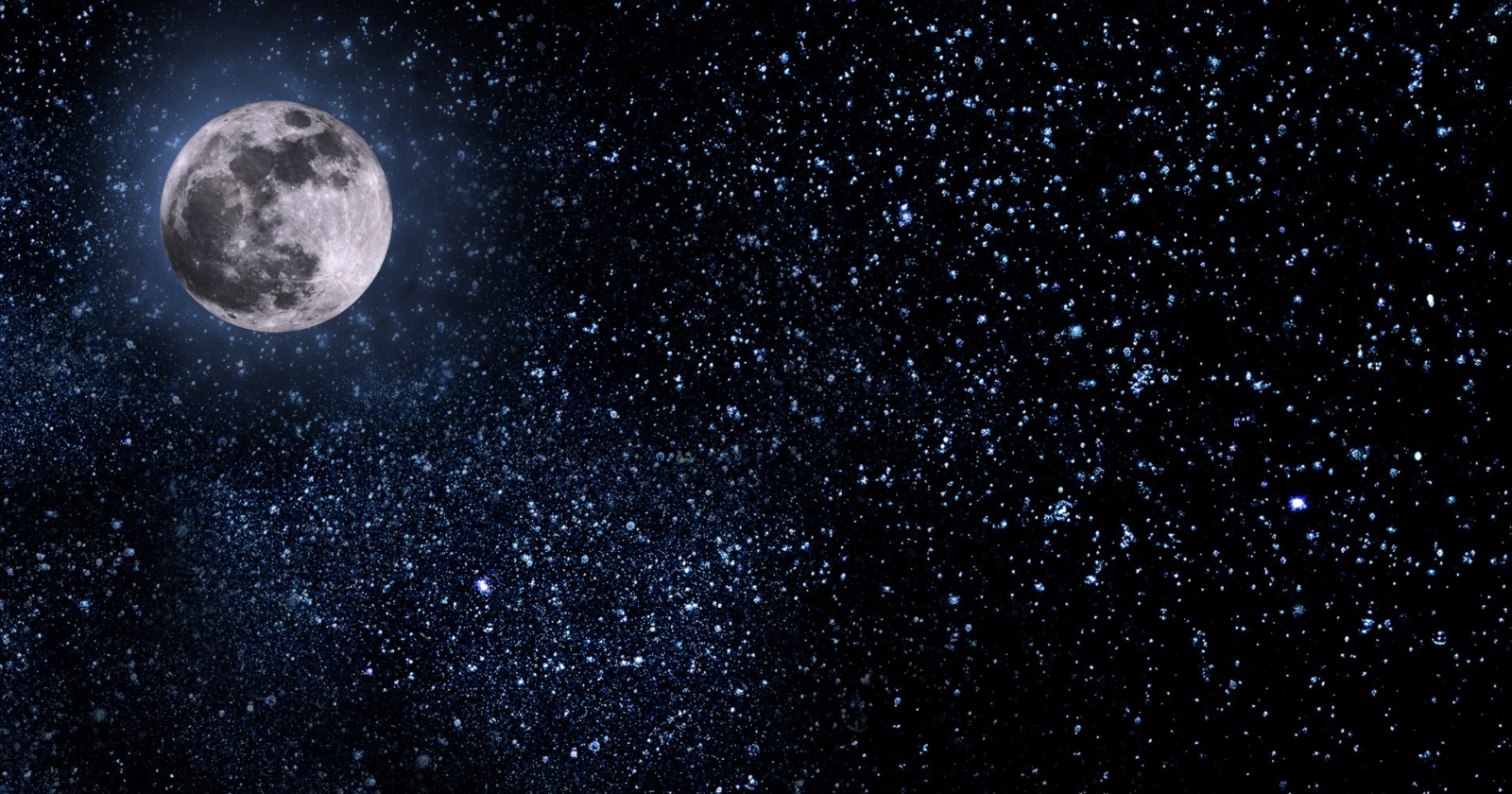
The second event of the week involves the full moon, which reaches its full phase on May 31, 2026, at 08:45 UTC. The full moon is, by the calendar-based definition of the term, a Blue Moon, because it is the second full moon to occur in May 2026, with the first having occurred on May 1.
The Blue Moon designation, on close examination, has considerably more cultural weight than astronomical significance. The published astronomy notes that the May 31 full moon is also the most distant full moon of 2026, making it a “Blue Micromoon” by the combined criteria. The micro-moon designation refers to the moon being at or near its farthest point from Earth in its orbit, which produces a slightly smaller apparent size than the average full moon. The size difference is, in practice, not easily detectable by the naked eye, but the designation does add a small additional layer to the cultural framing of the event.
What is more visually significant, on close examination, is what the Blue Moon does in the same period. The moon passes very close to Antares, the brightest star in the constellation Scorpius, on the night of May 30-31. The closest approach, with Antares less than 1 degree above the moon’s northern edge, occurs in the early morning hours of May 31. The pairing is, in some real way, the visually striking element of the event. Antares is a red supergiant, which means it has a distinctly reddish color visible to the naked eye, and the contrast between the bright white moon and the red star produces a particular kind of visual configuration that the wider register has not given particularly good language to.
The rarity of this particular pairing is also worth attending to. Antares is at opposition to the sun during the night of May 30-31, which means the star is approximately opposite the sun in Earth’s sky and is, accordingly, visible throughout the night. The combination of Antares at opposition and a full moon passing close to it is not, by every available measure, an annually recurring event.
What makes the whole week worth attending to
The combination of the planetary lineup in the western sky and the Blue Moon passing Antares in the southeastern sky produces, in any given evening of the last week of May, a particular kind of viewing opportunity that the wider register has not adequately characterized. The opportunity involves, more specifically, the fact that an observer can, in a single evening, walk outside at the right time and see several visually distinct astronomical events in different parts of the sky.
The walking-outside is the part the contemporary urban register has not been calibrated to. The urban environment has, by design, considerable light pollution that makes fainter objects difficult or impossible to observe. The events of this particular week are, however, bright enough that they remain visible from most urban environments. Venus is visible from essentially anywhere on Earth where the western horizon is not blocked. Jupiter is similarly visible. Mercury requires somewhat better conditions but is, in the current configuration, visible from most urban areas with a relatively clear western horizon. The Blue Moon is, by design, visible from anywhere the sky is not actively cloudy.
The cumulative effect is that the events of this week are, on close examination, accessible to virtually any adult who is willing to step outside at the appropriate time and look at the appropriate part of the sky. The accessibility is unusual. Most of the visually striking astronomical events of any given year require either special equipment, travel to dark-sky locations, or specific weather conditions to be observed. The current week’s events require none of these. They require, more modestly, the observer’s willingness to attend.
Why this matters, on close examination
The feature worth attending to, on close examination, is what events of this kind actually offer the wider urban population that has, by long design, mostly stopped attending to the sky.
The events offer, more specifically, a particular kind of small temporary recalibration of one’s sense of scale. The contemporary urban environment is calibrated to producing, in its inhabitants, a particular kind of cognitive enclosure in which the human world dominates the apparatus’s available attention. The enclosure is not, in itself, unhealthy. The enclosure is, however, one-dimensional. The enclosure does not, by design, leave room for the kind of attention that events of this scale, when one actually attends to them, produce.
What the events produce, in the observer who attends to them, is the small temporary recognition that the wider universe is, in fact, doing things, on its own timescales, more or less independently of whatever the contemporary urban environment is currently preoccupied with. The recognition is brief. The recognition is, however, on the available evidence of how it lands in the apparatus, different from what the urban environment ordinarily produces. The difference is, in some real way, what the wider observation of the sky has been offering humans for the entire history of the species. The contemporary register has, in some real way, mostly stopped accessing the offering. The events of this particular week are an unusually accessible opportunity to access it again.
The acknowledgment this article wants to leave
The last week of May 2026 and the first week of June produce, in the western and southeastern evening sky, a particular combination of astronomical events that the wider register has been characterizing as the most worthwhile evening sky configuration of the year. The events involve Venus, Jupiter, and Mercury arranging themselves in a single visible line above the western horizon shortly after sunset, with Venus and Jupiter approaching a close conjunction on June 9. The events also involve a Blue Moon passing very close to the red supergiant star Antares on the night of May 30-31.
The events are, by every available measure, visible to the naked eye from most urban environments. The events require no special equipment. The events require, more modestly, the observer’s willingness to step outside at the appropriate time and pay attention for fifteen or twenty minutes. The cumulative window of the events is approximately a week. The combination of events of this kind, in this particular configuration, is not going to be available again in the same form for several years.
What is at stake is not, on close examination, anything dramatic. What is at stake is, more modestly, the small temporary access to the fact that the wider universe is doing things, on its own timescales, that are visible to anyone who is willing to look up. The looking-up is small. The looking-up is, in some real way, what most of the rewarding contact with the wider cosmos has been available to the species through, for the entire history of the species. The current week is a particularly accessible week to do the looking-up.
