Space, science, and the human mind. Since 1995.
Space Daily Editorial Team
Editorial Team

Space Daily Editorial Team

Editorial Team

The Space Daily Editorial Team produces content across our two editorial pillars: space industry news and Mind & Meaning. We cover launches, missions, satellites, defense, and the technology of getting humans to space, alongside the psychology of ambition, isolation, and meaning under extremes. Articles reflect our team's collective editorial process, source verification, drafting, technical review, and editing, rather than a single writer's work. Space Daily takes editorial responsibility for content under this byline. For more on how we work, see our editorial policy.

Mind & Meaning

People in the longest living populations on Earth tend to eat roughly four to five times as many beans as the average Westerner — black beans in Nicoya, fava beans and chickpeas in Sardinia and Ikaria, soybeans in Okinawa — making beans the single most consistent dietary feature across communities where reaching 100 is not unusual, in a finding that has held up across decades of longevity research

If you sat down to eat with a 95-year-old Sardinian shepherd, an 87-year-old Ikarian widow, a 92-year-old Okinawan farmer, and a 100-year-old Costa Rican grandmother all on the same day, the meals would look completely different from one another.

Human Behaviour

Approximately 10,000 years ago, teenagers in what is now western Sweden chewed wads of birch bark pitch and spat them out, and the saliva preserved in the wads contained enough human and microbial DNA that scientists have since sequenced the chewers’ complete genomes, identified the food they had eaten that day, and detected the bacterial signature of their gum disease.

The site is called Huseby Klev. It sits on the island of Orust on the western coast of Sweden, about an hour's drive north of Gothenburg.

Science

In 1994, a park ranger rappelling into a sandstone canyon 150 kilometres from Sydney found a living stand of trees known until then only from 90-million-year-old fossils and presumed long extinct, and fewer than 100 wild Wollemi pines still exist in a grove whose coordinates the Australian government keeps classified.

In September 1994, a New South Wales National Parks ranger named David Noble lowered himself on a rope into a narrow sandstone gorge inside Wollemi National…

Human Behaviour

An email with the subject line “ILOVEYOU” infected 45 million computers in 24 hours after it was released in May 2000 — disabling email systems at the Pentagon, the CIA, and most of the world’s largest corporations — and the 23-year-old Filipino college dropout who wrote it now runs a phone repair booth in Manila, never prosecuted because cybercrime was not yet illegal in the Philippines

You receive an email from someone you know. The subject line reads, simply, "ILOVEYOU.

Mars Daily

Breathable oxygen has now been produced on the surface of Mars — generated between 2021 and 2023 by a NASA experiment about the size of a toaster, riding inside the Perseverance rover — in the first time humans have ever made air on another planet, opening the door to bringing astronauts safely home one day

Sometime around midday on April 20, 2021, a microwave-sized device on Mars finished its first hour of work and reported back to its operators at the Massachusetts Institute of Technology.

Mind & Meaning

In 1932, the Australian government deployed soldiers with two machine guns and 10,000 rounds of ammunition to wage war on roughly 20,000 emus destroying wheat crops in Western Australia — and after weeks of campaign, the soldiers had killed only a few hundred birds, in the only war on record in which birds officially won

It is one of the more difficult sentences to write with a straight face in modern history: in 1932, Australia declared war on a flock of large flightless birds, and the birds won.

Constellations

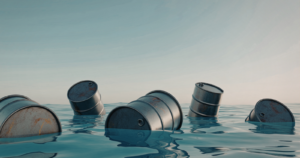
Sea Launch died in 2014 because the economics didn’t work — but a Florida startup founded by two former Crowley Maritime executives just convinced Lockheed Martin and Firefly that the rise of low Earth orbit constellations and a Pentagon afraid of fixed targets have quietly inverted that math

SpaceX alone flew more than 130 Falcon missions in 2024, and with Cape Canaveral, Vandenberg and Wallops booked through the decade, American launch capacity is hitting a wall.

Constellations

In September 2022 a NASA spacecraft deliberately crashed into a harmless asteroid 11 million kilometres away and shifted its orbit by about 32 minutes — the first time humans had ever moved another world, the moment planetary defence stopped being theory and became something we have actually done.

On 26 September 2022, NASA's Double Asteroid Redirection Test spacecraft struck Dimorphos, a roughly 150-metre moonlet orbiting the larger asteroid Didymos, about 11 million kilometres from Earth.