
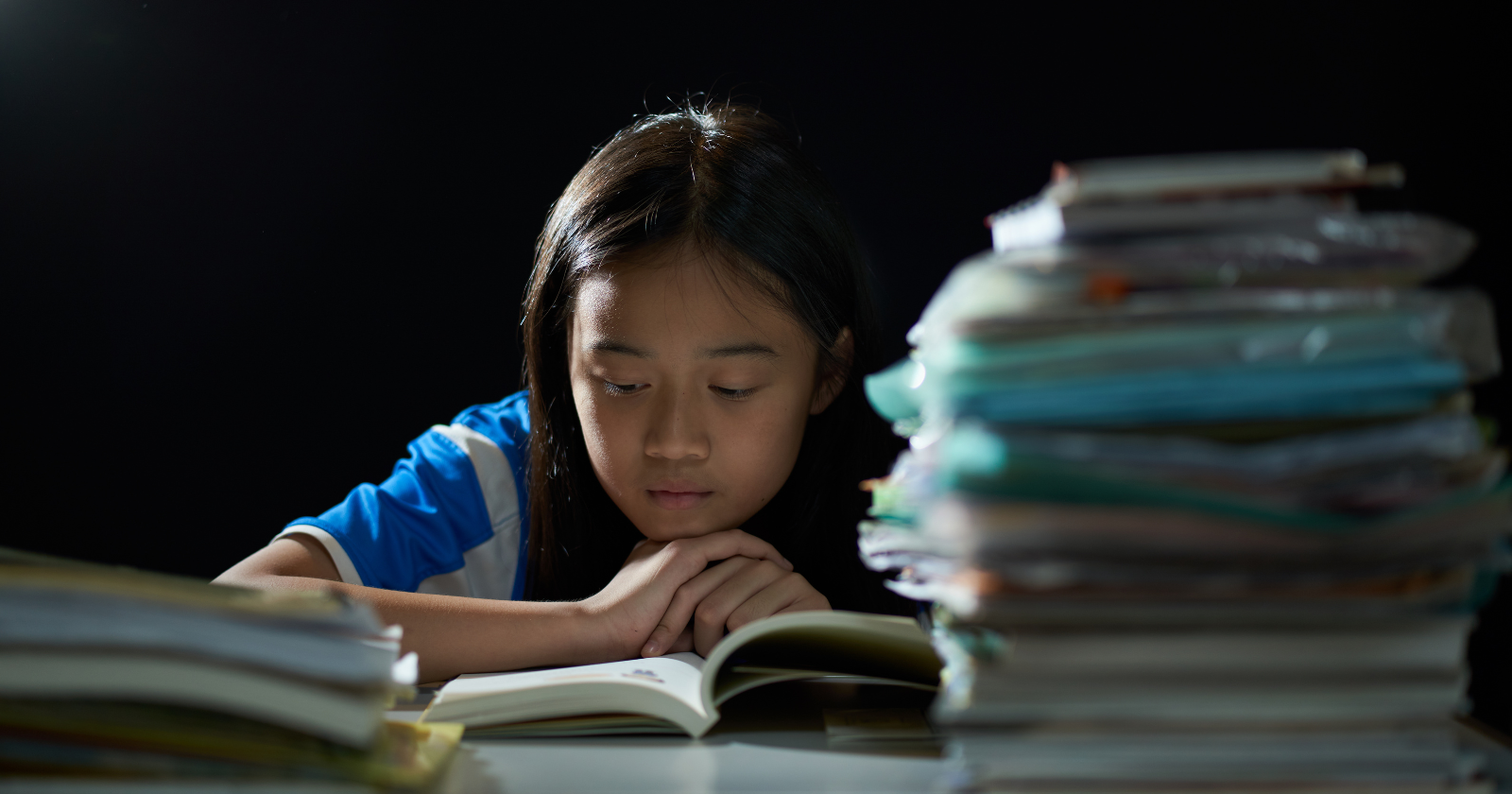
In one of Seoul’s wealthiest districts, six government employees climb into a vehicle and set out on patrol. They are looking for children still studying after 10 p.m., in tutoring academies that are supposed to have closed. The inspectors’ job is to walk in, interrupt the lesson, and send the kids home.
That scene opens Amanda Ripley’s 2011 report for Time, and it is one of the stranger things we have read about education policy. Ripley described the patrol’s job as finding children studying after 10 p.m. “And stop them.”
Once you understand why, it starts looking like a country trying, and mostly failing, to switch off a machine it built itself.
What the night patrol was actually looking for
The target was never the children. It was the hagwons, South Korea’s for-profit cram schools, which in Seoul are not allowed to teach past a 10 p.m. curfew. The patrol Ripley rode along with worked out of the Gangnam district office of education and moved through Daechi-dong, a neighbourhood thick with these academies.
The patrol leader, a midlevel bureaucrat named Cha Byoung-chul, told Ripley how he reassured students he found mid-lesson. “It’s the hagwon that’s in violation, not you. You can go home.” He also gave academies a grace period. “We don’t leave at 10 p.m. sharp,” he explained. “We want to give them 20 minutes or so. That way, there are no excuses.”
Ripley called one scene “a disturbing scene, sort of like a sweatshop for children’s brains.” She reported that a typical student’s academic day began at 8 a.m. and ended from 10 p.m. to 1 a.m. In 2010, about 74% of all students were getting some form of private after-school instruction, at an average yearly cost of roughly $2,600 per child.
Why a country pays people to stop children studying
The policy exists because the studying had stopped looking like simple diligence and started looking like harm: exhausted teenagers, families under financial pressure, and a growing gap between children whose parents could buy more instruction and those whose parents could not.
Lee Beom, a former cram-school instructor who worked on reform at Seoul’s metropolitan office of education, put the pressure in one line. “Where you attend university haunts you for the rest of your life.” That is one insider’s reading rather than an iron law, but it captures the logic. If university placement shadows a person’s career, studying until 1 a.m. can look like a rational bet.
The ‘hagparazzi’ and how deep the demand runs
The curfew was only half the enforcement machinery. In 2009, the Education Ministry introduced a system that paid citizens for reporting illegal hagwon practices. The freelance informants earned a nickname: hagparazzi, a mash-up of hagwon and paparazzi.
The reward scheme took off fast. Within about a month, payouts had topped 100 million won after more than 2,050 reports; 311 had earned cash rewards. Some tipsters later used hidden cameras to gather evidence. Officials were effectively recruiting the public into enforcement.
The arms-race logic that runs past midnight
What makes late-night studying so hard to legislate away is that no family is choosing it alone. Each one is responding to what everyone else is doing. Han Yoon-hee, an English teacher at a high school in Ilsan, described the anxiety to Ripley. Parents “get very nervous when they don’t take classes at night. They know other students are taking classes. They have to compete with each other.”
That is the trap. If your child’s rivals are all studying two extra hours, the safe move is to match them, and everyone resets the baseline higher. A curfew, in theory, forces everyone to stop at once. In practice, the demand leaks elsewhere. Andrew Kim, a Megastudy instructor who told Time he had earned $4 million in a year, put it bluntly: “The tougher the measures,” he said, “the more resilient hagwons become.” Ripley reported that some academies responded by putting more lessons online.
What a curfew can and cannot touch
Our read is that the crackdown was fighting a symptom with limited leverage over the cause. On the night Ripley followed the patrol, the inspectors found roughly 40 teenagers, in a country with about four million students. Six inspectors, one rainy night, forty kids sent home.
And the demand did not disappear. A 2023 Time follow-up reported that hagwons were attended by some 80% of Korean students, and that Seoul alone had more than 24,000 of them, triple the number of convenience stores in the city.
In July 2026, the maximum reward for reporting an unregistered academy was raised from 200,000 won to 2 million won; teaching-hours violations can now earn up to 1 million won.
We find it hard to believe an obsession can be regulated away while the incentive feeding it remains intact. The studying is a response to a belief, widely held and not entirely wrong, that exam results and university placement can shape the course of a life. As long as that belief holds, families will keep looking for the next hour of tutoring. The night patrols are less a solution than a measure of how much pressure the system generates, and how little a six-person patrol can do against it.
