
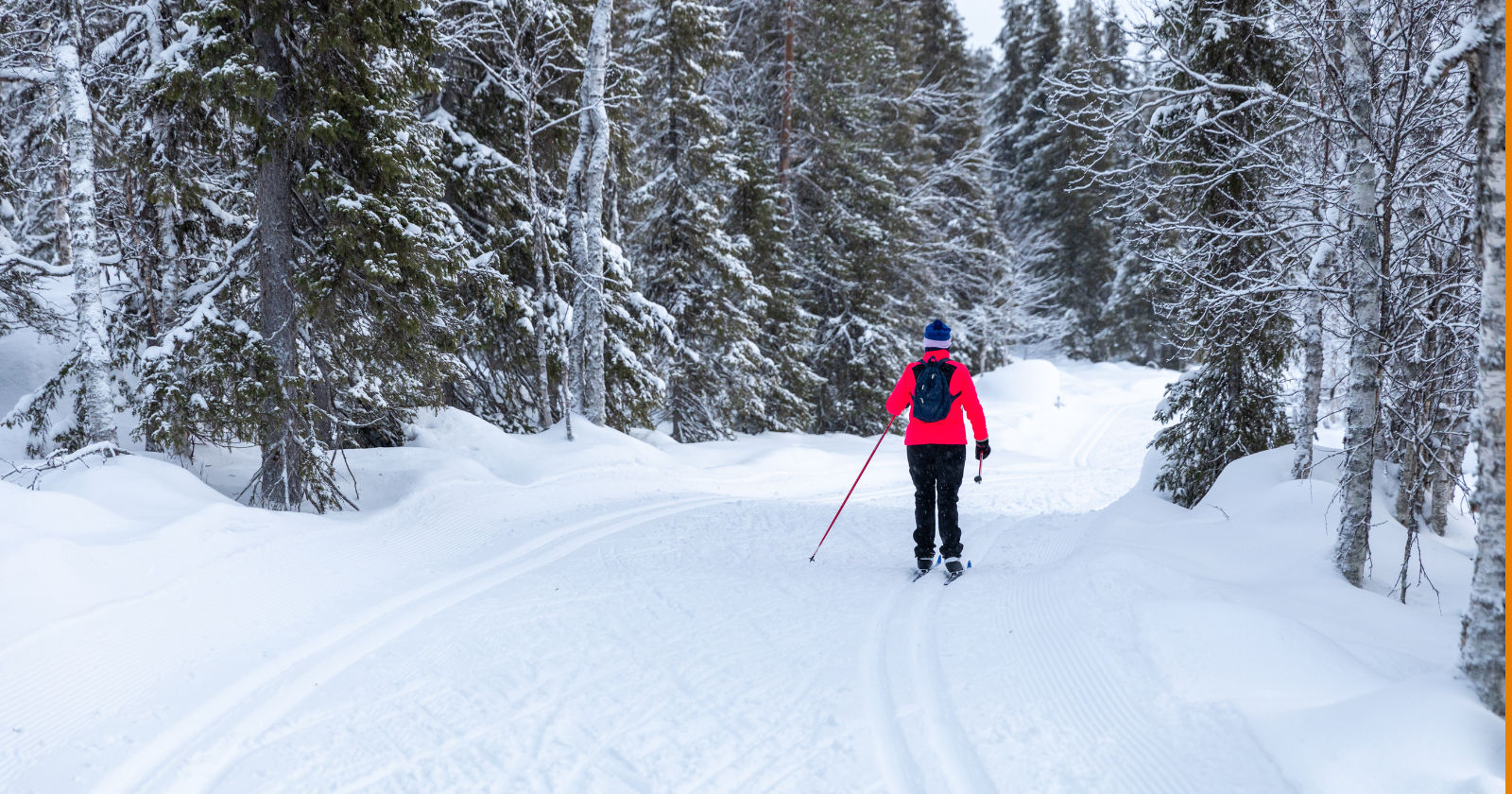
In most of the world, walking onto land you don’t own can be trespassing. Step onto someone’s forest to pick mushrooms or pitch a tent, and you may get moved along, or worse.
In Finland the default often runs the other way. The forest in front of you may belong to someone else, and you are still likely allowed to be in it.
That flip has a name: jokamiehenoikeus, traditionally translated as everyman’s right and increasingly as everyone’s rights. A country that lets strangers roam across land it has never stopped treating as private property. The Finnish Ministry of the Environment puts the principle plainly. It guarantees “everyone staying in Finland the basic right to roam freely in the countryside, without the need to obtain permission, no matter who owns or occupies the land.”
What the right actually covers
The list is longer than you might expect. Walking, skiing, cycling, riding a horse, swimming, boating, picking berries and mushrooms, angling with a hook and line, and camping temporarily on uncultivated ground. None of it requires you to ask the landowner, and these basic rights cost nothing, though restrictions apply in some protected areas and waters. You don’t even need to know who owns the land, because whether you’re allowed to be there generally doesn’t depend on the answer.
Much of the forest you’d want to walk across is private. Forest covers more than 75 percent of Finland, and private individuals and families own about 60 percent of the productive forest land. There are around 630,000 forest owners in the country. So this isn’t a scheme built only on public parks and state land. It runs straight across the property of hundreds of thousands of ordinary owners.
Access here isn’t carved out of the small slice of land the state happens to own. It’s laid over the top of private ownership itself, and the two coexist without one cancelling the other.
The one condition holding it together
For a right this broad, the basic rule is short. Whatever you do, you don’t cause harm or disturbance. The ministry states the limit in a single line: “The use of the right may not cause damage or disturbance.” Leave the place as you found it, don’t bother the people or the wildlife, and the door stays open.
It helps that this rests on custom as much as law. The ministry calls everyman’s right “a generally accepted custom,” and says its legal basis is spread across several laws rather than packed into one. The Penal Code, the Water Act and the Nature Conservation Act are among the laws marking its boundaries. The freedom is defined partly by what you’re allowed to do and partly by what you must not: cause more than minor harm or disturbance.
Where the line actually sits
The boundary isn’t vague once you look closely. You keep clear of people’s yards and out of cultivated fields. You don’t damage trees or crops.
Camping is fine, but only temporarily, not as a permanent occupation. Metsähallitus describes the right as allowing people to “stay and set up camp temporarily in areas where access is otherwise allowed.” Stay for longer or risk causing disturbance and you’re expected to ask the landowner. The right gives you a short stay under the trees, not a claim on the ground.
Fishing splits the same way. Simple hook-and-line angling with one rod and ice fishing are generally free, although restrictions apply in some waters. Lure fishing with one rod normally requires a fisheries management fee for anglers aged 18–69, while fishing with multiple rods or traps can also require the water owner’s permission. Metsähallitus sets out the distinction here.
Hunting sits outside everyman’s right and requires the appropriate permissions. Motors are simply out. Everyone’s rights do not give you the right to “drive a motor vehicle off the road.” You can cross the land under your own power. You can’t tear across it on a snowmobile.
That distinction matters in practice. When the ministry looked at what actually goes wrong, the complaints weren’t about the right itself but about people overstepping it. In a 2006 survey it commissioned, involving 362 questionnaires and a 68 percent response rate, the largest reported problems were “unpermitted or wild off-road driving, especially the use of snowmobiles, littering and letting dogs off the leash.” Each of those crosses the boundaries of the right. The system doesn’t fail. People occasionally step past its edge.
What the arrangement assumes
The custom predates any single modern statute defining it, and today its legal boundaries are drawn through several different laws rather than one comprehensive everyman’s-right act.
What stands out is how well it seemed to hold in the ministry’s survey. The 2006 study found near-universal agreement among the responding landowners, outdoor users and authorities that everyman’s right worked well, with only one percent rating it as working poorly. This is a single survey from one year, not a permanent verdict, and it reflects the views of the people who answered rather than the whole country. Still, one percent rating a right that lets strangers walk across privately owned forest as working poorly is a number that earns a second look.
The whole arrangement quietly assumes something unusual. It doesn’t ask owners to give up their land, and it doesn’t ask walkers to prove they belong there. It asks something harder and lighter at once: that everyone act as though the land is worth not damaging, whoever holds the deed. Ownership stays put. Access sits on top of it. The two coexist through a shared expectation that people use the countryside without causing damage or disturbance.
