
The strange thing about the biggest engineering promise being made in northern Europe right now is that it does not really hinge on the steel, the concrete, or the granite. It hinges on how fast a population of microbes, living in near-total darkness half a kilometre down, can turn one chemical into another.
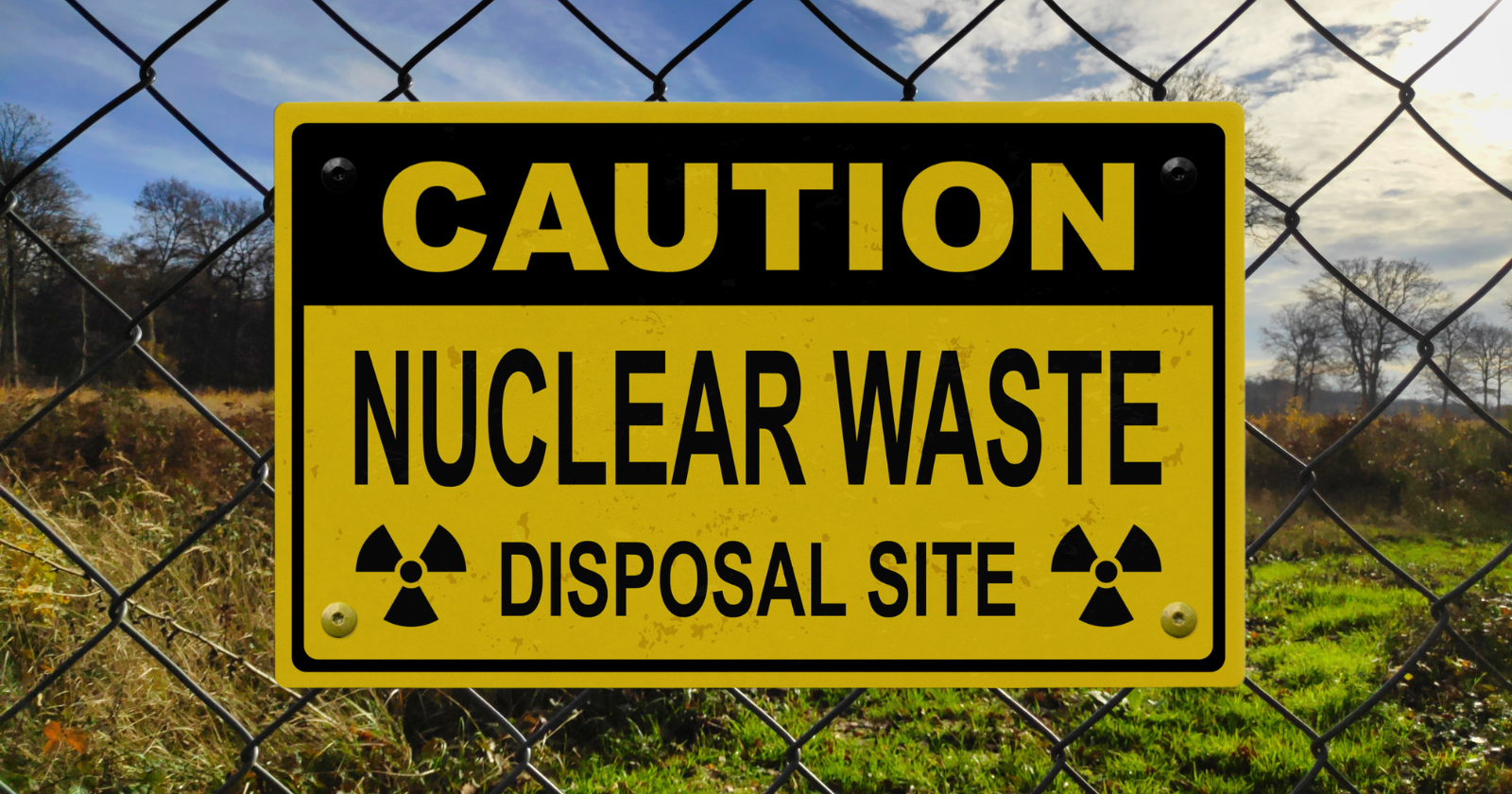
Finland and Sweden are both burying spent nuclear fuel for good, using a Swedish method called KBS-3. It wraps three barriers around the waste: a copper canister with a cast-iron insert inside it, a thick jacket of packed clay called bentonite, and then the bedrock itself.
In Finland the repository is Onkalo, about 430 metres down. In Sweden it sits near Forsmark at roughly 500 metres. The copper shell around each canister is 50 mm thick, five centimetres of it. The design is supposed to keep the waste sealed off for at least 100,000 years.
We are not corrosion scientists, microbiologists, or nuclear engineers. What follows is reading and reflection on the published research, not a verdict on whether these repositories are safe. The studies cited are mostly lab experiments and modeled projections, and a lab result about clay in a test cell is not a guarantee about a specific canister in the ground 40,000 years from now.
What 100,000 years actually asks of a metal box
It is hard to hold the number in your head. These canisters need to outlast everything humans have ever built, several times over, with no maintenance and no one watching.
The clever part of the design is that copper is not being asked to do the impossible. In pure water with no oxygen and no aggressive chemistry, it just sits there. The catch is that the ground is not chemically dead. So the real question was never “is copper strong?” It was “what, specifically, in this rock and this water can attack copper over geological time?” The answer comes down to a surprisingly short list.
Why the enemy is sulphide, not oxygen
When the canisters go into the ground, there is a short window, perhaps a few years to a few decades, where trapped oxygen can corrode the copper a little. Then the oxygen gets used up and never comes back. From that point on the canister lives in an oxygen-free world for essentially its entire life. By one estimate, a KBS-3 canister spends more than 99.99% of its expected service life in these oxygen-free conditions.
That flips the corrosion problem on its head. Oxygen, the thing that rusts most metals, barely matters here. The agent that matters in an oxygen-free repository is sulphide, and sulphide is not just sitting in the rock waiting. Most of it has to be made by living things.
Deep groundwater carries dissolved sulphate. Sulphate on its own leaves copper alone. But a group of microbes called sulphate-reducing bacteria breathe sulphate the way we breathe oxygen, and their waste product is sulphide. That is the chemical that can actually corrode the copper. So the load-bearing question in a 100,000-year safety case turns out to be biological: how busy are the bacteria, and how much of their sulphide reaches the metal.
Meet the bacteria, and what they need
Sulphate-reducing bacteria are ancient, widespread, and perfectly at home in deep oxygen-free groundwater. Give them dissolved sulphate, an energy source, and liquid water they can move around in, and they will make sulphide. That this kind of microbe-driven corrosion is real, and can move fast in the right conditions, is not hypothetical. An in-ground study in packed bentonite soaked with groundwater at repository depth measured active sulphide production by bacteria, with the rate dropping sharply as the clay was packed to higher densities.
So why is anyone confident the canisters last? Because the whole design is arranged to deny the bacteria the one thing they need most: room to work and a clear path to the metal. That is the job of the clay.
The bentonite bottleneck
The bentonite around each canister is not passive packing material. When it gets wet it swells into a dense, gel-like barrier. Two things happen at high density. The pores get so small and the water so tightly held that bacteria struggle to live and move. And sulphide can no longer flow freely; it can only creep through slowly.
A 2000 lab study led by Karsten Pedersen and colleagues tested exactly this. They reported that “sulphate-reducing bacteria were found to be active, reducing sulphate at the lowest density studied, 1.5 g cm-3, but sulphate reduction activity ceased at higher densities.” The paper’s own conclusion is carefully hedged: at full repository packing, it says the bacteria will most probably not be able to induce corrosion. That is one study, on Swedish KBS-3 clay, and it reads as suggestive rather than final. But it points at something the whole safety case leans on: squeeze the clay hard enough and the microbial factory inside it may largely shut down.
That still leaves sulphide arriving from the surrounding groundwater. Here the argument shifts from biology to plumbing. A 2017 review by Fraser King and colleagues argues that the long-term corrosion rate is set not by how eagerly copper reacts, but by how slowly sulphide can travel to its surface through the clay. As long as the sulphide supply stays low, the corrosion is throttled to a crawl.
Put those numbers into a 100,000-year projection and the developers reach a comfortable conclusion. SKB’s own review estimates that, counting the sulphide already in the deposition holes plus what can seep in from groundwater, the copper corrosion depth after 100,000 years comes to less than 5 mm. Against a 50 mm wall, that leaves a large margin.
Closing thoughts
So the summary is a split one. That copper resists corrosion in an oxygen-free repository is well supported. That dense bentonite slows the bacteria and throttles the sulphide is supported by lab work, with the caveat that it is lab work. That the resulting rate holds steady for 100,000 years is a modeled projection, reasonable and carefully argued, but a projection all the same. The five centimetres of copper is the easy part. The hard part is a number about how much a colony of bacteria, buried in clay half a kilometre underground, can do over a span of time longer than civilisation.
