
The phrase “cold welding in space” is usually followed by a dramatic image: an astronaut lets two metal tools touch, and they instantly become one impossible object. That is not how ordinary spacecraft hardware behaves.
The underlying phenomenon is real. Two compatible metal surfaces can form a solid-state joint without melting, solder or glue. But the surfaces must be extraordinarily clean, their atoms must come into intimate contact, and enough load or motion must create a meaningful contact area. Vacuum helps preserve those conditions. It does not magically create them.
That distinction turns cold welding from a piece of space folklore into a useful lesson about what a metal surface actually is. What looks like bare aluminium or steel is normally metal hidden beneath an invisible chemical skin.
Every ordinary metal surface arrives with a barrier
Fresh metal is highly reactive. Aluminium grows a tenacious oxide almost as soon as it encounters oxygen. Other engineering metals and alloys develop their own oxides, sulphides or adsorbed films. Water vapour, hydrocarbons from the air, machining fluids and fingerprints add further contamination.
These layers may be only a few atoms or nanometres thick, yet they decide what happens when parts touch. The oxide on one surface meets the oxide on the other. The underlying metal atoms remain separated, so no continuous metallic bond forms across the boundary.
NASA experiments found that even one or two monolayers of coverage can interrupt metal-to-metal bonding. A NASA cold-welding technique using ion-beam cleaning was designed around precisely this problem: removing the oxide before pressing aluminium surfaces together.
This is the first reason a wrench does not normally weld itself to a handrail during a spacewalk. Both objects launched with surface films already present. A light touch between two rough, contaminated surfaces does not expose enough clean metal or produce enough real contact area.
At atomic distance, the old boundary stops mattering
Metallic bonding is not a row of tiny hooks. Positive atomic cores are held together by electrons that are mobile across the metal lattice. Bring two chemically clean, compatible metal surfaces to atomic separation and the electrons can extend across the interface. The atoms have no memory of which manufactured part they occupied a moment earlier.
“Intimate contact” is doing a great deal of work in that sentence. No machined surface is perfectly flat. Under a microscope it is a landscape of ridges and peaks called asperities. When two apparently flat pieces meet, only a small fraction of their visible area may actually touch.
Pressure, impact or sliding deforms those high points. It can crack and displace their surface films, squeeze fresh metal into the interface and increase the real area of contact. Microscopic metallic junctions then form. Continued movement may strengthen them, tear them apart or pull material from one surface onto the other.
The result is a spectrum, not a switch. At one end are tiny adhesive junctions that merely raise friction. At the other is enough bonded area to seize a mechanism or create a deliberate solid-state weld. Material pairing, crystal structure, mutual solubility, temperature, pressure, roughness, time and sliding history all influence where an interface lands on that spectrum.
Vacuum preserves a clean surface; it does not necessarily produce one
On Earth, a patch of exposed metal quickly encounters oxygen, water vapour and organic molecules. Its protective film begins rebuilding. In the high vacuum of space, the supply of those molecules is drastically reduced. Once rubbing or another process uncovers fresh metal, the clean patch may remain available for bonding much longer.
But simply leaving a finished component in vacuum does not reliably strip it bare. A detailed NASA assessment of on-orbit cold welding concluded that metal surfaces exposed only to the space environment were unlikely to become clean enough for cold welding within a practical mission lifetime unless mechanical or electrical effects accelerated film removal.
Spacecraft also outgas. Polymers, adhesives and lubricants release molecules that may settle elsewhere, adding contamination rather than removing it. In low Earth orbit, atomic oxygen, ultraviolet light, shadowing and local geometry further complicate what any particular surface experiences.
An early 14-month orbital friction experiment moved 16 representative spacecraft material couples against each other. Its central result was that surface-to-surface sliding controlled the friction behaviour, while passive time in vacuum did not. The dangerous recipe is therefore not “metal plus space.” It is exposed metal plus sufficient pressure and relative motion, with vacuum preventing fast repair of the protective film.
The real danger lives inside moving mechanisms
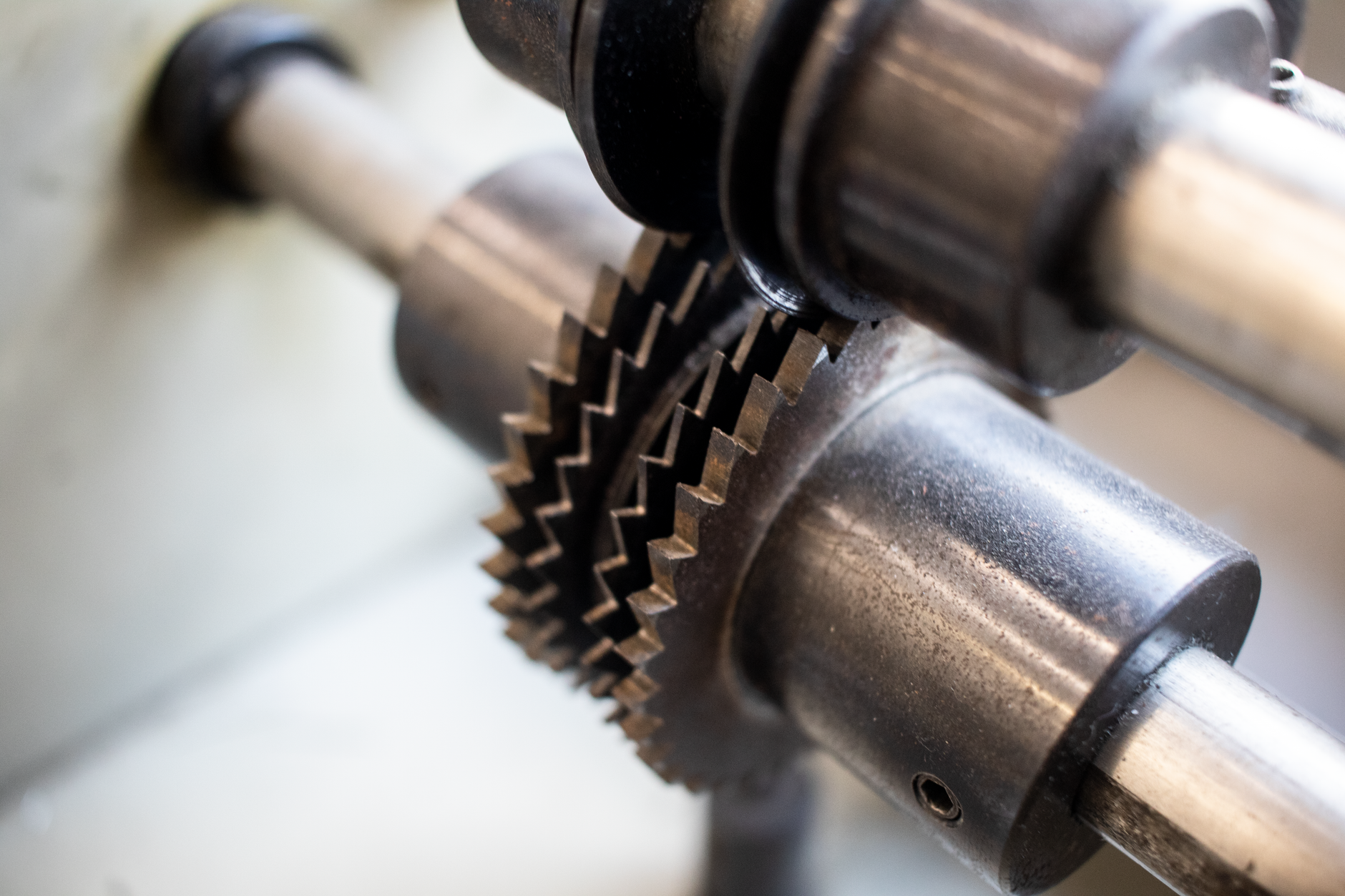
The interfaces that concern engineers are bearings, gears, hinges, latches, threaded fasteners, slip joints, electrical contacts and docking or separation hardware. These parts carry loads and move, exactly what is needed to rupture films and press asperities together.
Some movement is barely visible. Launch vibration, thermal expansion and changing loads can produce fretting, repeated oscillations over microscopic distances. Each pass can abrade a little more oxide or lubricant. A small metallic junction forms, tears during the next pass and leaves a rougher surface that is even more likely to catch.
This is where cold welding overlaps with adhesive wear, galling, sticking and stiction. ESA’s technical guide to separable contacts in vacuum focuses specifically on impact and fretting because a complete, permanent weld is not the only failure that matters. A small bonded patch may be enough to push the release force beyond what a spring, motor or explosive bolt can deliver.
The consequences depend on the mechanism. A stuck cover can blind an instrument. A solar array hinge that refuses to deploy can starve a spacecraft of power. A seized pointing assembly can make a healthy antenna useless. Even large, serviceable systems face ordinary wear: an earlier SpaceDaily report followed the planned replacement of a worn Canadarm2 wrist joint outside the International Space Station.
Engineers win by keeping clean metals from meeting
Cold-welding prevention begins with the material pair. Identical metals can be highly susceptible, but some dissimilar pairs also adhere if their crystal structures, atomic sizes or mutual solubility favour bonding. Designers choose combinations with poor affinity, or interrupt the path entirely with ceramics, polymers and self-lubricating composites.
They also add controlled barriers. In its account of the science of spacecraft friction, ESA describes low-vapour-pressure oils and greases, very thin coatings of lead or molybdenum disulphide, and self-lubricating bearings. Ordinary terrestrial lubricants may evaporate, creep away or contaminate nearby optics in vacuum, so the formulation and containment matter as much as the presence of a lubricant.
Geometry supplies another layer of protection. Engineers limit contact stress, control surface finish and clearances, prevent unwanted sliding, and make sure a release mechanism has force margin. They test mechanisms in thermal-vacuum chambers through representative vibration, temperature and life cycles. A hinge that must open once after ten years needs a different test from a wheel that turns continuously.
Cold welding is also not unique to outer space. Manufacturers can pressure-weld metals on Earth by deforming them enough to break oxides and push clean material together. Vacuum simply makes it easier for a newly cleaned interface to stay clean. The phenomenon is ordinary solid-state physics operating under unusually unforgiving conditions.
The hazard is real, but the famous catastrophe is missing
Cold welding is often offered as a ready-made explanation whenever spacecraft hardware sticks. NASA’s historical review found no documented significant on-orbit cold-welding event on a United States spacecraft. Several mechanisms had seized because of fretting, galling or lubricant loss, while a few intentional orbital experiments seized material pairs selected and cleaned precisely because they were prone to weld.
Another NASA review of Long Duration Exposure Facility hardware similarly reported no documented cold-welding-related failures, while still recommending precautions. This is not a contradiction. Spaceflight engineering is full of hazards that rarely become accidents because designers take them seriously before launch.
A static interface that was assembled on Earth, did not weld there and remains undisturbed in orbit is unlikely to wake up and fuse. A rubbing interface that loses its coating is a different proposition. The distinction explains both why cold welding is physically remarkable and why astronauts can handle metal equipment without leaving every tool permanently attached to the spacecraft.
Vacuum does not command two pieces of metal to become one. It simply stops the universe from quickly putting a protective layer back between them.
