

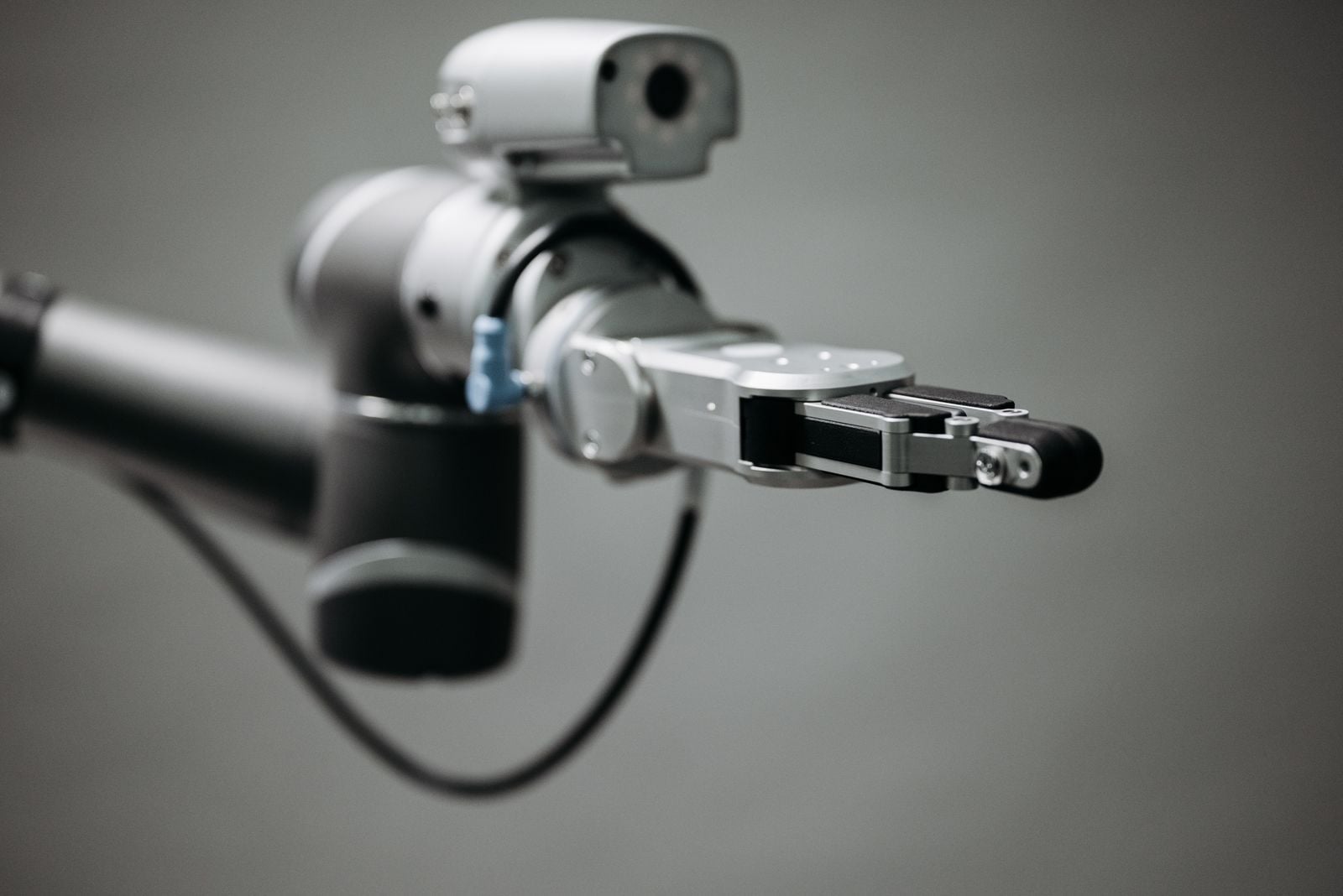
Canadarm2 has been bolted to the outside of the International Space Station since April 2001, working in shifts measured in years rather than hours. It catches arriving cargo ships, ferries spacewalking astronauts around the truss, and inspects parts of the station that no human eye reaches without it. On the morning of May 27, 2026, during routine operations, one of its wrist joints drew elevated motor current and refused to move as commanded. The arm has been parked in a stable configuration ever since.
On Tuesday, June 30, NASA flight engineers Chris Williams and Jessica Meir will exit the station’s Quest airlock and spend an estimated six and a half hours outside, replacing the failed wrist joint with a spare already pre-positioned on the station’s truss for exactly this kind of morning. NASA’s announcement notes it will be the 280th spacewalk in support of ISS assembly, maintenance, and upgrades, the second for Williams and the fifth for Meir.
What broke on May 27
The failure mode was specific. NASA’s status update describes the system as having “demonstrated an elevated motor current in a wrist joint” with arm motion that “did not occur as expected.” Translated out of agency phrasing: the joint tried to move, drew more power than it should have, and stopped. The arm itself was undamaged. One discrete component, one of seven motorized joints, had aged into the failure profile its designers had anticipated.
NASA worked with the Canadian Space Agency, which funds Canadarm2 and supports it through MDA Space in Brampton, Ontario, to characterize the issue. They concluded that the spare on station would have to be installed by hand, in suits, outside the airlock. Standard operations using the arm were paused. The arm has remained in its safe configuration for over a month.
That matters because Canadarm2 is not optional infrastructure. It captures Northrop Grumman’s Cygnus cargo vehicles, which arrive without the autonomous docking capability of SpaceX’s Dragon. It moves external payloads. It supports a meaningful share of the outside-the-station maintenance that keeps the rest of the orbiting laboratory running. Until June 30, that capacity is offline.
A machine engineered to be repaired
The arm is 17 meters long, weighs about 1,500 kilograms, and has been operating for more than a decade past its original design life. It has kept working because the engineers who built it assumed, correctly, that things would break.
Canadarm2 uses identical Latching End Effectors at both ends, which lets it walk hand-over-hand along the outside of the station between power data grapple fixtures. Per the Canadian Space Agency’s specifications, individual segments — the wrist joints, the elbow joint, the end effectors — can be removed and replaced in space. The arm has been designed to be repaired piece by piece by people in suits, indefinitely, because nothing is bringing it back to Earth.
It is not the first time. In June 2002, spacewalking astronauts replaced one of the arm’s wrist roll joints. Across two spacewalks in late 2017 and early 2018, the crew swapped both Latching End Effectors after they showed signs of wear. The June 30 procedure follows a maintenance pattern that has been baked into the program since launch.
The spare wrist joint was waiting on the truss for this. Canadarm2 has lived in orbit alongside its replacement parts for years, because the Canadian Space Agency built spare inventory into the original architecture and kept replenishing it across cargo flights. The expectation is that the arm will keep operating through the station’s planned end-of-life around 2030.
Williams and Meir
Williams launched to the station in November 2025 aboard Soyuz MS-28 with cosmonauts Sergey Kud-Sverchkov and Sergey Mikaev for an eight-month research increment. He has been on station roughly seven months. June 30 will be his second career spacewalk.
Meir has more time outside. On October 18, 2019, she and Christina Koch carried out the first all-woman spacewalk in history, a seven-hour-and-seventeen-minute job replacing a failed battery charge-discharge unit on the same station’s power system. She and Koch did two more all-female spacewalks together in January 2020. June 30 will be Meir’s fifth EVA.
ESA flight engineer Sophie Adenot and NASA’s Jack Hathaway will support from inside the station. Hathaway will operate Canadarm2 to position the work site and crew during the repair, which is its own kind of irony — using the arm to fix the arm, one joint at a time.
What Canada’s arm became on Earth
Canadarm2 is more than hardware. It is Canada’s contribution to the ISS partnership, the in-kind payment that buys CSA astronaut seats and Canadian science slots on the station. The Canadian astronaut Jeremy Hansen flew around the Moon on Artemis II in April 2026 partly because of work paid for by this arm, and Joshua Kutryk is currently in the launch flow for a long-duration ISS mission paid for by the same program.
Ground controllers at CSA headquarters in Saint-Hubert, Quebec, run a meaningful share of Canadarm2 and Dextre operations from the floor, offloading work that would otherwise consume astronaut time. The arm and its companion robot have been operated from Quebec for the better part of two decades.
The technical work has produced spinoffs that have nothing to do with space. MDA’s Canadarm heritage led directly to neuroArm, the first MRI-compatible surgical robot, developed in partnership with neurosurgeon Garnette Sutherland at the University of Calgary. Its first patient was a Calgary mother named Paige Nickason, who had a brain tumor removed by a machine descended from the arm that builds space stations. The same engineering family produced IGAR, an image-guided robot now in clinical trials for breast cancer diagnosis. The line between a manipulator that grapples cargo ships and one that removes tumors is shorter than it looks.
The Gateway pivot
The successor arm was supposed to live on the Lunar Gateway, the planned cislunar space station that would have been the next big piece of Canadian space infrastructure. In March 2026, NASA paused the Gateway program in favor of a focus on lunar surface infrastructure, with administrator Jared Isaacman pivoting the agency toward a Moon-base architecture between 2029 and 2036.
That left Canadarm3, MDA Space’s billion-dollar follow-on arm, without its planned destination. MDA’s CEO Mike Greenley said in subsequent earnings calls that the contract with CSA continues, that the arm’s preliminary design was largely done, and that the company is adapting the work for the lunar surface or for commercial space stations in low Earth orbit. None of that changes June 30. But it does mean that the wrist joint Williams and Meir are about to replace is, for now, the latest joint on the most operational Canadian-built robot anywhere in space.
From Leonov to scheduled maintenance
The first spacewalk ever happened on March 18, 1965. Soviet cosmonaut Alexei Leonov stepped out of Voskhod 2’s inflatable airlock on a five-meter tether for twelve minutes and nine seconds. His Berkut spacesuit, pressurized at 0.4 atmospheres against a hard vacuum on the other side, ballooned. He could not reach his own camera. When he tried to come back inside, his suit was too stiff to bend into the airlock. He bled pressure through a valve, dropping the suit to roughly 0.27 atmospheres, and squeezed back in — a version of events later complicated by archival research the Smithsonian published in 2020 drawing on Leonov’s own contemporaneous mission report. The full account is documented in a detailed Space Daily piece on the mission.
What the first spacewalk demonstrated is that going outside a spacecraft was not floating. It was working inside a machine — the suit — that had to bend, breathe, cool, seal and survive, against an environment that wanted none of those things. Sixty-one years later, that engineering inheritance still shapes every EVA. Suits are better. Cooling is better. The choreography is rehearsed for months on the ground. But the basic problem — a pressurized human inside a flexible bag, doing skilled work in a vacuum — hasn’t changed.
What has changed is the cadence. EVAs are no longer first attempts. They are scheduled procedures. Astronauts have fixed this arm before, and they will fix other components of this station before it is deorbited. The June 30 procedure is closer in spirit to a regularly scheduled engine swap than to Leonov’s twelve minutes.
Reid Wiseman, who commanded Artemis II in April 2026, did two spacewalks on this same station in October 2014. He posted afterward, with characteristic compression, that the experience had taught him something about his own fears: “I used to think I was scared of heights but now I know I was just scared of gravity.” That is roughly the only fear EVAs do not introduce.
How to watch
NASA and CSA will cover the spacewalk through NASA+ and the agency’s YouTube channel, beginning roughly an hour before the airlock opens. NASA and CSA held a joint technical briefing on the procedure from Johnson Space Center in Houston on June 25.
At 8:35 a.m. EDT on June 30, Williams and Meir will float out of Quest with a spare wrist joint and a list of procedures rehearsed many times on the ground. They will spend the morning bolted to handrails on a machine designed before either of them joined the astronaut corps, replacing one of its joints with another one of the same shape, in the same orbit it has been working in since they were children. The arm will move again. Cygnus ships will continue to be caught. Somewhere in the design archives in Brampton, the next joint failure is already accounted for.