
Space, science, and the human mind. Since 1995.
The Daily Orbit
A Space Daily column

The Daily Orbit

News desk

The Daily Orbit is Space Daily's news desk. Launches, mission milestones, agency decisions, and the commercial race to orbit, reported as they happen. Most stories start from primary sources: NASA and ESA releases, operator updates, and launch broadcasts.

Station News

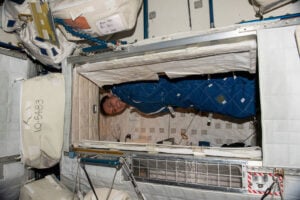
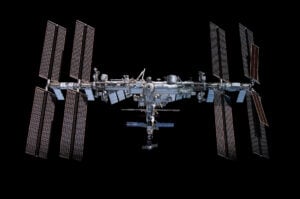
As of September 2026, humanity has two continuously crewed space stations: China’s Tiangong, occupied without interruption since 2022, and the International Space Station. If the ISS retires around 2030 before replacement stations are ready, Tiangong could become the only permanently inhabited outpost in Earth orbit.

Tiangong and the ISS sustain continuous occupation today. Whether that remains a two-station minimum after ISS retirement depends on crew operations, not just commercial launch dates.

Launch Pad

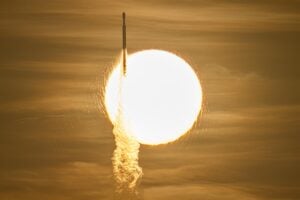
Europe has launched satellites aboard its own rockets for decades, but never from Western European soil; on 5 September 2026, German startup Isar Aerospace’s 28-metre Spectrum became the first rocket to reach orbit from the region, deploying five satellites from Arctic Norway on only its second flight—17 months after its debut lost control and crashed back to Earth less than a minute after liftoff.

Isar Aerospace's Spectrum reached orbit from Arctic Norway on its second flight, releasing five CubeSats and giving Western Europe its first successful orbital launch from local soil.

Space Travel

Suni Williams and Butch Wilmore launched aboard Boeing’s Starliner in June 2024 for an eight-day test flight and came home on a SpaceX capsule 286 days later—not because they were chasing a record, but because NASA judged the propulsion problems on the spacecraft that carried them there too uncertain to risk bringing them back.

NASA did not conclude that Starliner was certain to fail. It concluded that unresolved thruster behaviour made a crewed return harder to justify than waiting for Crew-9.

Deep Space

By the age of eight, a girl in northeastern Brazil was working through sky-survey images on two computer screens and had logged 18 preliminary asteroid detections; if confirmed, they would make her younger than Luigi Sannino, who was 18 when he set the record for youngest person to discover an asteroid in 1999.

A Brazilian girl's methodical scan of deep-space data threatens to upend a record that's stood for a quarter century, raising questions about who gets access to the tools of discovery.

Tech Space

In 2025, SpaceX’s Starlink-led connectivity business generated $11.4 billion—apparently the first satellite-broadband operation ever to cross $10 billion in annual revenue—and supplied 61 percent of the company’s total sales. More strikingly, it earned $4.4 billion in operating profit while SpaceX’s rocket division lost $657 million, making internet connectivity the financial engine helping bankroll Starship.

SpaceX's 2025 accounts show Starlink-led Connectivity supplied 61% of combined revenue and $4.423 billion of operating income, helping fund Starship's expensive development cycle.

Moon Daily

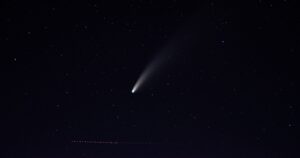
China’s Tianwen‑2 travelled roughly one billion kilometres over 400 days before returning the first close-up image of Kamoʻoalewa in July 2026—a tiny, fast-spinning asteroid perhaps only 20 metres wide whose unusual spectrum once made it look like a fragment of the Moon, although new observations have reopened that debate.

Tianwen-2 has reached a fast-spinning asteroid that Webb estimates at only 18 plus or minus 2 metres wide, just as new spectra and models reopen its proposed lunar origin.