

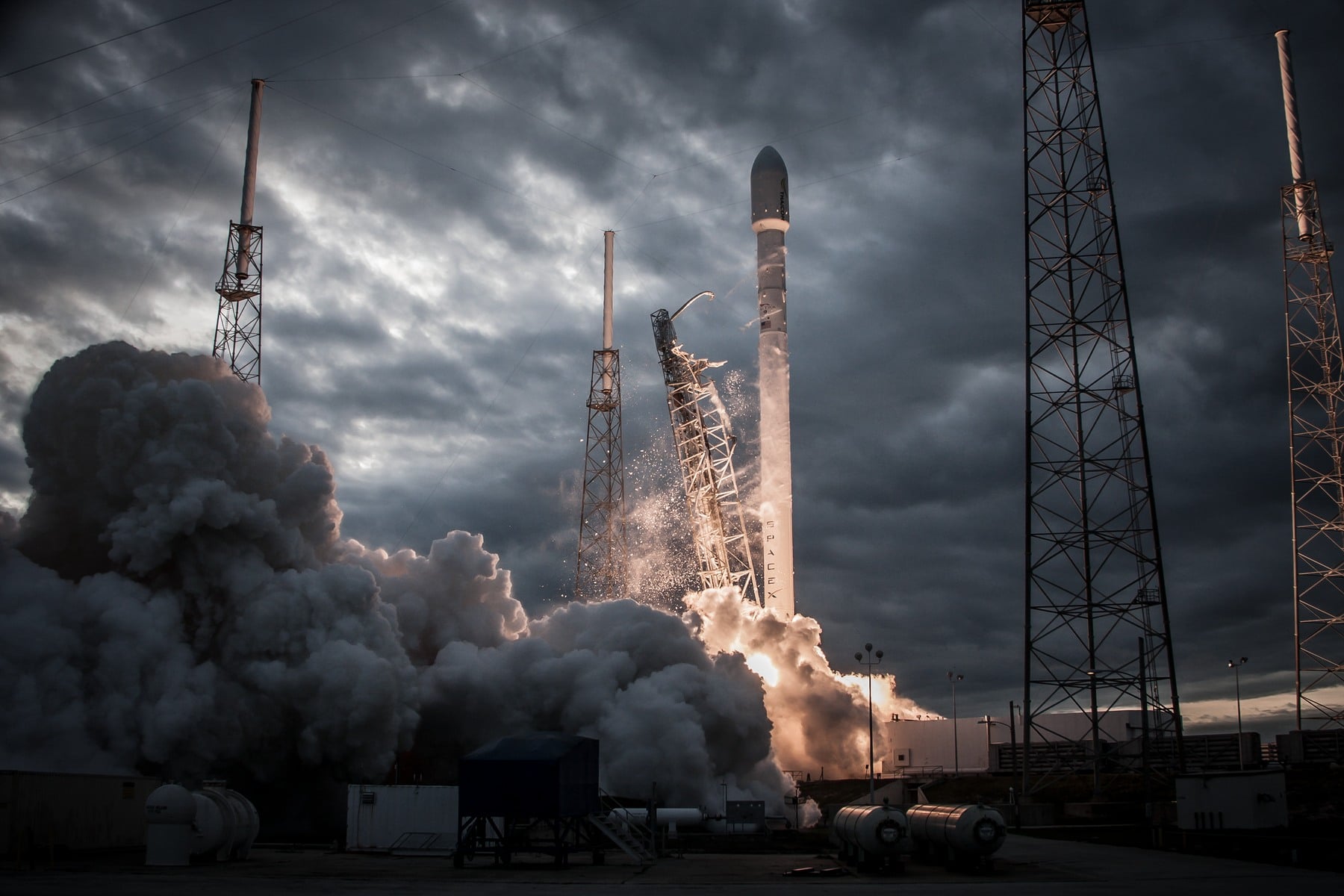
Suni Williams and Butch Wilmore lifted off on 5 June 2024 for Boeing Starliner’s first crewed test flight. The mission was expected to last about eight days. They returned on 18 March 2025 after 286 days in space, aboard a SpaceX Dragon rather than the spacecraft that had carried them to orbit.
The extension was not a record attempt, a secret long-duration experiment or a decision by two astronauts who simply preferred to stay. Starliner developed additional helium leaks and lost reliable thrust from five reaction-control jets as it approached the International Space Station.
NASA and Boeing spent the summer firing thrusters, analysing telemetry and recreating the problem on the ground. The work established plausible failure mechanisms, but it did not give the agency enough confidence that the propulsion system would behave predictably throughout a crewed return.
On 24 August, NASA decided to send Starliner home empty. Williams and Wilmore became part of the station’s long-duration expedition and were assigned the two places deliberately left open for them on SpaceX’s Crew-9 return.
The distinction matters. A spacecraft can remain capable of landing and still carry more uncertainty than NASA is willing to accept with people aboard. Starliner eventually made a safe autonomous descent, but that successful outcome did not exist yet when managers had to choose.
The eight-day plan was real, even if the mission was a test
The Crew Flight Test launched from Cape Canaveral on a United Launch Alliance Atlas V at 10:52 a.m. EDT on 5 June. Wilmore was commander and Williams was pilot. Both were veteran Navy test pilots and veteran space travellers.
Starliner had completed two uncrewed orbital tests, although the first failed to reach the station in 2019 and the second did not fly until 2022. The 2024 mission was designed to demonstrate the complete human transportation system before NASA certified Boeing for routine crew rotations.
The planned stay was roughly a week, commonly described as eight days. Test flights carry schedule flexibility, and NASA stressed during the delay that the mission was gathering useful data. Neither fact turns a 286-day flight into the original plan. Williams and Wilmore packed for a short certification mission, not a nine-month expedition.
SpaceDaily’s earlier account of the flight’s extraordinary extension followed the broad chronology. What the later investigation makes clearer is why a capsule that ultimately landed intact could still fail the decision test for carrying its crew.
Starliner reached the station through a propulsion failure
The first warning had appeared before launch. Engineers found a small helium leak in one manifold of Starliner’s service-module reaction-control system. Helium pressurises the propellant lines; it is not the fuel itself. NASA and Boeing analysed the leak and accepted the flight with it present.
During the rendezvous on 6 June, additional helium leaks appeared. More consequentially, five of the 28 aft reaction-control thrusters were automatically deselected after producing less thrust than commanded. The jets controlled Starliner’s orientation and fine movement near the station.
NASA’s 2026 investigation said the crew temporarily lost full six-degree-of-freedom control during the approach. In plain language, Starliner could not reliably command every combination of translation and rotation needed to manoeuvre freely. Crew manual flying and recovered thruster performance allowed the spacecraft to continue, and it docked that afternoon.
Four of the five affected thrusters later returned to service. Starliner was attached to a safe station, the crew was healthy and supplies were not immediately scarce. This is why the event did not resemble a capsule tumbling helplessly through space.
It was nevertheless more than a minor inconvenience. The service-module thrusters would be required again after undocking to control Starliner before its deorbit burn and the separation of the crew module. A recurrence at the wrong stage could reduce the available margins for a safe entry.
Ground tests explained a mechanism, not the next flight
Keeping Starliner docked created time to investigate. Engineers conducted hot-fire tests of the spacecraft’s thrusters, studied helium leak rates and fired a comparable thruster through repeated duty cycles at NASA’s White Sands Test Facility in New Mexico.
The ground work reproduced a loss of performance. Repeated firing could trap heat inside the compact service-module “doghouse” surrounding the jets. That heating could deform a Teflon seal in an oxidiser valve, restricting the flow of propellant and reducing thrust.
Finding a plausible mechanism was valuable. The difficulty was turning it into a dependable prediction for the actual spacecraft. The service module could not be inspected while docked and would be discarded before landing, so engineers could not recover the failed hardware afterwards for a complete physical examination.
Models differed over how much thermal stress the thrusters would experience during undocking and the return sequence. Some engineers believed the remaining redundancy and modified flight profile made a crewed return supportable. Others were not satisfied that the failure had been bounded.
NASA’s 24 August decision announcement described the decisive issue as uncertainty and a lack of expert concurrence. The agency did not claim that Starliner was certain to fail. It concluded that the unresolved risk did not meet its safety and performance requirements for human spaceflight.
That is a more exact description than “the thrusters were broken.” Several thrusters had recovered and there were procedures for limiting demand on them. What NASA lacked was confidence that it understood the system well enough to place two people inside it for the return.
A safe empty landing did not make the decision wrong
Starliner undocked without Williams and Wilmore on 6 September 2024 and landed at White Sands Space Harbor early on 7 September. The propulsion system completed the necessary manoeuvres, the crew module separated, its parachutes opened and its airbags cushioned the desert landing.
It is tempting to look backwards from that success and say the astronauts could have ridden home after all. That confuses an observed outcome with the risk information available beforehand.
If a system has an incompletely understood failure mode, a single successful run does not prove that every possible run was acceptably safe. Nor did the empty return reproduce the consequences of carrying people, whose presence changes operational requirements and makes loss of control intolerable in a way that a test vehicle’s loss is not.
The relevant question on 24 August was not whether Starliner had a path to landing. It was whether NASA could justify exposing Williams and Wilmore to that path when a lower-risk alternative existed at the station. The answer was no.
NASA’s archived Crew Flight Test return FAQ makes the same distinction. Starliner had flown autonomous entries before, and the crew had trained for the mission. The decision turned on the accumulated propulsion and helium-system uncertainty measured against NASA’s standards, not on an absolute inability to command the spacecraft.
Two empty Dragon seats turned delay into an expedition
Once NASA ruled out a crewed Starliner return, it needed to fit two astronauts into the station’s rotation system. SpaceX’s Crew-9 mission supplied the answer.
Crew-9 launched on 28 September with NASA astronaut Nick Hague and Roscosmos cosmonaut Aleksandr Gorbunov. Its Dragon capsule was designed for four, so the two unoccupied launch seats became the return seats for Williams and Wilmore. Crew equipment and seating accommodations were carried to the station for them.
The arrangement was possible because NASA’s Commercial Crew strategy had funded two independent American systems. In practice, however, the episode also underlined how much operational capacity rested with one of them. SpaceDaily later examined NASA’s continuing dependence on Crew Dragon while Starliner remained uncertified.
Williams and Wilmore did not spend the intervening months waiting beside packed bags. NASA integrated them into Expeditions 71 and 72. They maintained the station, performed research and completed spacewalks. Williams also commanded the orbiting laboratory during part of the extended mission.
Their departure depended on the arrival of the replacement Crew-10 astronauts and a short handover. Crew-10 docked on 16 March 2025. Crew-9 undocked early on 18 March with Hague, Gorbunov, Williams and Wilmore aboard Dragon Freedom.
The capsule splashed down off Florida at 5:57 p.m. EDT. According to NASA’s final mission figures, Williams and Wilmore spent 286 days in space, travelled 121,347,491 miles and completed 4,576 orbits.
“Stranded” was both understandable and incomplete
Public descriptions tended to divide into two camps. In one, the astronauts were stranded and awaiting rescue. In the other, they were safe professionals whose test mission had merely become longer. Each captured part of the situation and obscured another part.
Williams and Wilmore were not in an immediate survival emergency. The International Space Station had food, oxygen, shelter, communications and several experienced crew members. NASA continually maintained contingency return arrangements and eventually placed them in the planned Crew-9 rotation.
But their intended spacecraft could not satisfy the agency’s threshold for a crewed return. They could not choose an ordinary commercial flight home, and the alternative required waiting for another capsule within a tightly managed station schedule. The constraint was real even when the immediate danger was controlled.
Calling Crew-9 a rescue mission can also imply that SpaceX launched a dedicated emergency flight to collect them. It did not. NASA reduced an already planned crew rotation from four launching astronauts to two and used the available seats on its return leg.
The 286 days were not a record chase. Both astronauts accepted the operational roles created by the decision, but neither had launched with that duration as an objective. Their time aloft remained below several longer single missions. The number is important because it measures how far the test departed from its plan, not because it placed them at the top of a record table.
The 2026 investigation made the institutional failure explicit
In February 2026, NASA released the findings of the Program Investigation Team examining the Crew Flight Test. The agency classified the loss of manoeuvrability during rendezvous as a Type A mishap, its most serious mishap category, based on the loss of controlled flight and associated financial consequences.
The label does not mean Williams and Wilmore suffered the same outcome as crews lost in other Type A accidents. It means the event crossed NASA’s formal severity threshold. The investigation considered technical faults alongside deficiencies in certification, oversight, communication and shared understanding of risk.
By June 2026, NASA’s inspector general said Starliner remained uncertified and was unlikely to obtain human-rating certification before 2027 at the earliest. The OIG review said its next mission would carry cargo rather than astronauts so that upgrades could be validated in flight.
On 28 September, NASA and Boeing provided a firmer development plan. The uncrewed Starliner-1 has the potential to fly in December 2026 or January 2027 as an engineering evaluation mission. NASA’s current plan is to return astronauts on Starliner-2 by 2028.
Boeing has made thermal modifications to the service module for Starliner-1. After that flight, NASA and Boeing plan to complete an additional thruster-valve design modification focused on poppet-seal extrusion. NASA says Boeing will also install new crew-module thrusters and batteries and make minor parachute-system changes in support of certification.
The agency also intends to exercise options for fifth and sixth Starliner flights to the station and to work with Boeing and United Launch Alliance towards certifying Vulcan after Atlas V’s final flight. These are development and certification plans rather than completed milestones. The consequences of the 2024 propulsion problem therefore extend well beyond one delayed homecoming.
The mission was prolonged by a safety threshold
Human spaceflight decisions are often described as choices between safe and unsafe. The Starliner decision was harder. Managers compared an uncertain but possibly successful return in one spacecraft with a much longer stay followed by a return in another spacecraft with a mature flight record.
Staying in orbit also carried risk. Long missions expose astronauts to radiation, bone and muscle loss, altered vision and the ordinary hazards of station operations. Rearranging Crew-9 affected schedules, families, research and the people removed from its original manifest.
NASA nevertheless had a functioning station and another American capsule available. Those assets bought the agency something rarely available during an in-flight anomaly: time. It could decline propulsion uncertainty without forcing an immediate landing or abandoning the crew’s work.
Williams and Wilmore did not remain aloft because anyone wanted the publicity of 286 days. They remained because the spacecraft that had launched them no longer had an agreed, defensible crew-return case. The Dragon that brought them home was not proof that Starliner could not have done it. It was the lower-risk answer NASA could justify before anyone knew how Starliner’s empty landing would turn out.