Space, science, and the human mind. Since 1995.
Kiran Journals
Writer at Space Daily

Kiran Journals

Writer

Kiran Journals is a writer at Space Daily with a degree in multimedia journalism. She covers psychology, identity, and the inner life — the questions of how people change, what holds them back, and what helps them grow. Her writing for Space Daily sits in the Mind & Meaning pillar, where she focuses on practical psychology and the human side of ambition.

Profile on Brown Brothers Media →

Asia News

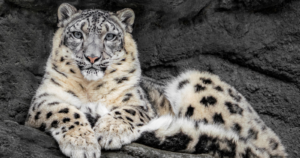
For decades Pakistan’s snow leopard population was a guess, put somewhere between 100 and 400 animals from questionnaires and expert hunches, until a decade-long survey of 828 cameras and more than 1,000 genetic scat samples finally produced a real number, and it landed near the bottom of that range.

A decade of camera traps and genetic analysis finally replaced guesswork with hard numbers—revealing Pakistan's snow leopard population may be far smaller than conservationists hoped.

Space Travel

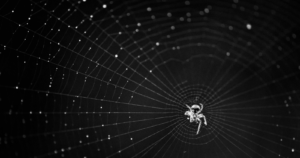
A high-school student’s idea sent two spiders to a US space station to see whether they could still spin a web with no gravity to hang it from, and they did, building lopsided, confused webs at first before adjusting, and one of the spiders, named Gladys, turned out on return to be male and was renamed Gladstone.

When gravity vanished, two orbiting spiders revealed something surprising: they could still dance their ancient geometry, just not quite the way evolution taught them.

Early Earth

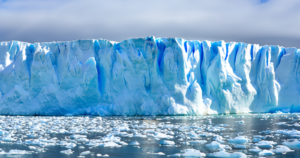
Antarctica holds a continuous record of the air going back 800,000 years, locked in bubbles inside a two-mile column of ice that scientists drilled out one section at a time, so that every atmosphere for eight hundred millennia now sits catalogued on shelves in European laboratories, ancient air trapped in frozen bubbles

As ice ages, atmospheric bubbles trapped within compress into denser form—creating an archive of Earth's climate so detailed that scientists can now read the exact composition of air from the time of Neanderthals.

Flora And Fauna

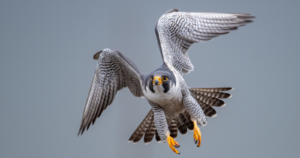
The fastest animal on Earth isn’t the cheetah, it’s a bird that folds its wings and drops out of the sky like a missile, reaching over 240 miles an hour in its dive, fast enough that if it hit a small bird head-on it would kill it instantly with a single clenched foot

When a peregrine falcon folds its wings and plummets earthward at over 240 miles per hour, it becomes nature's deadliest missile—capable of killing prey with a single impact of its clenched foot.

Water Worlds

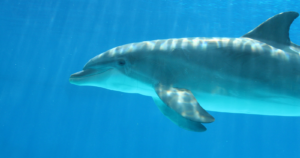
Off the coast of Portugal, a pod of sperm whales was seen adopting a lone bottlenose dolphin with a deformed, S-shaped spine that its own kind had apparently rejected, letting it swim, forage and nuzzle among them for weeks, the first time these deep-diving giants had ever been recorded forming a bond with another species, and no one can say what the whales got out of it.

What drove these massive deep-diving whales to nurture a disabled stranger when their own species abandoned it—and what did they gain in return?