The waters around the Azores, the small Portuguese archipelago sitting about sixteen hundred kilometres west of Lisbon in the middle of the North Atlantic, are one of the reliably good places on Earth to study sperm whales. The bathymetry drops away sharply from the islands into some of the deepest water in the Atlantic, which the whales use for hunting squid at depths of a kilometre or more. The population passing through the archipelago each year is stable, well-studied, and quietly one of the most valuable natural laboratories in modern cetology.
Which is why two German behavioural ecologists were in the area in 2011, studying the pod dynamics of the local sperm whales, when they noticed something in a group of adult females and calves that took them a moment to properly understand.
There was an animal in the pod that wasn’t a sperm whale.
What the researchers actually saw
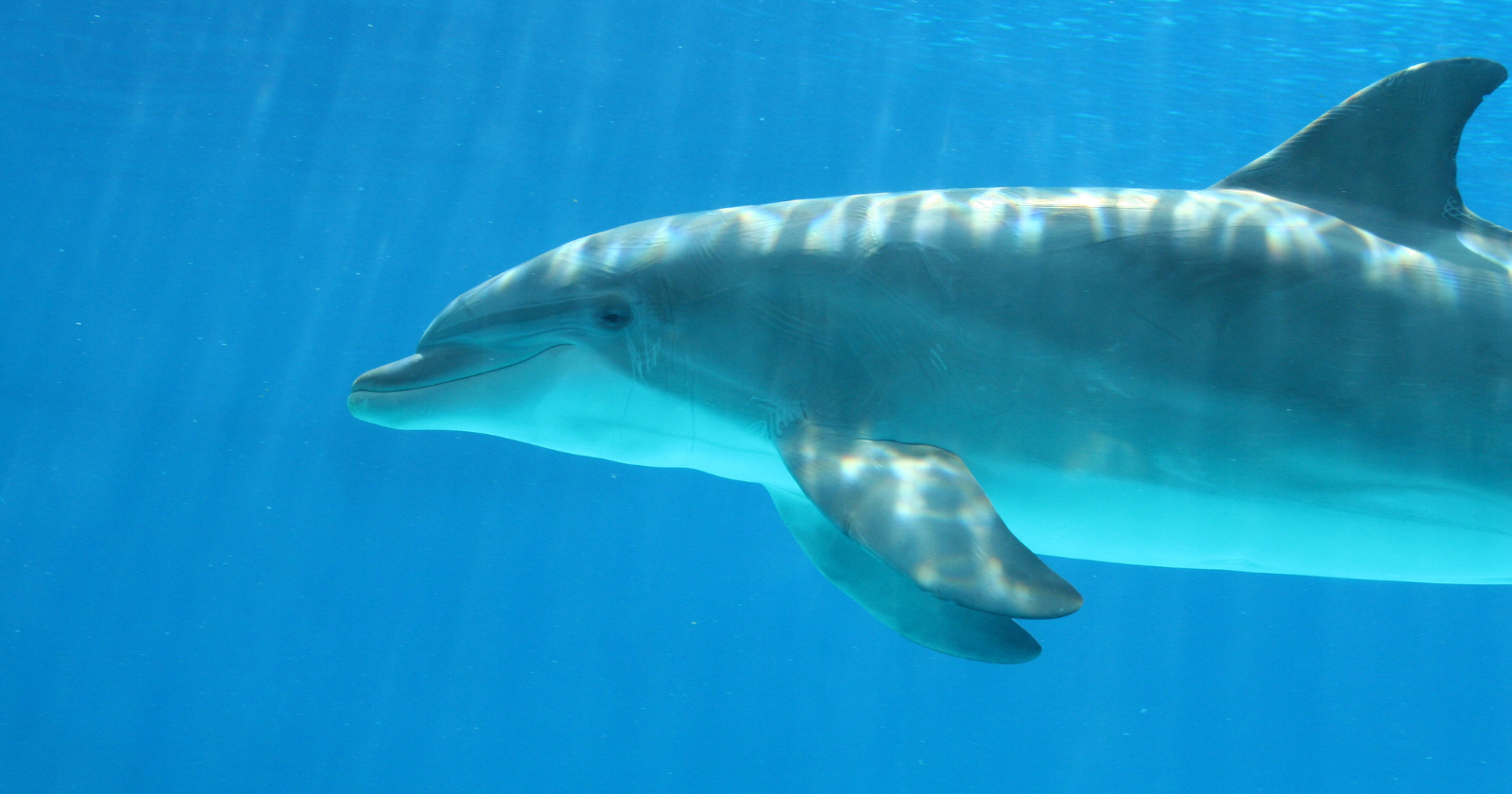
According to reporting by National Geographic on the incident, drawing on interviews with the research team from the Leibniz-Institute of Freshwater Ecology and Inland Fisheries in Germany, who had been observing the sperm whales in the Azores when the interaction was first documented, the behavioural ecologists Alexander Wilson and Jens Krause spent eight days closely observing the group. What they found was an adult male bottlenose dolphin that had, on all the evidence of the daily observations, effectively joined the pod. The dolphin travelled with the whales. It foraged near them. It played with the adult females and their calves. It swam alongside individual whales, rubbed its body against them, and, on several occasions the team caught on film, was returned the gesture. The whales, who ordinarily have nothing to do with bottlenose dolphins and are often actively harassed by them, were treating this particular dolphin as one of the pod.
If you enjoy learning about our amazing animal kingdom, you’ll enjoy this video we made on the invisible wall only elephants can see…
The dolphin was easy to identify. It had a spinal curvature that gave the back half of its body an unmistakable S-shape. On any close look at the film footage, the malformation is severe. The kind of scoliosis that would, in an animal whose ordinary swimming style depends on the coordinated flexion of the entire spinal column, put the dolphin at a significant physical disadvantage against other members of its own species. It couldn’t have swum as fast as an unimpaired dolphin. It couldn’t have hunted as efficiently. And, on the ordinary rules of bottlenose dolphin social behaviour, it would probably have been low on the social hierarchy of any group it belonged to.
Which is one of the reasons Wilson and Krause suspected the dolphin had been ostracised from its own pod. Bottlenose dolphin groups run on strict dominance hierarchies. Individuals that can’t keep up, whether through age or injury or genetic deformity, tend to get pushed to the edges of the group, harassed by dominant members, and eventually left behind. The team’s working hypothesis, which they published in the peer-reviewed journal Aquatic Mammals in early 2013, was that the dolphin had been rejected by its original pod for reasons connected to its physical condition, and had, somehow, ended up in the company of sperm whales instead.
What made the situation genuinely unusual, and what turned it into the first documented case of its kind in the whole cetacean literature, was that the sperm whales appeared to have accepted the arrangement.
What the whales might have been getting out of it
Which is where the analysis started to run into difficulty. According to reporting by Science magazine on the observation, drawing on Wilson’s own commentary and photo documentation from the Wilson and Krause team’s Aquatic Mammals paper, the researchers could offer several plausible explanations for what the dolphin was getting out of the arrangement. Sperm whales swim slowly enough that a scoliotic dolphin could keep up with them. Sperm whale pods leave a designated adult near the surface with the calves while the other adults dive deep for squid, which meant the dolphin was never completely alone. And travelling with a group of much larger animals would presumably reduce whatever residual predation risk the dolphin faced in open water.
What was harder to explain was the other side of the transaction. The Azores waters have very few natural predators of adult sperm whales, so the whales weren’t gaining anything obvious in the way of protection. The dolphin was too small to help with foraging in any meaningful way. It couldn’t produce sperm-whale vocalisations or contribute to the pod’s coordinated hunting. And, as the University of the Azores cetacean ecologist Mónica Almeida e Silva pointed out to Science at the time, sperm whales have good reason to be wary of bottlenose dolphins in general, because dolphins often chase and harass whales and their calves in exactly the shape of interaction that would be expected to make a sperm whale pod hostile to any dolphin approaching it.
Wilson’s own suggestion, when pressed on the mechanism, was that the interaction might not have been transactional at all. Perhaps some form of social play or interspecies curiosity, similar to the kind occasionally observed in captive dolphins interacting with human trainers, was what the whales were engaging in. Perhaps they had accepted the dolphin because it wasn’t threatening, hadn’t harassed them, and offered a novel form of social contact none of them had encountered before. The framing wasn’t quite anthropomorphic pity, but it wasn’t far from it.
According to commentary by the animal behaviour specialist Marc Bekoff, published in his Animal Emotions column at Psychology Today in early 2013 alongside expert quotes from Luke Rendell of the University of St Andrews and Almeida e Silva at the University of the Azores, the interpretive difficulty was acknowledged by the researchers themselves. Rendell warned specifically against overreading the whales’ motivations. The observation was brief, the situation was rare, and the underlying social lives of the specific whales involved were not well understood. What the researchers could confidently say was that the interaction had happened, that it had been sustained over the observation period, and that the whales had not, at any point in the eight days, tried to drive the dolphin off.
What they could not say, on any of the evidence available at the time or since, was why.
The dolphin has not, as far as the follow-up literature indicates, been reliably re-sighted with the pod in subsequent years. It’s possible the arrangement continued for some time after the researchers left the area. It’s possible the whales eventually moved on to other waters and the dolphin was left behind. It’s possible the dolphin died. Sperm whale movement across the Atlantic makes long-term follow-up on this kind of individual observation exceptionally difficult, and no subsequent published research has documented the same combination of animals or a comparable cross-species arrangement anywhere else.
What the 2013 observation established, and what has held up in the twelve years since, is that a species not previously known for forming social bonds outside its own kind did so, at least once, under conditions that nobody has ever quite been able to reconstruct. On the observations that survive from those eight days in 2011, and on the photographs and film footage of the dolphin nuzzling adult female sperm whales in the middle of the North Atlantic, it happened. The whales let it happen. And the underlying question of what they got out of it remains, on the current published record, one of the more genuinely open puzzles in modern cetacean behaviour.