

Human Behaviour
A single human exhale contains roughly 25 sextillion molecules, and the air on…
You just inhaled around 25 sextillion molecules of air. That's 25 followed by 21 zeroes.

You just inhaled around 25 sextillion molecules of air. That's 25 followed by 21 zeroes.

In the eight years since, the world has done something genuinely strange. It has confirmed, item by item, almost every warning he spent his final decade trying to make people listen to.

Every gold atom on Earth, including the one wrapped around your finger, was forged in a cosmic collision so violent it briefly outshone entire galaxies — and there is no other process in the universe that can make it.

The bubble wrap on your desk was supposed to be wallpaper, then a greenhouse liner, before a desperate IBM shipping problem rescued it from oblivion.
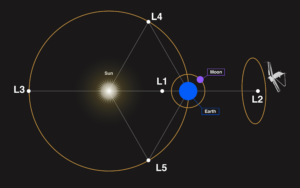
The James Webb Space Telescope operates from a halo orbit around the Sun-Earth L2 point, roughly 1.5 million kilometres from Earth, and runs on about one kilowatt of power.
The booster landing itself on a barge. The Starship test flight. The Elon Musk press conference about Mars.

Caregiving and one-sided relationships can affect friendship, but they do not explain every older adult with a small social circle.
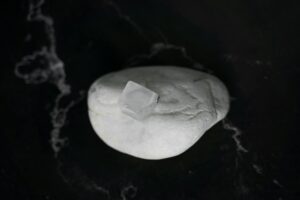
The arithmetic survives scrutiny, but the procedure for compressing eight billion humans into a single sugar cube reveals something stranger than the headline suggests.

A construction firm in Osaka has been building Buddhist temples without interruption since the year 578, surviving 78 emperors, three shogunates, two atomic bombs, and the entire arc of recorded modernity — and the procedural reality of how it managed that is stranger than the headline.

A 2013 rat study found high-frequency activity above waking baseline; human evidence includes one case report and gamma surges in two of four dying patients, none of whom survived to report an experience.
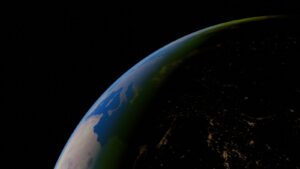
At 17,500 mph, the ISS produces real relativistic time dilation. After 340 days in orbit, Scott Kelly returned roughly 5 milliseconds younger than his identical twin brother Mark, a tiny but measurable confirmation of Einstein's special relativity in human flesh.

The cellular turnover figure is real, but the leap from biological replacement to philosophical erasure depends on assumptions that the underlying biochemistry quietly refuses to support.
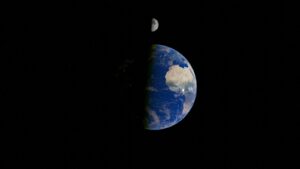
Apollo astronauts left passive mirror arrays on the Moon in 1969, 1971 and 1971. Lasers fired at those reflectors from Earth now measure the lunar distance to within centimeters, and the data shows the Moon receding at 3.8 cm per year — about the pace your fingernails grow.

A neutron star packs the mass of a mountain into the volume of a sugar cube and can spin faster than a kitchen blender, and the procedural story behind those numbers is stranger than the headline lets on.

A wedding ring weighs a few grams. The gold in it has been mined, refined, alloyed, cast, polished, and fitted.
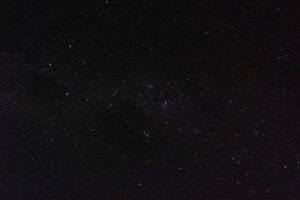
The numbers are staggering enough on their own, but the procedural reality behind them — what 'observable' actually means, and what cosmologists know is permanently hidden — is stranger than the comparison suggests.