
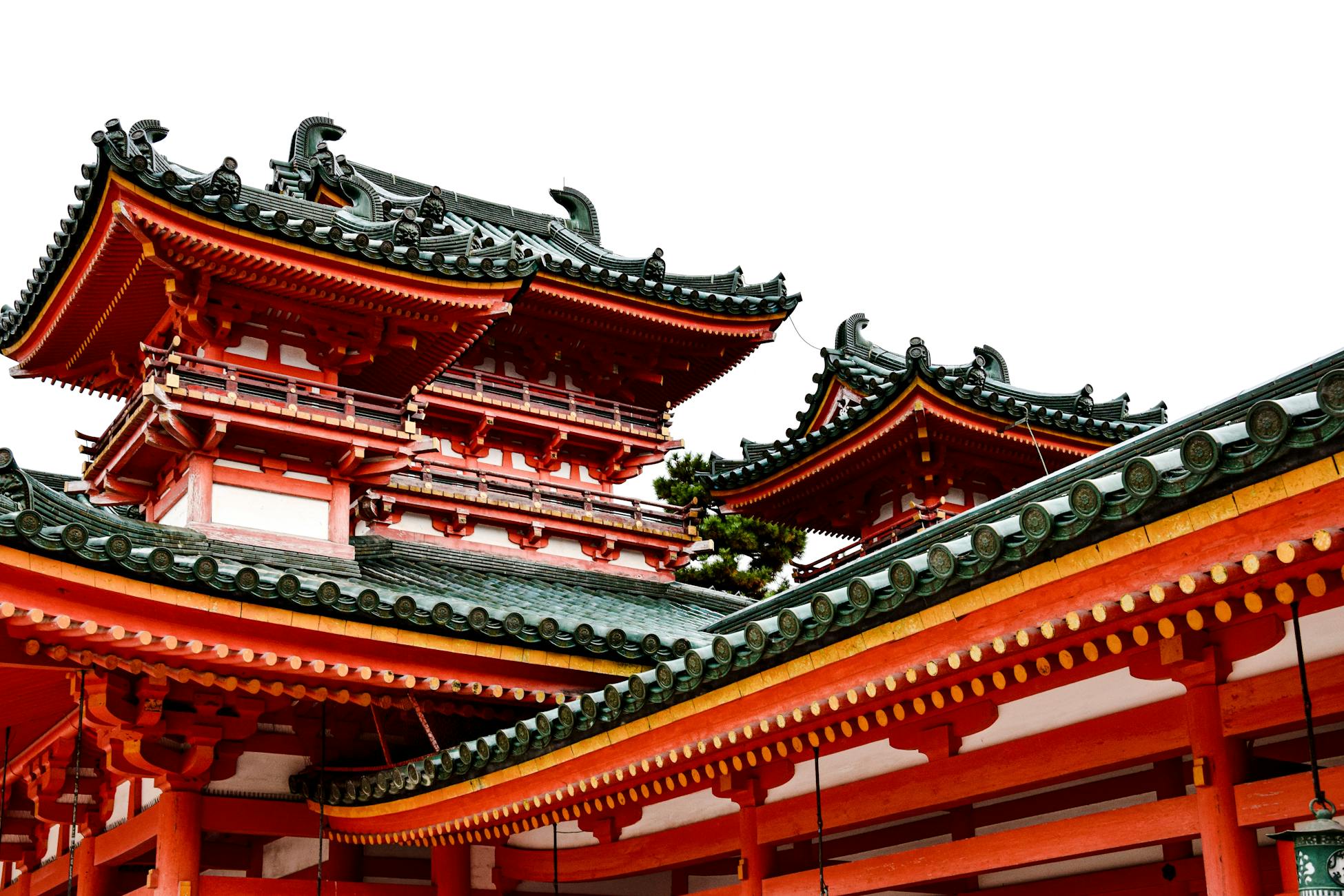
Masakazu Kongō, the fortieth-generation head of Kongō Gumi, used to keep a hand-copied scroll listing every leader of the family business going back to a Korean carpenter named Shigemitsu Kongō, who arrived in what is now Osaka in the year 578 at the invitation of Prince Shōtoku to build Shitennō-ji, one of the first Buddhist temples on the Japanese archipelago. The scroll is roughly four meters long. Each name corresponds to a person who ran the same construction firm. The list does not stop until it reaches the man holding it.
That sentence sounds like folklore. It is, in fact, the documented operating history of a company that built temples continuously from the Asuka period through the Meiji Restoration, through the firebombing of Osaka in 1945, through the postwar reconstruction, through the bubble economy, and into the present, where the firm now operates as a subsidiary of the Takamatsu Construction Group after being absorbed in 2006.
The popular framing goes like this: Kongō Gumi is the oldest company in the world, a 1,400-year-old miracle of Japanese tradition, founded before Islam existed, before England was a country, before the Vikings raided anywhere. That framing is approximately right in its emotional effect and somewhat misleading in its procedural detail. The part of the story worth slowing down on is what “continuous operation” actually means across fourteen centuries — and what it took, in the end, to break it.
What 578 actually predates
The founding date is not a guess. It is anchored to the construction of Shitennō-ji, a temple whose own founding is documented in the Nihon Shoki, Japan’s second-oldest surviving chronicle, completed in 720. Prince Shōtoku brought three carpenters from the Korean kingdom of Baekje to build it. One of them, Shigemitsu Kongō, stayed. His descendants kept building.
To locate that year on a wider timeline: the Prophet Muhammad would not be born for another dozen years. The first Hijri year, the start of the Islamic calendar, was still 44 years away. The Anglo-Saxon kingdoms that would eventually unify into England were a loose constellation of warring polities; the word “Englaland” would not appear for roughly 500 more years. Charlemagne’s coronation as Holy Roman Emperor was 222 years in the future. The Tang dynasty, which dominates the popular image of “classical China,” would not be founded for another 40 years. The University of Bologna, the oldest continuously operating university in Europe, would not exist for another 510 years.
Kongō Gumi was, by then, already taking on its second commission.
What “continuous” actually means
The temptation, reading a number like 1,428 years, is to imagine an unbroken line of fathers handing tools to sons in a perfectly preserved workshop. The procedural reality is messier and more interesting. The leadership of Kongō Gumi did pass through the same family for forty generations, but the rule was not strict primogeniture. The head of the firm was the most capable available heir, which sometimes meant a younger son, sometimes a son-in-law adopted into the family and given the Kongō name, and at least once meant a woman — Yoshie Kongō took over in the 1930s after her husband, the 37th-generation leader, died.
Adoption of capable adults into a family business, with full inheritance rights, has been a standard Japanese mechanism for institutional continuity for centuries. It is one of the structural reasons Japan has more century-old companies than any other country on Earth — the working estimate from researchers at the Bank of Korea and Tokyo Shoko Research is somewhere around 33,000 to 40,000 firms older than 100 years operating in Japan today, depending on which threshold is used. The genetic line matters less than the institutional line. The name is the thing that persists.
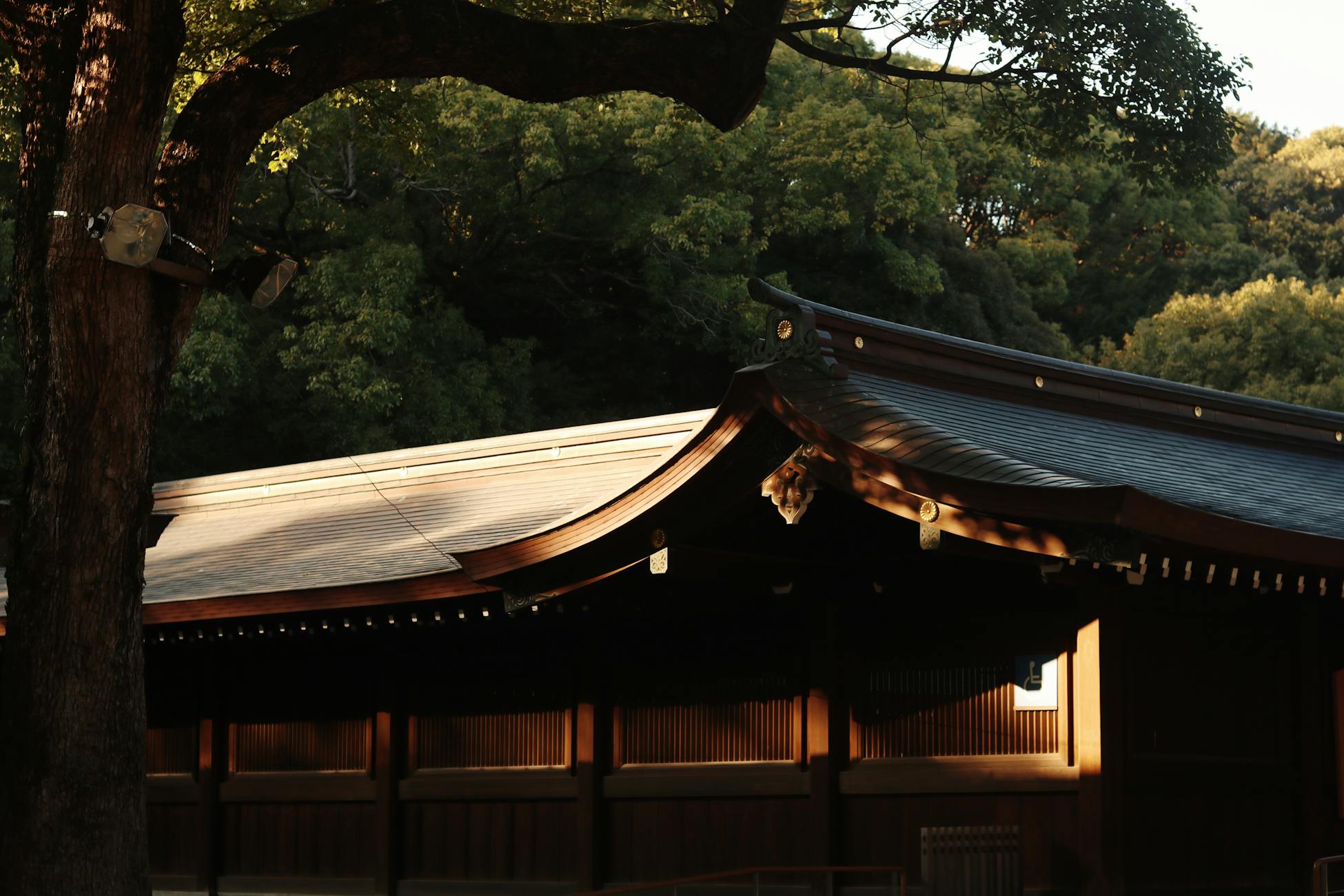
The work itself also evolved. The early Kongō Gumi built temples using mortise-and-tenon joinery techniques imported from the Asian mainland, methods that allowed wooden structures to flex during earthquakes rather than crack. Some of those original techniques are still used by the firm’s hundred-or-so master carpenters, called miyadaiku, who specialize in temple and shrine construction. Other parts of the operation modernized aggressively. By the late twentieth century, Kongō Gumi was pouring concrete foundations, using CAD systems, and bidding on commercial construction contracts alongside its temple work.
What finally broke it, and what didn’t
The list of things that did not end Kongō Gumi is longer than the list of things that ended most institutions. It survived the Genpei War. It survived the Mongol invasion attempts of 1274 and 1281. It survived the Sengoku period, when Japan dissolved into roughly a century of warlord conflict and the temple-building business should, by any reasonable expectation, have collapsed. The Toyotomi clan, which controlled Osaka in the late 1500s, became patrons. When the Tokugawa shogunate took power in 1603 and imposed a 250-year period of national isolation, Kongō Gumi kept building. When the Meiji Restoration in 1868 abruptly disestablished Buddhism as a state religion and many temples lost their funding, the firm survived by diversifying into shrine work and, eventually, commercial buildings. It survived the 1945 firebombing of Osaka, which destroyed roughly a third of the city.
What ended the family ownership, in 2006, was a debt of about 4 billion yen accumulated during the Japanese asset bubble of the late 1980s and early 1990s, when the firm borrowed heavily to invest in real estate at the peak of the market and could not service the loans once property values collapsed. The 39th-generation head, Toshitaka Kongō, oversaw the absorption into Takamatsu Construction. The firm still exists. It still builds temples. The name on the door is still Kongō Gumi. But the family lineage as the operating ownership ended after fourteen centuries because of a leveraged bet on Osaka real estate.
That is the part of the story that tends to get sanded off in the inspirational versions. The thing that survived the Mongols, the shogunate, and the Pacific War was finally undone by a property bubble.
What the human brain does with 1,400 years
The cognitive part of this is genuinely difficult. Human temporal intuition is calibrated for events on the scale of a lifetime, maybe two. Anything beyond a few generations starts to collapse into a flat undifferentiated “long ago.” The gap between 200 and 400 years ago feels smaller than the gap between last week and last month, even though the former is roughly 5,000 times larger. Work published in eLife on neural representation of time across complementary reference frames suggests that the hippocampus encodes event sequences in a way that compresses distant intervals, which is part of why “578 AD” and “1066 AD” can feel cognitively adjacent even though almost five centuries separate them.
This is also why the Kongō Gumi story is genuinely useful as a calibration exercise. Most institutions readers can name — the United States, the British monarchy in its current Windsor form, the modern Olympics, every Fortune 500 company, every existing university outside a small handful in Europe and North Africa — are younger, often dramatically younger, than this construction firm. The Catholic Church and a handful of monasteries are older as institutions. The Japanese imperial line is older by tradition though its early dates are contested. Almost nothing else with a continuous operating identity reaches back that far.

Temporal perspective shapes how people weigh risk and continuity, and exposure to extreme timescales can shift the framing of present problems. There is also a smaller literature on how altered or expanded perception of time — whether through meditation, ritual, or, in some experimental contexts, psychedelic compounds that reshape temporal processing — affects the way people relate to their own decisions. The Kongō Gumi case is a non-pharmacological version of the same effect. It is hard to read the company’s history and not briefly recalibrate what a long-term decision actually looks like.
The thing the headline flattens
The deeper claim worth extracting is not that one company lasted a long time. It is that institutional continuity at this scale required a specific set of conditions: a stable patron class (Buddhist temples needed building and rebuilding for fourteen centuries, because wooden structures burn and earthquakes happen), a flexible inheritance system that prioritized capability over bloodline, a specialized skill base (miyadaiku techniques) that could not easily be replicated by competitors, and a willingness to modernize the business while preserving the craft.
Remove any of those and the chain breaks. The chain did, eventually, break — not because the carpentry stopped working but because the firm strayed into a business it did not understand at a moment when Japanese asset prices were detached from anything resembling fundamentals. Just as a human body persists as an identity while its cells turn over, an institution persists as a name while every person inside it is replaced. The question of when the persistence ends is partly a definitional argument.
Kongō Gumi is still building temples in Osaka. The fortieth-generation Kongō is no longer in charge. The scroll, presumably, is still being kept. Whether the chain counts as broken or merely transferred depends on what you decide “the company” actually is — the family, the name, the techniques, or the buildings that keep getting built. The procedural reality is that all four answers are defensible, which is what 1,400 years of operation tends to do to clean categories.
