
Government
Senate rushed Alaska deal, but House delayed paying Russia for a year
A bargain-basement empire: America's Alaska purchase sailed through the Senate in days, then got stuck in the House treasury for over a year.

A bargain-basement empire: America's Alaska purchase sailed through the Senate in days, then got stuck in the House treasury for over a year.
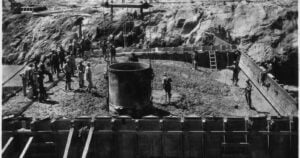
A bucket holding eight cubic yards of concrete swung out over Black Canyon on a cable, dropped into a form, and opened.
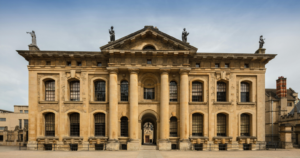
A 184-year-old experiment in a Oxford lab keeps ringing against all odds—and scientists refuse to peek inside to solve its greatest mystery.
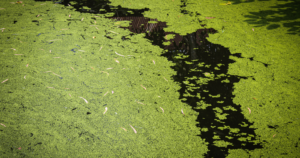
Living organisms just proved they can power our devices—without batteries, charging cables, or human intervention.
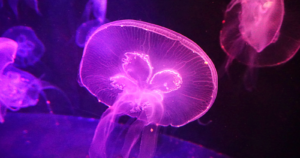
A Swedish team harnessed nature's bioluminescent trick, transforming jellyfish glow-protein into a functioning solar cell that converts ultraviolet light into electrical current.
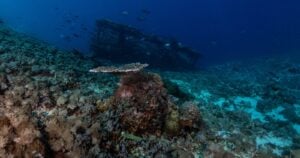
The accidental discovery of a 500-year-old merchant ship in the deepest waters off France raises questions about how many other wrecks lie hidden in the abyss, waiting to rewrite maritime history.
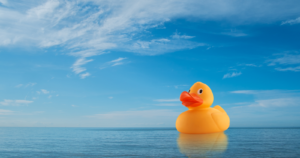
A lost shipment of bath toys became an accidental oceanographic instrument, revealing decades of currents and gyre patterns that scientists couldn't observe any other way.

If these dots are indeed black holes cloaked in stellar nurseries, it would overturn decades of assumptions about how the universe's most violent objects form and hide in plain sight.
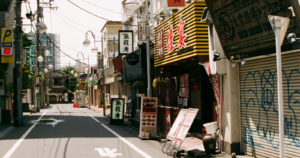
A parking-spot requirement in 1960s Japan created an unexpected winner: a car so small it barely needs one.
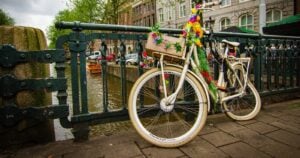
Every year, Amsterdam's canal-cleaning crew hauls out enough bicycles to fill a small parking lot—a mundane operation so routine it's easy to forget it's actually extraordinary.
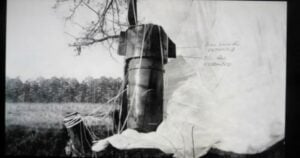
Two February 1961 Sandia Corporation reports, released under a Freedom of Information Act request in 2021, one for the first time and the other with far less blacked out, walk through the wreckage component by component. On the bomb whose parachute opened, the batteries fired, the barometric switch closed, the timer ran its cycle out and the nose crushed on impact. Two switches had never been moved, and the second stayed safe only because the first did.
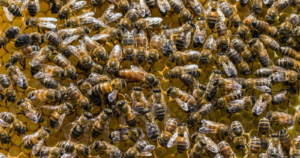
A shortcut through a graveyard revealed millions of bees living invisibly beneath New York soil—a discovery that rewrites what scientists thought possible about solitary insect colonies.
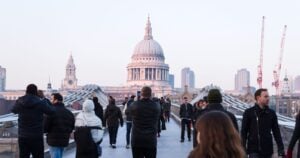
A pedestrian bridge's catastrophic wobble revealed that crowds don't need to march in lockstep to trigger structural collapse—just walk normally, and physics does the rest.
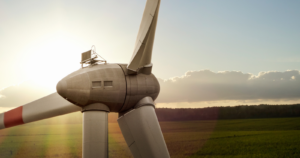
A remote Scottish island became a pioneer of community ownership—and renewable energy—by crowdfunding its freedom from 169 years of landlord rule.

The sweetest reward of work may not be crossing the finish line, but the absorption in the work itself.
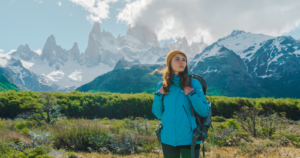
A billionaire's gift to Argentina comes with a radical strings attached: a legally binding commitment to let the land rewild for nearly a century.