
Scientists have now made the most comprehensive tally yet of deep-sea exploration
Humanity has sent cameras to the Moon, Mars, Venus and the outer planets, but on Earth itself there is still a larger frontier that has barely been looked at directly.
Editorial Team
The Space Daily Editorial Team is the publication’s general news desk across Space and Missions, Universe, Earth and Life, Science and Engineering, and Human Factors. Current articles under this byline are commissioned, edited and approved under Space Daily’s editorial standards.

Humanity has sent cameras to the Moon, Mars, Venus and the outer planets, but on Earth itself there is still a larger frontier that has barely been looked at directly.

Jul 5, 2026

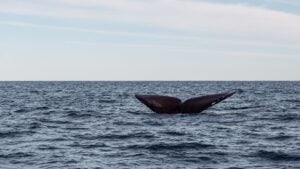
A blue whale can send a call through the ocean with a voice deeper than almost any animal sound on Earth.
Jul 5, 2026

A whippet at full sprint looks less like an animal running than a spring being released.
Jul 5, 2026

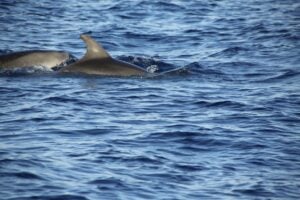
In 2013, a study reported something remarkable about bottlenose dolphins. They could recognise the calls of animals they had once lived with but had not heard for more than 20 years, one of the longest social memories ever documented in a non-human animal.
Jul 5, 2026

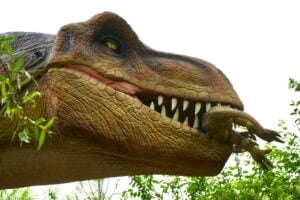
For much of the past century, many scientists believed the dinosaurs were already in decline when the asteroid struck 66 million years ago, a group past its prime that a cosmic accident merely finished off.
Jul 5, 2026

Keeping a data centre cool on Earth is a surprisingly large part of the job. Cooling can swallow anywhere from a tenth to a third of a facility's entire energy budget, and the thirstiest sites drink millions of litres of water to do it.
Jul 5, 2026

Ask how many Earth-like planets there are, and the honest answer is that serious researchers give estimates spanning more than twenty orders of magnitude.
Jul 5, 2026

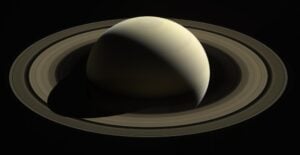
A few years ago, Saturn was listed with 83 moons. Then astronomers looked harder, began finding them dozens at a time, and by 2026 the tally had reached 285, so many that Saturn now has nearly three times as many confirmed moons as Jupiter.
Jul 5, 2026

If microbial life is ever confirmed beyond Earth, on Mars, in the hidden ocean of Europa, or in the icy plumes of Enceladus, it would rank among the most consequential discoveries in the history of science.
Jul 4, 2026

In the 1960s, NASA and the Atomic Energy Commission built nuclear rocket engines and test-fired them dozens of times in the Nevada desert.
Jul 4, 2026

The bootprints that Apollo astronauts pressed into the lunar dust between 1969 and 1972 are still there, and they will stay for a very long time.
Jul 4, 2026

The largest known volcano in the solar system is on Mars, and it is so vast that if you stood on its summit you might not realise you were on a volcano, or even a mountain, at all.
Jul 4, 2026

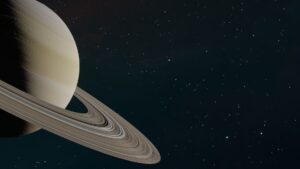
Saturn looks like the solar system's old monument, a pale gas giant encircled by rings that seem as permanent as the planet itself.
Jul 4, 2026

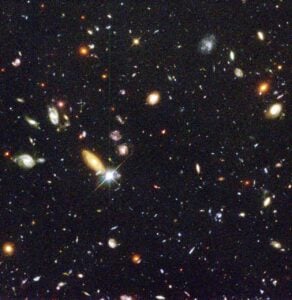
In December 1995, Hubble did something that sounded almost like a misuse of a great telescope.
Jul 4, 2026

Human spaceflight had crossed oceans, docked with stations, circled the Moon and lived in orbit for more than a year before anyone did something deceptively simple: fly people straight over both poles of Earth.
Jul 4, 2026

On 15 May 2026, NASA's Psyche spacecraft passed within 2,864 miles, or 4,609 kilometres, of Mars and left the encounter on a better path than the one it arrived on.
Jul 4, 2026