

Science & Engineering
AI did not just demand more electricity — it demanded water
The public argument about artificial intelligence has mostly been an argument about electricity.

The public argument about artificial intelligence has mostly been an argument about electricity.
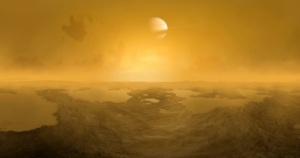
In January 1610, Galileo Galilei turned a small telescope toward Jupiter and noticed something that should not have been there: tiny points of light close to the planet, changing position from night to night.
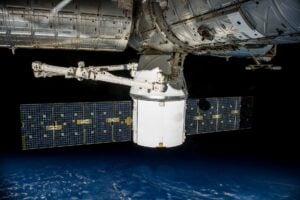
The Sun has been so active lately that it puffed up the top of Earth's atmosphere and began dragging a NASA space telescope down toward a fiery reentry.
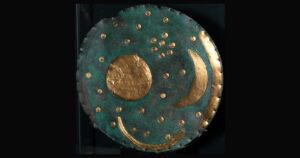
Buried around 1600 BC, looted in 1999 and seized in a Basel sting in 2002, the Nebra sky disc carries what one research team calls the earliest concrete picture of the night sky. How firmly the bronze can prove that is still argued.
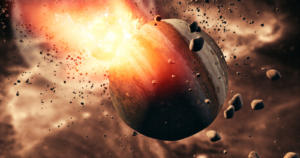
The first time human beings ever watched two objects hit each other in space was in July 1994, and the observation happened almost by accident because a…
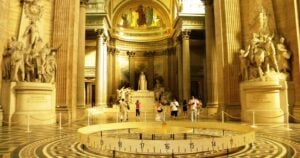
In 1851 Léon Foucault hung a heavy bob on a long wire under the dome of the Panthéon and set it swinging. Its path slowly rotated, the first plain, direct sign anyone could watch of the Earth turning on its axis. It does not, though, turn once a day everywhere.
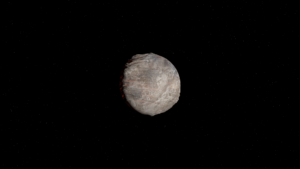
A planet just 25 light-years away, already known to sit in the narrow band where liquid water could exist, has been reassessed by astronomers led by the University of California, Irvine.

The Novo Nordisk Foundation controls 77% of the voting power in the maker of Ozempic through A-shares that have never been traded and legally cannot be sold — making a Copenhagen charity the permanent, unsellable owner of one of Europe's most valuable companies.
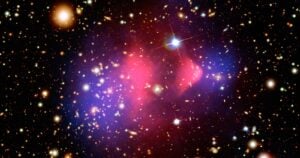
The stars inside a faint galaxy called DF9 drift so slowly that its whole mass matches its visible stars alone. It is the third dark-matter-poor galaxy found strung along one narrow trail in the same patch of sky.
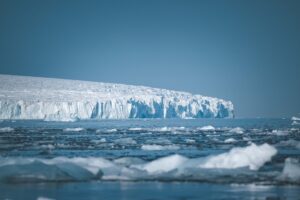
East Antarctica can look, from above, like the quiet half of the frozen continent: old, thick, cold and buried under kilometres of ice.
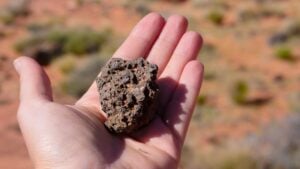
A rock about the size of a fist, found lying in the Sahara, may be a surviving shard of a lost world nearly as large as the Moon.
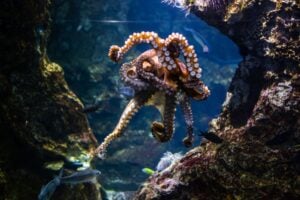
Octopuses are among the worst animals to leave behind as fossils. Their bodies are mostly soft tissue.
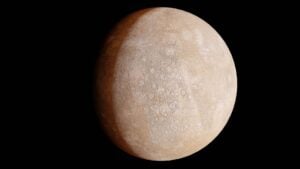
In November, a spacecraft called BepiColombo, after nearly eight years looping through the inner solar system, will finally let Mercury capture it into orbit.
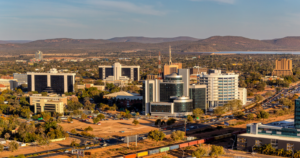
Twelve kilometres of paved road. That is the figure that opens almost every account of Botswana at independence.
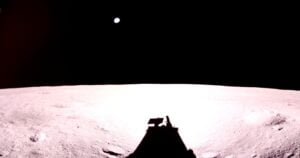
Astrobotic, Firefly Aerospace and Intuitive Machines will each fly updated versions of landers they have already flown, carrying the same three NASA science instruments to build a network of data across the lunar surface.
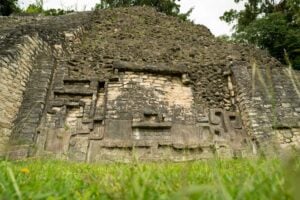
The discovery being described is Ocomtún, the Maya city announced after fieldwork in May and June 2023 in the Balamkú Ecological Conservation Zone of Campeche, Mexico.