
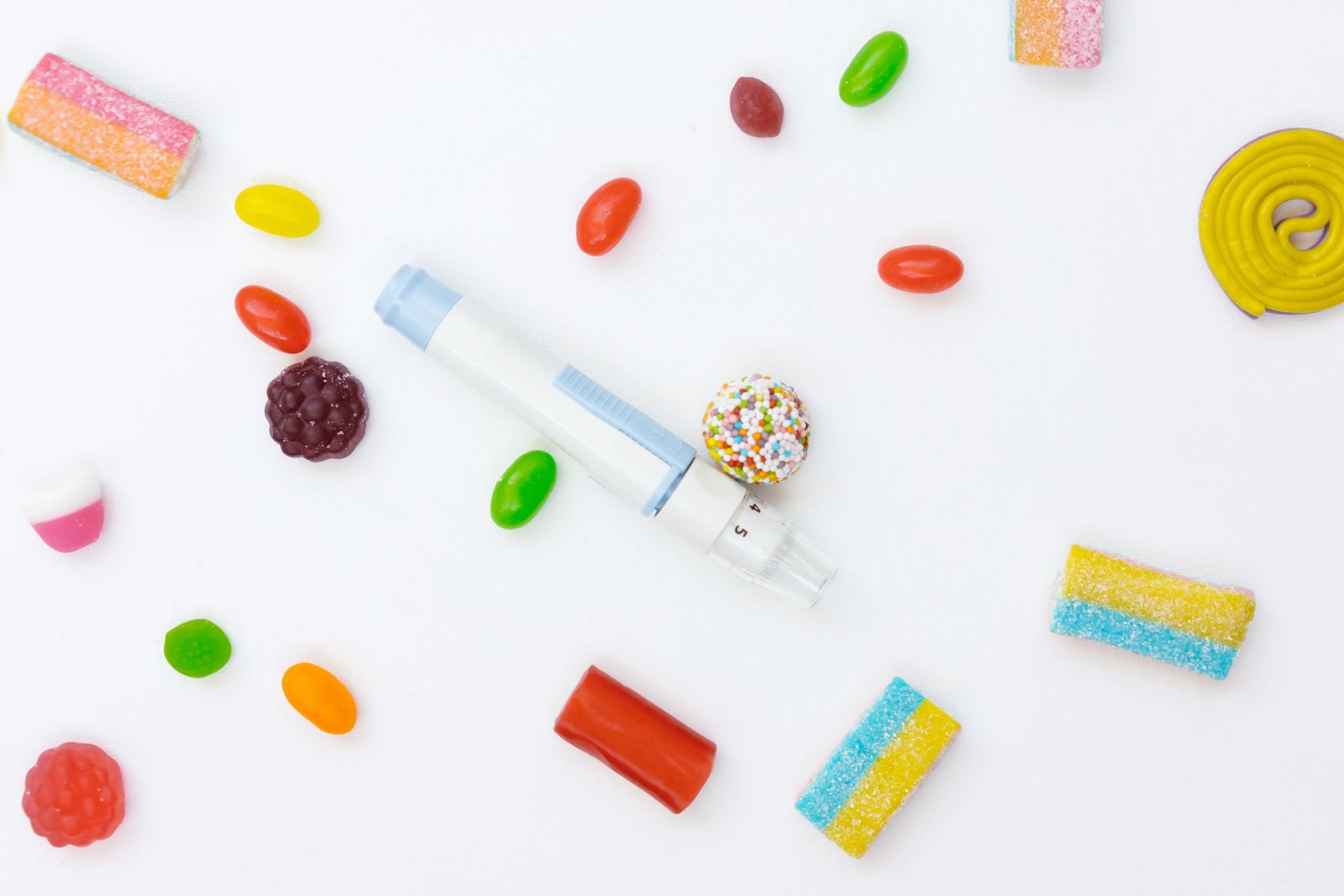
The Novo Nordisk Foundation, headquartered in a low-slung building in the Copenhagen suburb of Hellerup, controls 77% of the voting rights in the pharmaceutical company whose semaglutide molecule — sold as Ozempic and Wegovy — has reshaped how the world treats diabetes and obesity. The Foundation holds these votes through a class of shares called A-shares, which have never traded on any exchange, and which the Foundation’s own charter forbids it from ever selling. The maker of the most commercially successful drug of the 2020s is, in effect, owned by a charity that cannot cash out.
This is not a metaphor or a governance quirk. It is the actual legal structure.
The A-shares sit in a vault, so to speak, at Novo Holdings — the investment arm the Foundation uses to exercise its ownership. The B-shares, which trade freely on Nasdaq Copenhagen and as ADRs in New York, carry one-tenth the voting power. When retail investors and pension funds buy Novo Nordisk stock, they are buying B-shares. The A-shares remain locked, unsellable, and permanent.
A charity that outgrew the company it owns
The Foundation traces to the early 1920s, when the physiologist August Krogh — a Nobel Prize laureate — brought insulin production techniques from Toronto to Copenhagen with his wife Marie, a physician living with diabetes. The company they helped found produced insulin for Scandinavia within a year. A rival Copenhagen insulin maker, Novo Terapeutisk Laboratorium, was founded shortly after. The two merged in 1989 to form Novo Nordisk.
The Foundation, restructured into its modern form in the same period, was set aside as the permanent controlling owner. Its stated purpose is twofold: to keep the company Danish and independent, and to distribute its dividends to scientific and humanitarian causes.
That second purpose has grown into something extraordinary. By 2023, the Novo Nordisk Foundation had become the largest philanthropic foundation in the world by assets, holding roughly $150 billion at peak — most of it in the form of A-shares it is contractually forbidden from selling.
How the share structure actually works
Novo Nordisk has two classes of shares. A-shares carry ten votes each. B-shares carry one vote each. The Foundation, via Novo Holdings, owns all the A-shares and a portion of the B-shares. Even though the Foundation’s economic stake in Novo Nordisk is closer to 28%, its voting stake is 77%.
Dual-class share structures are common — Meta, Alphabet, and Ford use versions of them. What is unusual about Novo Nordisk is the identity of the controlling shareholder and the terms of its charter. The Foundation is a Danish enterprise foundation, a legal form that has no owners, no shareholders, and no members. It exists only for its stated purpose. It cannot be acquired. It cannot go public. It cannot be liquidated in the normal sense. And its founding charter explicitly prohibits the sale of the A-shares.
Research on ownership structure and corporate performance has long noted that concentrated, long-horizon shareholders behave differently from diffuse public markets — they tend to accept slower payoffs, tolerate research spending that hurts quarterly earnings, and resist takeover offers that public boards struggle to refuse.
The semaglutide windfall
Semaglutide, the GLP-1 receptor agonist molecule behind Ozempic and Wegovy, has propelled Novo Nordisk to become one of the most valuable listed companies in Europe. Its market capitalisation briefly exceeded the entire GDP of Denmark. The Foundation’s paper wealth swelled accordingly.
The molecule mimics a gut hormone that regulates insulin, appetite, and gastric emptying. It was originally approved for type 2 diabetes in 2017 and later, at a higher dose, for chronic weight management in 2021. Demand outstripped supply for years. Wegovy launched in the Chinese market in 2024 after years of anticipation.
Researchers are still cataloguing what semaglutide and its cousins can do. A 2024 review published via EurekAlert on GLP-1 agonists and healthspan examined evidence that the drug class may affect chronic inflammation, oxidative stress, and mitochondrial function — potentially with implications well beyond diabetes and weight. Separate work summarised by Psychology Today on GLP-1 agonists and mental illness has flagged early signals in addiction and mood disorders.
The commercial consequence is a company whose next decade of cash flows looks unlike anything else in European pharma. The governance consequence is that a Copenhagen charity, unable to sell its stake, is sitting on the largest single concentration of pharmaceutical wealth on Earth.
What the Foundation does with the money
The Foundation’s grant-making has scaled to match its assets. It funds the Novo Nordisk Foundation Center for Biosustainability at the Technical University of Denmark, the Center for Protein Research at the University of Copenhagen, and a growing portfolio of quantum-computing and bioengineering initiatives. It has committed billions of Danish kroner to global health programmes on antimicrobial resistance and diabetes access in low-income countries.
Its industrial spending has drawn attention too. The Foundation and Novo Holdings backed the construction of Europe’s largest green methanol plant, part of a broader Danish push into industrial decarbonisation that the Foundation’s dividend income helps underwrite.
The critical view is that a charity this large, tied this tightly to a single company, is not quite a charity in the ordinary sense — it is an industrial dynasty with a philanthropic budget. The defensive view is that the structure has kept the company Danish, kept it research-focused, and kept it out of the merger-and-acquisition churn that has hollowed out much of European pharma.
Why the structure survives scrutiny
Perpetual foundation ownership is not unique to Novo Nordisk. Carlsberg, the brewer, is majority-controlled by the Carlsberg Foundation. Bertelsmann, the German media conglomerate, sits under the Bertelsmann Stiftung. The Robert Bosch Stiftung holds most of the voting rights in Bosch. IKEA is ultimately controlled by a Dutch foundation with similar non-transferability provisions.
What these structures share is a rejection of the assumption that ownership must eventually be traded. In an Anglo-American framing, an owner is someone who bought in and can sell out. In the enterprise-foundation framing, an owner is a permanent steward whose only exit is failure.
Some pharmaceutical peers are moving in the opposite direction. In 2025, Innate Pharma proposed to transform its governance into a more conventional board-of-directors model, part of a broader trend of European biotechs adopting American-style structures to attract capital.
The political exposure
Being unsellable does not mean being untouchable. The Foundation’s fortunes rise and fall with Novo Nordisk’s, and Novo Nordisk sells its drugs into markets that are increasingly interested in what they cost.
In the United States, semaglutide’s list price of roughly $1,000 a month has made it a political target. The Trump administration’s May 2026 Most-Favored-Nation drug pricing framework aims to peg US prices closer to those paid in other wealthy countries — a policy that would, if fully implemented, compress margins on precisely the products the Foundation depends on. Investment analyses of pharmaceutical exposure, including reviews of the PPH pharmaceutical ETF’s concentration risks, have flagged drug-pricing policy as the dominant near-term variable.
China has launched a broader nationwide pharmaceutical probe touching on pricing and distribution practices across the sector. Regulatory pressure is no longer a distant risk.
The Foundation cannot sell its way out of any of it. It can only hold.
An unusual kind of permanence
The A-shares of Novo Nordisk are, in a strict legal sense, among the most illiquid securities on Earth. They confer control over one of the most valuable companies in Europe, and they cannot be transferred, pledged, auctioned, or inherited. They sit in the accounts of an institution that has no owners and no exit.
The scientists working on the next generation of GLP-1 molecules in Bagsværd, on the northern edge of Copenhagen, are employees of a company whose ultimate shareholder is a charter document. The dividends their work generates flow to the Foundation, which by design cannot spend them on itself — only on grants, capital projects, and reserves.
When Marie Krogh first injected insulin in 1923, she had months to live without it. A century later, the descendant of the small laboratory her husband helped set up is worth more than most nation-states, and the shares that control it are frozen in place by a document written to make sure no one could ever take it away.
