
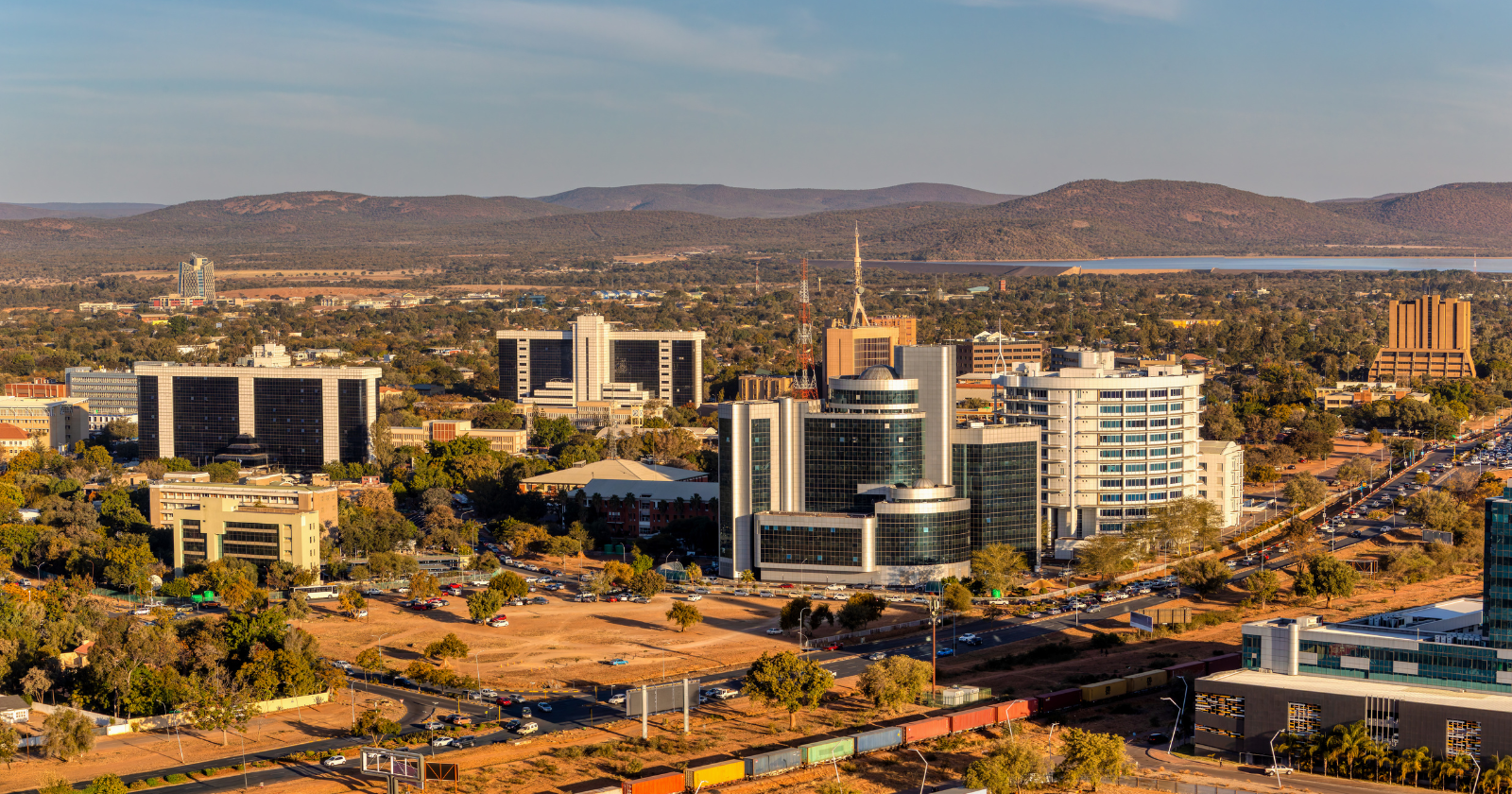
Twelve kilometres of paved road. That is the figure that opens almost every account of Botswana at independence. A country the size of France, freshly free of British rule on 30 September 1966, had barely enough sealed road to cross a mid-sized town. The economists Daron Acemoglu and James Robinson put the rest in the same frame. Botswana, they wrote, “had a total of twelve kilometers of paved roads, twenty-two citizens who had graduated from university, and one hundred from secondary school.”
So how did a country that poor end up, six decades later, as an upper-middle-income economy with one of the highest incomes per head on the continent and one of its cleanest records on corruption? The short answer is diamonds. The more interesting answer is what Botswana did with them.
The starting point in 1966
The former Bechuanaland Protectorate entered independence as one of the poorest places on Earth. The average annual income per head was under $80. There was little to build on and no obvious reason to expect what came next. Then, a year after independence, the country’s first major diamond find happened, which became the giant Orapa mine.
A mineral windfall on that scale usually ends badly. The pattern is common enough to have a name, the resource curse: sudden wealth props up a small elite, feeds corruption, and hollows out the rest of the economy. Botswana went the other way, posting some of the fastest growth recorded anywhere for decades after independence.
How the money was spent
The diamonds were mined through Debswana, a company jointly owned by the government and De Beers. That meant the state kept a large share of the money rather than watching it flow overseas. What mattered more was where the money went. Revenue was channelled through six-year national development plans into schools, clinics, and infrastructure, not into consumption or handouts to allies. As put by the IMF, they handled revenue in “prudent and transparent manner”.
The results showed up in the poverty figures. The share of the population living on less than $1.90 a day fell from 34.8% in 1993 to 18.2% in 2009. Roads were built and children were schooled, in a country that had started with almost none of either.
That reputation is measurable. Botswana scored 58 on Transparency International’s 2025 Corruption Perceptions Index, among the cleanest on the continent. The region averaged 32, with only four of its 49 countries scoring above 50.
Where the numbers sit today, and the caveats
Six decades on, the headline figures are hard to argue with. Income has reached more than $18,300 per head on a purchasing-power basis, among the highest in Africa.
But the success story has always carried a dissenting footnote. Researchers writing for the UN Research Institute for Social Development note that all that growth did little to broaden the economy beyond diamonds, or to bring down poverty and unemployment, both of which stay high for a country this rich.
The jobs figures bear that out. Even before the recent downturn, the unemployment rate was 27.6% overall, and 38.2% among young people in early 2024. A country can post one of the continent’s best incomes per head and still leave more than a quarter of its workers without a job.
Then the diamonds turned. Demand for natural stones fell harder and for longer than forecast, squeezed by cheaper lab-grown gems. The economy shrank 3 percent in 2024, with mining output down 24 percent. Diamonds still supply about a third of government revenue and roughly three-quarters of foreign exchange, so the shock ran straight through the public finances. Finance Minister Ndaba Gaolathe, presenting a forecast of further contraction, said it “reflects continued weakness in the diamond sector.”
What the six decades prove, and what they don’t
The record settles one long-running argument fairly cleanly. A resource windfall need not corrupt a state, provided the institutions to manage it are in place first. Botswana did the harder thing, turning geology into schools and roads while keeping the money largely out of private pockets.
What the record does not settle is whether the model outlives the stones that funded it. President Duma Boko’s government has floated taking a larger stake in the diamond trade, an ambition to “become the true owners” of the resource, even as the IMF warns against tying the state more tightly to a weakened market. The narrow, diamond-dependent economy that economists worried about has now arrived as a bill. Botswana’s first six decades answered whether a diamond economy could stay honest. The next turn is a question that era never had to face: what such an economy does when diamonds no longer pay as reliably as they once did.
