
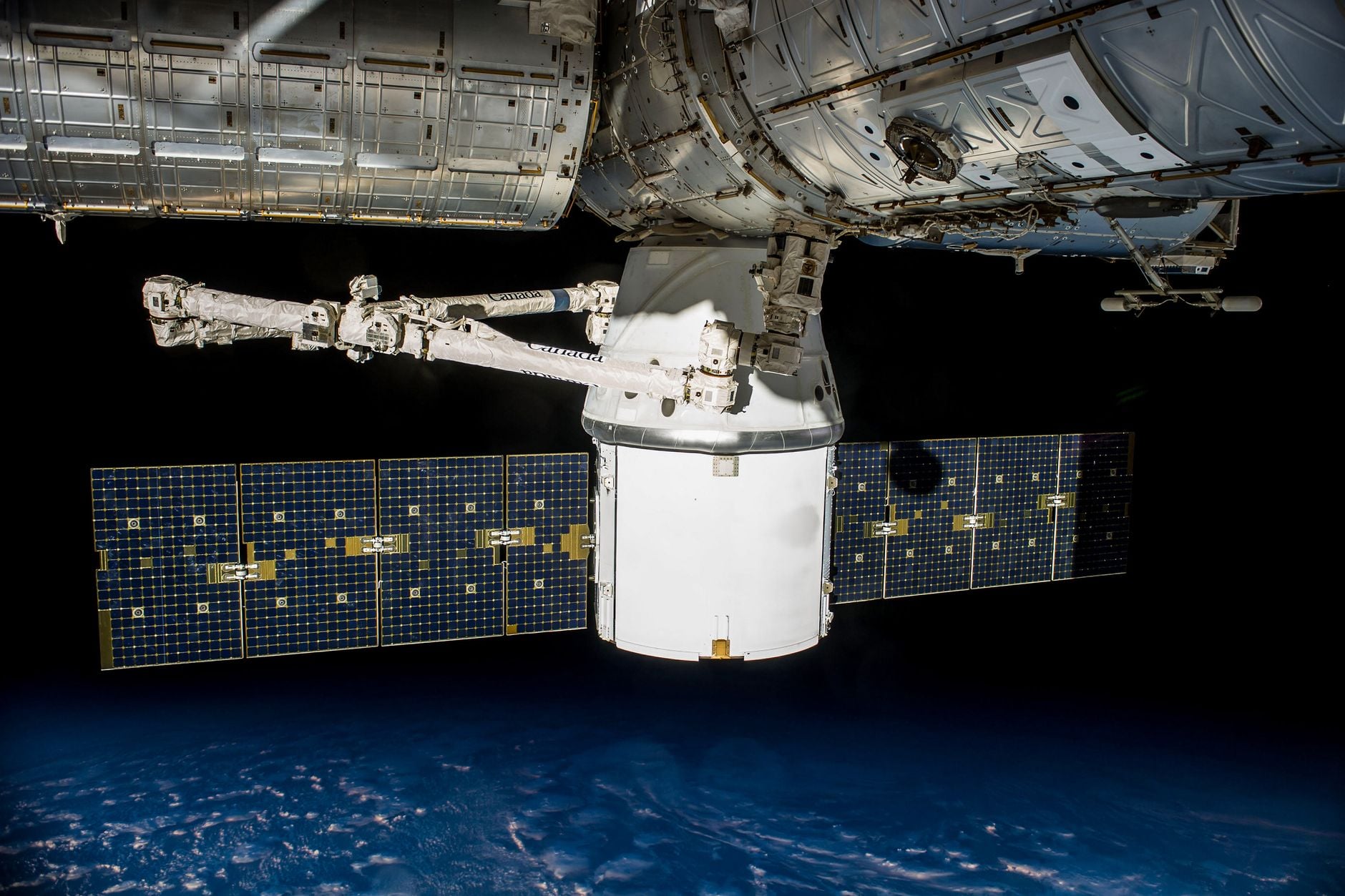
The Sun has been so active lately that it puffed up the top of Earth’s atmosphere and began dragging a NASA space telescope down toward a fiery reentry. Rather than let it burn, NASA hired a company to build a robotic rescuer in under a year, and this week that spacecraft launched to chase the telescope down and haul it back up to a safer orbit.
It is a genuinely novel piece of engineering, and also a sign of the times. The same solar activity that produces bright auroras has been quietly shortening the lives of satellites in low orbit, and this is the first time anyone has tried to save one this way.
Why a working telescope suddenly started falling
The telescope is the Neil Gehrels Swift Observatory, launched in 2004 and best known for catching gamma-ray bursts, the brief and violent flashes that mark some of the most extreme events in the universe. It orbits low, at an altitude of a few hundred kilometres, which is close enough that the thin outer atmosphere matters.
That is where the Sun comes in. We are near the peak of the Sun’s eleven-year activity cycle, and this peak has been stronger than forecasters expected. When the Sun is active, its extra output heats the upper atmosphere and makes it swell outward. Air that would normally sit lower puffs up to Swift’s altitude, and thicker air means more drag. The telescope started losing height faster than anyone had planned for, and mission managers came to a stark conclusion: Swift’s survival was now a matter of months, not years, with an uncontrolled reentry likely by the end of 2026.
A telescope worth saving
Swift is not cheap to walk away from. Between building it, launching it and running it for more than two decades, the observatory has cost around 500 million dollars. It also still does useful work, reacting within seconds to detect gamma-ray bursts and alerting other telescopes so they can turn to look. Replacing that capability would cost far more than trying to keep the existing instrument alive.
So NASA made a calculation. The observatory was worth rescuing, and the situation was a chance to prove a capability the agency will want again: reaching up to an ailing satellite and giving it back its orbit.
The rescuer built in seven months
In September 2025, NASA contracted a company called Katalyst Space Technologies and gave it roughly a year to design, build, test and launch a servicing spacecraft. The company did it in about seven months, an unusually fast turnaround for anything that has to work in space.
The result is a spacecraft named LINK, about the size of a household refrigerator. It carries ion engines for gentle, efficient thrust, three robotic arms, and a suite of sensors to find its target, close in on it and take hold. The whole rescue, spacecraft and launch included, cost NASA about 30 million dollars, a small fraction of the value of the telescope it is trying to save.
Catching something never meant to be caught
The hard part is the catch. Swift was launched in 2004 with no thought that anything would ever need to grab it. It has no docking port, no grapple fixture, none of the handles a spacecraft designed for servicing would carry. It was simply not built to be captured.
LINK therefore has to approach an uncooperative target on its own, judge its motion, and grip it firmly enough to push it without damaging it. If it works, it will be the first time a commercial spacecraft has captured a government satellite that was never designed for docking or servicing. That is the real significance beyond Swift itself: a demonstration that a satellite in trouble can be reached and rescued rather than written off.
The plan from here
LINK launched early on 3 July 2026 in an unusual way. It rode a Northrop Grumman Pegasus rocket that was carried aloft under a modified airliner over the Marshall Islands and dropped in mid-air before the rocket ignited and carried the spacecraft to orbit. An earlier attempt had been held up by a problem with the rocket.
From here the timeline is measured in weeks. LINK is expected to take about a month to catch up with Swift and capture it, then a couple of months more to use its ion engines to lift the telescope from its present orbit of roughly 360 kilometres up to about 600 kilometres. At that higher altitude the air is far thinner, the drag much weaker, and Swift should be stable again for years.
What to watch
The outcome is not guaranteed. The delicate step to watch is the rendezvous and capture, because approaching and grabbing an uncooperative satellite has never been done quite like this, and it has to go right before any reboost can begin. After that comes the slow climb to a safer orbit, a race against the very drag that started the problem.
The wider thing to watch is whether this works well enough to become routine. Solar activity is stressing satellites across low orbit, and the ability to send up a small robot to rescue a valuable spacecraft, rather than lose it, would be a useful new tool. For now, a refrigerator-sized machine with three arms is chasing a falling telescope, and the next few months will show whether the catch can be made.
