
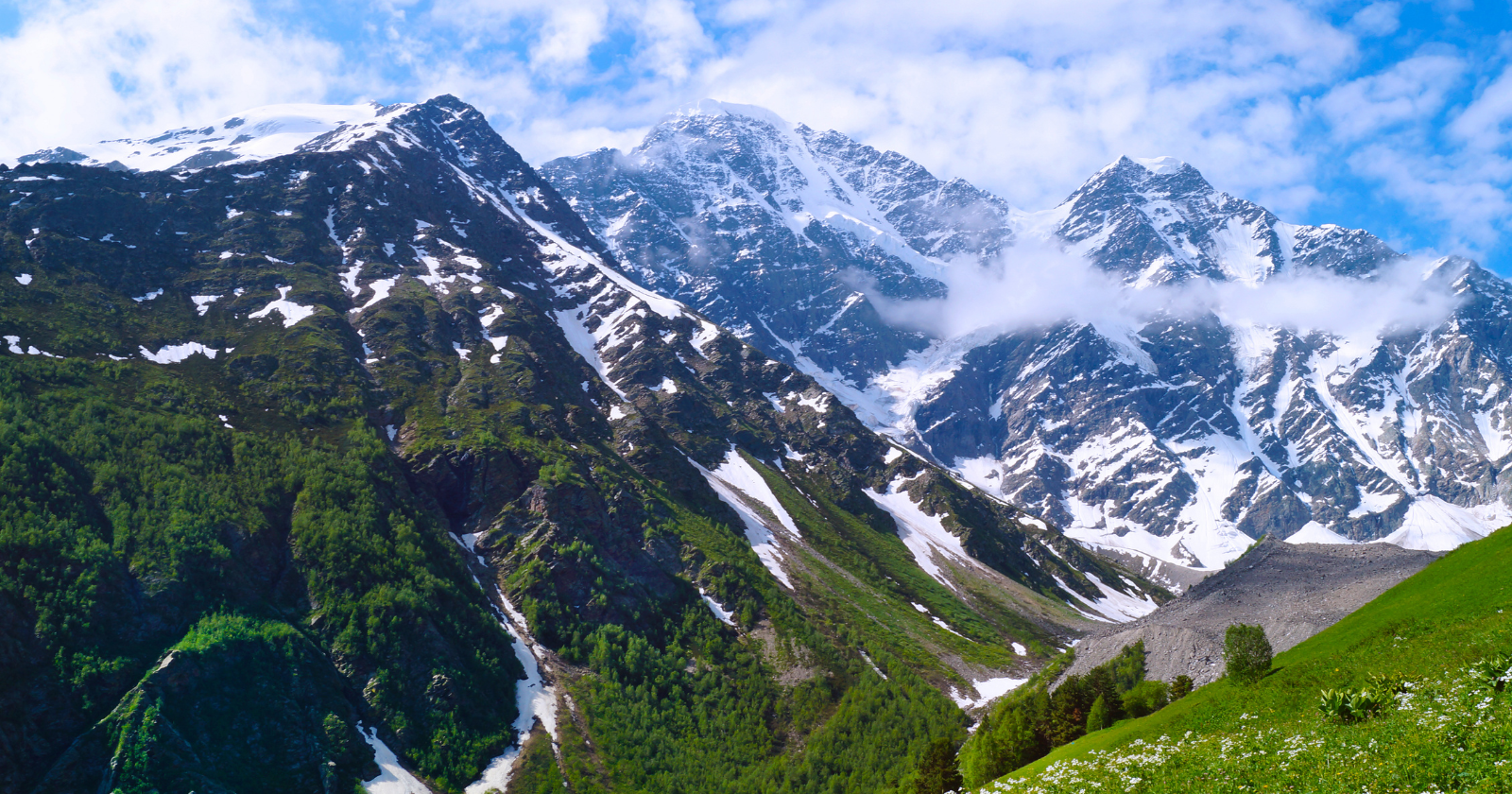
The entrance to Veryovkina Cave is, in physical terms, unimpressive. A roughly square opening about three metres wide and four metres long, sitting on the side of a remote Caucasian mountain at an elevation of 2,285 metres, gives no immediate indication of what sits beneath it. A small group of Soviet cavers from Krasnoyarsk first encountered the entrance in 1968. They descended to a depth of approximately 115 metres before turning back, unaware that the shaft beneath their feet continued downward for another two kilometres. Over the next half-century, more than thirty separate expeditions by Russian and international caving teams pushed the documented depth of the cave progressively further — to 440 metres by the mid-1980s, then a pause through the post-Soviet collapse, then renewed expeditions through the 2000s and 2010s — until a team from the Moscow-based Perovo Speleo Club, in March 2018, reached a terminal underground siphon they named Captain Nemo’s Last Stand at 2,212 metres below the entrance. The measurement made Veryovkina, by a small margin, one of the two deepest caves ever documented on Earth, alongside the nearby Krubera-Voronja Cave whose own claim to the depth record fluctuates with each new measurement.
According to a comprehensive reference summary of the cave’s exploration history and the geology that produced it, the Arabika Massif itself contains four of the deepest known caves on the planet — Veryovkina, Krubera-Voronja (2,199 metres), Sarma (1,830 metres), and Snezhnaja (1,760 metres) — all formed within the same massive limestone formation that was deposited during the Upper Jurassic and Lower Cretaceous periods, was subsequently uplifted by the Alpine orogeny as the Eurasian and Arabian tectonic plates collided, and has been gradually dissolved over millions of years by slightly acidic groundwater dripping through fractures in the rock. The cumulative result is a karst landscape with carbonate rock more than two kilometres thick, sloping continuously southwest toward the Black Sea, riddled with vertical shafts and horizontal passages that descend much further into the planet than any other comparable region known to science.
What the descent actually involves
The journey from the surface to the bottom of Veryovkina takes approximately four days of continuous, physically demanding caving. As reported by National Geographic’s coverage of a Perovo Speleo expedition in September 2018 that nearly ended in tragedy, the descent involves rappelling down successive vertical shafts on fixed ropes, with the longest single drop measuring approximately 152 metres of straight free-hanging descent through darkness. Cavers carry their food, sleeping equipment, photographic gear, and waste-disposal equipment in water-tight plastic packages roped to their bodies, with intermediate camps established at fixed depths along the route — typically at minus 600 metres, minus 1,300 metres, and minus 2,100 metres — so that the team can rest, sleep, eat, and prepare for the next stage of the descent. The temperature inside the cave hovers steadily around 4 degrees Celsius, just above freezing. Humidity is 100 percent. Water continuously seeps down the shafts from the surface, soaking the ropes, the equipment, and the cavers themselves. Hypothermia is a constant concern. So is fatigue, which accumulates across the multiple days of descent and ascent, with the climb back to the surface being the more physically demanding portion of the round-trip because every metre of vertical rope must be ascended against gravity using mechanical climbing equipment.
The 2018 expedition described by National Geographic ended with a flood pulse triggered by heavy surface rainfall, which inundated the lower passages of the cave while the team was at the deepest camp at minus 2,200 metres. The cavers — including the Russian Perovo team and two British photographers, Robbie Shone and Jeff Wade — received a warning from team members already partway up the route and began an emergency ascent through rapidly rising water. The escape took more than sixteen continuous hours. All survived. The expedition’s leader, Pavel Demidov, would die two years later in a separate cave in the same Arabika Massif when a rock burst killed him at a depth of approximately 305 metres. In 2020, the Russian caver Sergei Kozeev attempted a solo descent of Veryovkina and died of hypothermia at minus 1,100 metres after failing to ascend a wet section requiring climbing equipment he had not brought with him. His body was recovered the following year.
The darkness in the deepest chambers
The psychological dimension of the experience is less obvious from the surface than the physical one but is, by every available account from cavers who have completed the descent, the part that distinguishes Veryovkina from ordinary cave exploration. Per a Daily Galaxy account of the conditions at the cave’s deepest reaches and the biological communities that survive there, the level of darkness encountered in the chambers more than two kilometres below the surface is more complete than any darkness available at the Earth’s surface anywhere — not the dim darkness of a moonless night, not the dark of a tightly closed bedroom, but the absolute, photon-free darkness of an environment that has never received, and could never receive, sunlight or atmospheric scattered light of any kind. The human visual system, deprived of any input for sustained periods, does not simply register the absence. The brain begins, in the deepest chambers, to generate hallucinated light of its own — spontaneous flashes of colour, drifting patterns, occasional brief illuminations of objects that are not present — as the visual cortex attempts to construct sensory information from the only signals available to it, which are the random firings of its own neurons. The phenomenon is related to what neurologists call the Ganzfeld effect or “prisoner’s cinema” in other sensory-deprivation contexts. Cavers in Veryovkina’s deepest passages report it as a feature of the experience that no surface analogy adequately prepares them for.
As covered by an Explorersweb feature on the cave’s exploration history and the broader physical extremity of the environment, the combined effect of multi-day darkness, near-freezing temperatures, total humidity, continuous physical exertion, and the constant awareness of being separated from the surface by more than two kilometres of solid limestone has produced documented psychological effects in essentially every experienced caver who has reached the cave’s lower depths. Demidov, who led the 2018 record-setting expedition before his death two years later, described the environment in interview as “like having a look at the far side of the Moon.” The terminal siphon at the cave’s bottom is a still, turquoise-coloured pool of water approximately fifteen metres long and eight metres wide, surrounded by jet-black limestone walls, illuminated only by the artificial lights brought down by the expedition. Robbie Shone, the British photographer who captured the only photographs ever taken of the location, described it as “beautiful but at the same time eerie.” The lake is, by current measurement, the deepest known point inside Earth’s crust that a human being can physically reach without specialised diving equipment — a point so far below the surface that essentially every cultural reference point for “depth” available to surface-dwellers becomes inadequate, and where the human brain, lacking any external visual input for hours or days at a time, begins generating its own.
