Space, science, and the human mind. Since 1995.
Space Daily Editorial Team
Editorial Team

Space Daily Editorial Team

Editorial Team

The Space Daily Editorial Team produces content across our two editorial pillars: space industry news and Mind & Meaning. We cover launches, missions, satellites, defense, and the technology of getting humans to space, alongside the psychology of ambition, isolation, and meaning under extremes. Articles reflect our team's collective editorial process, source verification, drafting, technical review, and editing, rather than a single writer's work. Space Daily takes editorial responsibility for content under this byline. For more on how we work, see our editorial policy.

Mind & Meaning

In 2023, researchers placed a GPS collar on a young bull elephant in Zambia. Two years later, his path stretched across four countries and six national parks, revealing the ancient routes elephants still remember, and the human borders now cutting through them

A young bull elephant in southern Africa has spent the past two years walking. Fitted with a GPS collar north of Sioma Ngwezi National Park in Zambia in June 2023, the animal, known to researchers as Z16, has since covered close to 12,000 kilometres on foot.

Science

In November 1957, a stray dog from Moscow’s streets was strapped into Sputnik 2 and launched into orbit in a capsule never designed to come home — and Soviet officials claimed for 45 years that Laika had died painlessly after several days, until a scientist admitted in 2002 she had died within hours when the thermal control failed.

{"content":"On 3 November 1957, a small mongrel dog named Laika lay strapped inside a pressurised capsule roughly the size of a washing machine, riding a modified R-7 intercontinental ballistic mis

Moon Daily

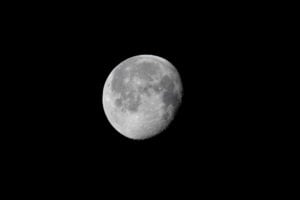
The moon is drifting away from Earth by about 3.8 centimetres a year — measured to the millimetre by bouncing laser light off mirrors the Apollo astronauts left sitting in the lunar dust more than half a century ago

The corner-cube reflectors Buzz Aldrin, Alan Shepard and David Scott left on the Moon between 1969 and 1971 are still returning laser pulses fired from Earth — and 57 years of measurements show our nearest neighbour is receding at exactly 3.8 centimetres a year, the rate a human fingernail grows.

Flora And Fauna

In 1960, anthropologist Louis Leakey sent a 26-year-old English secretary named Jane Goodall — who had no university degree and no scientific training — to a stretch of forest called Gombe to study wild chimpanzees. Within months she had observed a chimpanzee stripping leaves off a stalk to fish termites from a mound, overturning the long-held belief that only humans made and used tools

For most of the twentieth century, science had a simple test for what made us human: we made tools, and no other animal did.