
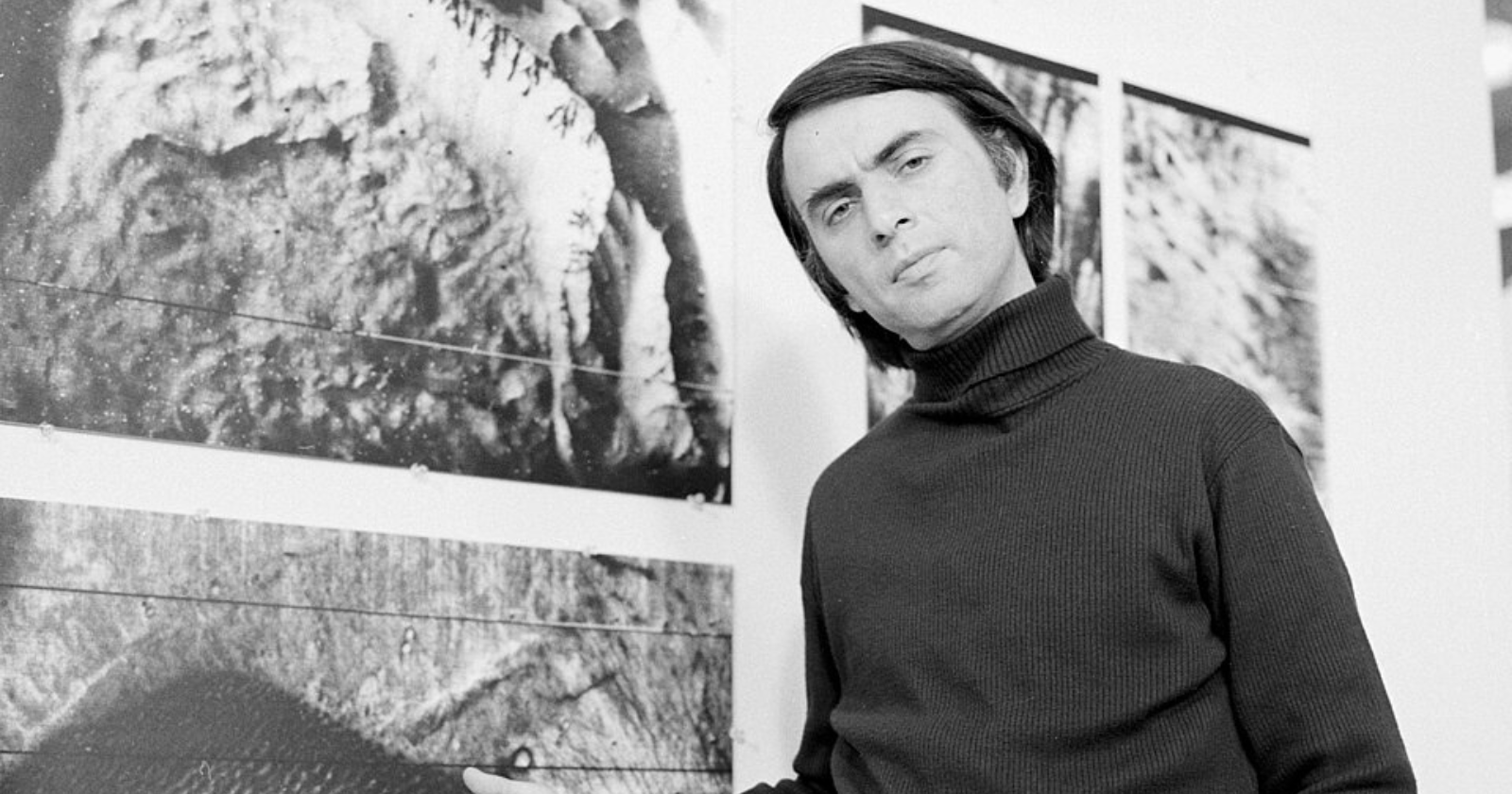
Around 1967, Harvard turned down a young astronomer for tenure. His name was Carl Sagan. He had joined the faculty in 1962, and he was already becoming a familiar face to a far wider public than most academics reach.
Part of the reason Harvard passed on him, by many accounts, was that senior colleagues thought his popular writing was beneath serious science. What happened next has become one of the more instructive stories about how institutions judge their own people.
The Harvard decision and what drove it
The tenure denial has long been attributed to faculty discomfort with Sagan’s wide-ranging interests and his rising public profile. One name comes up repeatedly: Harold Urey, the Nobel Prize-winning chemist who had mentored Sagan and then wrote strongly against giving him tenure. In Keay Davidson’s biography, Davidson describes Urey’s objection as reflecting “doubts about his sense of scientific responsibility.” That is a biographer’s summing-up of a disputed episode, not Urey’s own words, and it is worth reading as one careful account rather than the final word.
Others saw plainer politics at work. Lester Grinspoon, a psychiatrist at Harvard Medical School and a friend of Sagan’s, later gave his own read of the culture. In Grinspoon’s view, “I know Harvard well enough to know there are people there who certainly do not like people who are outspoken.”
What ‘serious science’ meant to the gatekeepers
The assumption behind the objection now has a name. The “Sagan Effect” is the belief that a scientist who is popular with the public must be a weaker researcher — that fame runs opposite to the amount and quality of real science. When Jensen and colleagues put it to the test, it largely didn’t hold: the researchers who did public outreach were, if anything, more academically active than their peers.
Sagan’s own record is the sharpest answer. He published more than 600 scientific papers and articles. Biographers, cited in the Jensen study, found that worked out to roughly one peer-reviewed paper a month. Whatever the gatekeepers thought popular writing did to his seriousness, the publication record says otherwise.
The bias outlasted him. A 2024 review led by neuroscientist Susana Martinez-Conde, summarised by the National Academies, found that “most disseminators incur no net penalty in their careers, and may even benefit slightly, yet they obtain few or no institutional rewards for their communication activities.” Scientists who talk to the public are usually not hurt by it now, but their institutions rarely reward them for it either. That is one study, but it fits Sagan closely. The same reflex showed up later when the National Academy of Sciences rejected him too.
Cornell’s bet and what it produced
Cornell saw it differently. Thomas Gold, who ran the university’s Center for Radiophysics and Space Research, went after Sagan and reassured the provost about the hire. Gold told him, “Dale, you will not ever regret this.” The Cornell Board of Trustees appointed Sagan an associate professor of astronomy in 1968, with tenure and a starting salary of $15,000 a year.
He became a full professor in 1971 and was later named the David Duncan Professor of Astronomy and Space Sciences. Sources disagree on the exact year that chair began: Wikipedia says 1976, while the American Astronomical Society obituary says 1977. Either way, he held it for roughly the last two decades of his life and ran Cornell’s Laboratory for Planetary Studies as well, until his death on 20 December 1996.
The irony the tenure system never resolved
Urey came to regret his reference. In a letter dated 17 September 1973, he apologised to Sagan and, as the Cornell record shows, wrote plainly: “I have been completely wrong.” The man whose objection helped close the door at Harvard had reversed himself within a few years.
The verdict from Sagan’s own department came after his death. Yervant Terzian, who chaired Cornell astronomy, said in tribute that “Carl was a candle in the dark.” He called Sagan the best science educator of his century.
The decision meant to protect serious science ended up handing a rival one of the most productive and public scientists of the era, tenure and all. Cornell kept him for nearly three decades. Harvard’s judgement, whatever it intended, simply found him a home somewhere else.
