
On 3 November 1957, a small mongrel dog named Laika lay strapped inside a pressurised capsule roughly the size of a washing machine, riding a modified R-7 intercontinental ballistic missile into orbit above the Earth. She had been picked up as a stray on the streets of Moscow only days earlier. For 45 years, Soviet officials told the world she had orbited peacefully for close to a week before being euthanised by poisoned food. In 2002, a scientist who had worked on the mission finally admitted the truth: Laika had died within hours of reaching orbit, killed by heat and panic when the thermal control system failed on a spacecraft that had never been designed to bring her home.
She was the first living creature to orbit the Earth. She was also, from the moment the launch tower fell away at Baikonur, going to die there.
A dog off the street, on a deadline
The launch of the first Sputnik on 4 October 1957 caught the world by surprise with how loudly it landed in the global imagination. Nikita Khrushchev wanted a sequel, and he wanted it fast. He ordered a follow-up flight timed to the 40th anniversary of the Bolshevik Revolution on 7 November. That gave the engineers at OKB-1, led by Sergei Korolev, less than four weeks to design, build and launch a spacecraft that would carry a living passenger.
There was no time to design a re-entry system. There was barely time to design the capsule at all.
Soviet biomedical researchers had been flying dogs on sub-orbital rocket hops since 1951, and they had settled on a preferred profile: small, calm, light-coloured females, ideally strays, on the theory that animals that had already survived Moscow winters would tolerate stress better than pampered pets. According to reporting on the selection process, three candidates were shortlisted. The chosen dog was a roughly three-year-old mongrel weighing about six kilograms, part husky, part terrier, with a quiet temperament. She was called Kudryavka at first — “Little Curly” — but the world came to know her as Laika, “Barker.”
The capsule that was never coming back
Sputnik 2 weighed about 508 kilograms — more than six times the mass of the first Sputnik. It carried a pressurised cabin lined with padding, a food dispenser that offered a nutritious gel, a bag for waste, and a harness that allowed Laika to stand, sit or lie down but not turn around. Sensors tracked her heart rate, breathing and blood pressure. A small fan was meant to switch on if the cabin temperature climbed above 15°C.
What the capsule did not have was any means of returning to Earth. The Smithsonian’s account of the mission is blunt about it: Sputnik 2 was a one-way spacecraft. The plan, such as it was, called for Laika to be poisoned by a dose of tainted food after roughly a week in orbit, before her oxygen ran out. The engineers building the capsule knew this. The veterinarians who trained her knew this. Vladimir Yazdovsky, the lead scientist on the biological programme, took Laika home to play with his children in the days before the launch. He later wrote that he wanted to do something nice for her, because she had so little time left.
What actually happened in orbit
Sputnik 2 lifted off from the Tyuratam launch site — now Baikonur Cosmodrome — at 2:30 a.m. Moscow time on 3 November 1957. The R-7 boosted it into an elliptical orbit ranging from about 212 to 1,660 kilometres above the Earth. Telemetry showed Laika’s pulse spike to roughly three times its resting rate during the ascent. Her breathing rate quadrupled. Then things began to go wrong.
The core stage of the rocket failed to separate cleanly from the capsule. That mattered, because the thermal insulation calculations had assumed the two would part ways. With the booster still attached, heat could not radiate away as designed. Cabin temperatures began to climb past 40°C. The fan, if it fired, was not enough.
Laika’s heart rate, which should have settled after weightlessness, stayed elevated. Then the biosensor traces started to flatten.
Forty-five years of a comforting lie
The Soviet press announced that Laika had orbited the Earth for several days, providing valuable data on how a living body handled spaceflight, and had then been humanely put to sleep. Different official accounts gave different timelines — four days, six days, a week — but the common thread was that she had died calmly, on schedule, after her mission was complete. TASS bulletins described her as content. Postage stamps carried her portrait. She became a symbol, a small dark-eyed face on posters, a Soviet answer to the American question of what humans might survive in space.
The truth stayed inside the programme for the rest of the Cold War. It did not surface with the fall of the Soviet Union in 1991. It emerged, finally, at a scientific conference in Houston in October 2002, when Dimitri Malashenkov of the Institute for Biological Problems in Moscow presented a paper drawn from previously classified Sputnik 2 telemetry. Laika, he said, had died between five and seven hours into the flight, from a combination of overheating and stress, somewhere between the fourth orbit and the fifth. Contemporary reporting on Malashenkov’s disclosure put it plainly: the thermal control system had failed and there had never been a plan to bring her home.
The capsule itself continued to orbit, silent, for another five months. It re-entered the atmosphere on 14 April 1958, and burned up over the Caribbean. By then Laika had been dead for 162 days.
Why the story matters, and why it was hidden
The Soviet space programme built its early legend on a run of firsts: first satellite, first animal in orbit, first human in orbit with Yuri Gagarin in April 1961, first woman, first spacewalk. The engineering behind each of those firsts was extraordinary, and it was also chronically rushed, politically pressured and physically dangerous in ways the public was not told. Space Daily has previously looked at how Gagarin himself watched flames outside his porthole and thought he was burning up on the way down. The gap between the polished announcement and the operational reality was the house style.
Laika sat at the sharp end of that gap. Admitting that she had died from overheating within hours of launch would have meant admitting that the thermal design had failed, that the schedule had been driven by a Kremlin anniversary rather than by readiness, and that the first living creature humans sent to orbit had died badly and alone. Space Daily has covered the gap between the public account and the eventual disclosure in previous pieces; the shape of it says a lot about what a closed programme protects.
The people who knew
Oleg Gazenko, one of the senior scientists on the biomedical programme, spoke publicly about Laika in 1998, four years before Malashenkov’s presentation. He expressed regret for what had been done to her. “Work with animals is a source of suffering to all of us,” he said. “We treat them like babies who cannot speak. The more time passes, the more I’m sorry about it. We shouldn’t have done it… We did not learn enough from this mission to justify the death of the dog.”
Dimitri Malashenkov’s 2002 presentation supplied the telemetry that had been kept classified. It showed Laika’s vital signs collapsing between the fourth and fifth orbits. He also noted that it had been practically impossible to create a reliable temperature control system in the limited time the engineers had been given before the politically fixed launch date.
That last point matters. Sputnik 2 was defended at the time as a scientific necessity — proof that a living body could survive launch and weightlessness, groundwork for eventual human flight. In practice, because the thermal system failed so early, the mission returned only a few hours of useful biological telemetry from an animal already in acute physiological distress. The engineers learned that a mammal could survive ascent and reach orbit alive. They did not learn much beyond that.
The Soviet Union did fly other dogs, and did bring most of them home. Belka and Strelka orbited for a full day in August 1960 aboard Sputnik 5 and returned alive, along with a rabbit, mice, rats, flies and plants. One of Strelka’s puppies was later given to Caroline Kennedy. The programme learned how to build a re-entry capsule. It had not, in November 1957, bothered to try.
A monument, eventually
For decades after her death, Laika had no formal memorial in Russia. A plaque at the Institute for Biological Problems listed her name among the animals used in space research. That was it. In April 2008, more than 50 years after the launch and six years after Malashenkov’s admission, a small monument was unveiled outside the military research facility in Moscow where she had been trained. It shows a dog standing on top of a rocket. She is looking up.
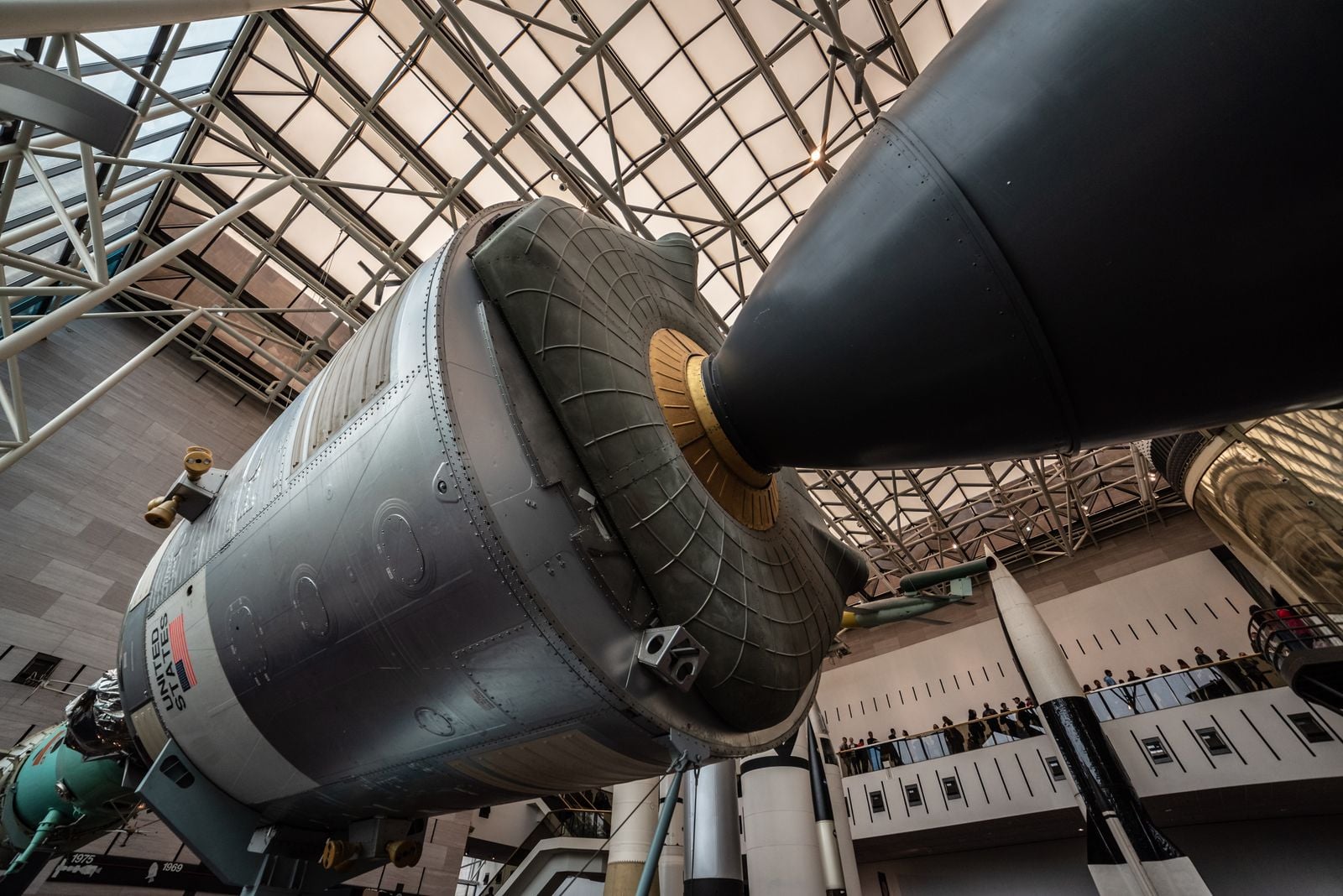
The Smithsonian’s National Air and Space Museum holds a training capsule of the same design that carried her, on loan from Russian collections, and it is startlingly small in person — the kind of enclosure that would be considered cramped for a medium-sized dog on a car journey, let alone as a permanent home in orbit.
The R-7 rocket family that lofted her is, in one of the stranger continuities in engineering history, still flying. Derivatives of the same booster now launch Soyuz crews to the International Space Station. When astronauts ride uphill from Baikonur today, they are riding a direct descendant of the vehicle that killed Laika inside its own nose cone in 1957.
What Sputnik 2 actually taught
The mission’s real lesson, the one that took 45 years to reach the public, is about what a programme will authorise when a deadline is political rather than technical. Sputnik 2 flew on 3 November because 7 November was the anniversary. Every corner cut in the capsule design — no re-entry system, insulation calculations that assumed a clean booster separation, a cooling loop with no redundancy — traces back to that date on Khrushchev’s calendar. A dog paid for it in a few hours of terrified panting inside a metal drum 1,600 kilometres above her home.
The shock of Sputnik in American politics is the part of the story that gets told in US textbooks — the founding of NASA, the panic about science education, the birth of the space race. The dog inside the second Sputnik gets a line, sometimes a photograph. What she went through in the hours after launch, on the far side of the world, went unspoken until a scientist stood up in a conference room in Houston in the autumn of 2002 and said the number out loud.
Between five and seven hours. That is how long the first living creature humans put into orbit was alive up there. The capsule kept circling for another five months without her, a small warm metal object going cold, tracing an ellipse over a planet that had been told a gentler story.
