Space, science, and the human mind. Since 1995.
Mission Notes
A Space Daily column

Mission Notes

Spaceflight and industry

Mission Notes follows the business and engineering of spaceflight. Rockets, satellites, contracts, and the industry behind the missions. Space Daily has reported on this beat since 1995, when the launch industry was a fraction of its current size.

Moon Daily

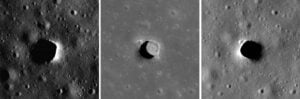
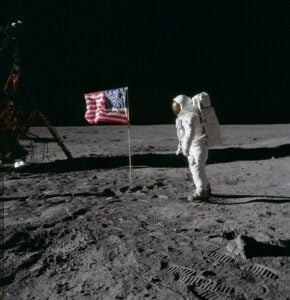
The Moon’s south pole can spend days in darkness, temperatures can plunge below −200°C, and unprotected electronics may not survive — Northrop Grumman is repurposing hardware built for NASA’s shelved Gateway station to test how lunar systems cope before astronauts are targeted to land in 2028.

Gateway-era hardware may help test lunar-surface thermal and electronics risks, but NASA has not finalised HALO's reuse and its early-2028 Artemis IV landing remains a target.

Moon Daily

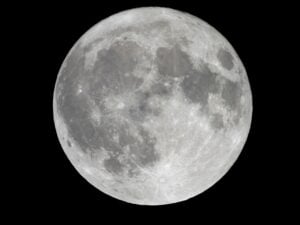
When Luna 2 struck the Moon in September 1959, its instruments had found no detectable lunar magnetic field or radiation belts, while two explosive spheres were meant to scatter 144 steel Soviet pennants across the impact site

On 13 September 1959, a 390-kilogram Soviet probe hit Mare Imbrium at roughly 3.3 kilometres per second, becoming the first human-made object to reach another world — and scattering, in theory, dozens of stainless-steel Soviet pennants across the impact site.

Saturn Daily

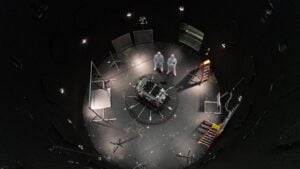
NASA is currently assembling a nuclear-powered octocopter in a Maryland cleanroom that is scheduled to reach Saturn’s moon Titan in 2034. Titan’s atmosphere is more than four times as dense as Earth’s while its gravity is only about one-seventh as strong—conditions that make rotorcraft flight extraordinarily efficient, with ideal hover calculations requiring roughly 40 times less power than on Earth.

Dragonfly's flight fuselage is in integration at Johns Hopkins APL. Titan's dense air and low gravity explain the ideal 40-to-one hover-power comparison, but not the spacecraft's full energy budget.

Aerospace

In January 1961, a chimpanzee named Ham was strapped into a Mercury capsule and launched on a suborbital arc that overshot its target by roughly 240 kilometres, and when the hatch was opened aboard the USS Donner, he was found alive, slightly dehydrated, somewhat exhausted, and carrying a small abrasion across his nose

On 31 January 1961, a six-year-old chimpanzee named Ham rode a Mercury-Redstone rocket on the suborbital arc that would carry Alan Shepard three months later — and came back alive, uninjured, and unwilling ever again to sit in the couch.

Constellations

In September 1983, a Soviet lieutenant colonel named Stanislav Petrov sat in a bunker south of Moscow watching his early-warning screens light up with five incoming American missiles, and instead of phoning it up the chain he decided the computer was lying and waited — a judgment call that historians now credit with preventing a retaliatory nuclear launch

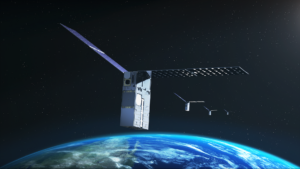
Just after midnight on 26 September 1983, the Soviet Union's new Oko early-warning satellites told Lieutenant Colonel Stanislav Petrov that five American missiles were inbound. He decided the computer was lying — and was right.

Space Scopes

In 1966, the Soviet chief designer behind Sputnik, Gagarin’s flight, and the entire early space program died during routine surgery, and only then did the world learn his name was Sergei Korolev — for a decade Moscow had referred to him in print only as the Chief Designer, because the KGB feared the CIA would have him killed

For roughly a decade before his death in January 1966, Sergei Korolev — the engineer who built Sputnik, launched Gagarin, and ran the Soviet lunar program — was referred to in Soviet media only as the Chief Designer. His name appeared in print for the first time in his own obituary.

Climate Science

The Huygens probe detached from Cassini in December 2004 and spent 22 days coasting silently toward Titan before parachuting through an orange methane haze for two and a half hours, and when it thumped down on a plain of ice pebbles it kept transmitting for 90 more minutes from a moon nobody had ever seen the surface of

On 14 January 2005, ESA's Huygens probe parachuted through Titan's orange methane haze and kept transmitting for 90 minutes from the surface — still the most distant landing in history.