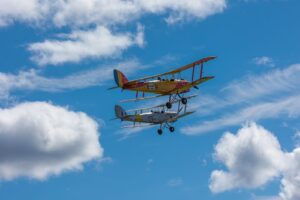
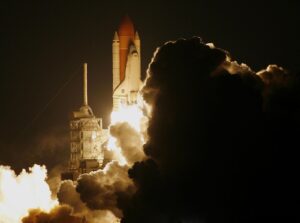
Science The Wright brothers made the first powered flight in 1903 and Apollo 11 landed on the Moon in 1969, close enough together that a single person could have witnessed both within one lifetime By Space Daily Editorial Team · Jun 22, 2026
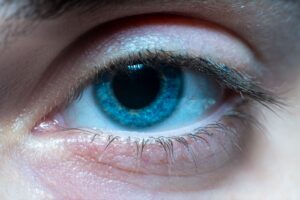
Science Everyone with ordinary inherited blue eyes appears to share a common ancestor, probably someone who lived around 6,000 to 10,000 years ago, when a tiny genetic switch near the OCA2 gene reduced brown pigment in the iris — meaning blue eyes, as we know them today, may trace back to one ancient mutation. By Space Daily Editorial Team · Jun 22, 2026
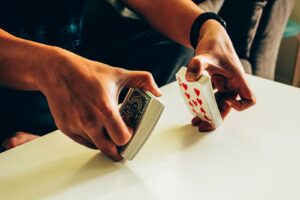
Science Every time you give a deck of cards a proper shuffle you almost certainly create an order that has never existed before in the history of the universe, because the possible arrangements vastly outnumber the seconds since the Big Bang By Space Daily Editorial Team · Jun 21, 2026
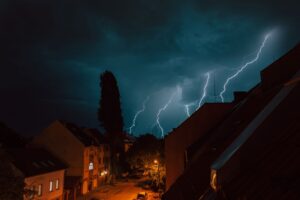
Science Apollo 12 was struck by lightning twice in the first 52 seconds of flight, filling the spacecraft with warning lights and turning Mission Control’s data into nonsense — until a young controller named John Aaron recognised an obscure failure pattern and calmly said: “Try SCE to Aux.” By Space Daily Editorial Team · Jun 21, 2026
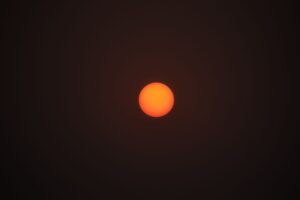
Space Industry NASA's STEREO-A spacecraft happened to be sitting in the path of the July 2012 Carrington-class storm and took the full hit instead of Earth — the only reason we have detailed measurements of a blow we never felt By Space Daily Editorial Team · Jun 21, 2026
Space Industry Solar storms don't shock people directly — they induce electric currents in long metal, meaning power lines, pipelines and undersea internet cables become the very antennas that channel the damage into modern life By Space Daily Editorial Team · Jun 21, 2026
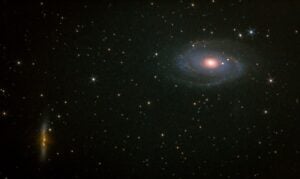
Constellations Our galaxy and its neighbours are racing through space at more than two million kilometres an hour, caught in a tug-of-war between the gravity of distant superclusters ahead and a vast, near-empty void shoving us from behind By Deep Field · Jun 21, 2026
Mind & Meaning Researchers had 124 adults cut their email checking to three times a day — what dropped wasn't their workload, it was their daily stress By Mal James · Jun 21, 2026
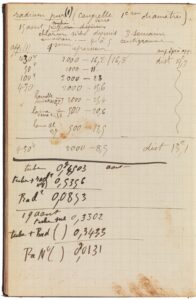
Science The notebooks Marie Curie used in her research remain radioactively contaminated more than a hundred years later. Some Curie papers have been found contaminated with radium-226, an isotope with a half-life of about 1,600 years, and original volumes are kept under strict radiation-protection controls before anyone can handle them. By Space Daily Editorial Team · Jun 21, 2026
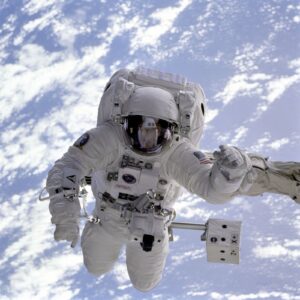
Science In the weightlessness of orbit, an astronaut’s heart can become more spherical as it no longer works against gravity in the usual way, while their spine stretches enough to make them measurably taller before they return to Earth. By Space Daily Editorial Team · Jun 21, 2026
Constellations In the far future the expansion of space will carry every other galaxy beyond the reach of our telescopes, leaving the astronomers of that era with an empty sky and no way to ever discover that the Big Bang happened By Deep Field · Jun 21, 2026
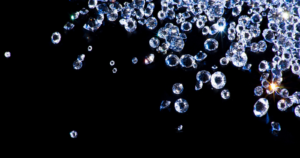
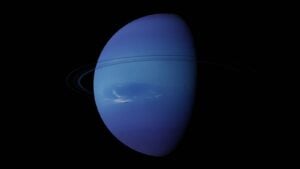
Constellations Deep inside Neptune and Uranus the pressure is thought to crush carbon into diamonds, which then sink slowly through the planet as a glittering rain By Deep Field · Jun 21, 2026
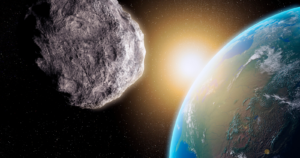
Deep Impact About 66 million years ago an asteroid roughly 10-15 km wide struck off Mexico's Yucatan, gouging a crater some 180 km across — and the extinction that followed wiped out the non-avian dinosaurs and around 75% of all species By Space Daily Editorial Team · Jun 21, 2026
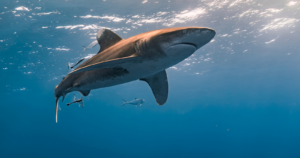
Science A Greenland shark studied in 2016 was estimated to be nearly 400 years old, meaning it may have been born around the time Shakespeare’s era was ending — and, astonishingly, would not have reached sexual maturity for more than another century. By Space Daily Editorial Team · Jun 21, 2026
Constellations HD 189733b looks deep blue from space, almost Earth-like at first glance — but its colour comes not from oceans, but from silicate particles in a scorching atmosphere where glass may rain sideways through winds of thousands of kilometres an hour. By Deep Field · Jun 21, 2026
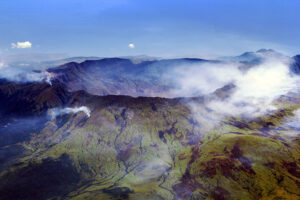
Climate Science The 1815 eruption of Mount Tambora in Indonesia, the largest documented volcanic eruption in human history, killed approximately 90,000 people directly and produced the year without a summer in 1816, a climate disruption that caused famine across the Northern Hemisphere, may have triggered the first global cholera pandemic, and produced the cold dark summer at Lake Geneva during which Mary Shelley wrote Frankenstein By Life Signs · Jun 21, 2026