
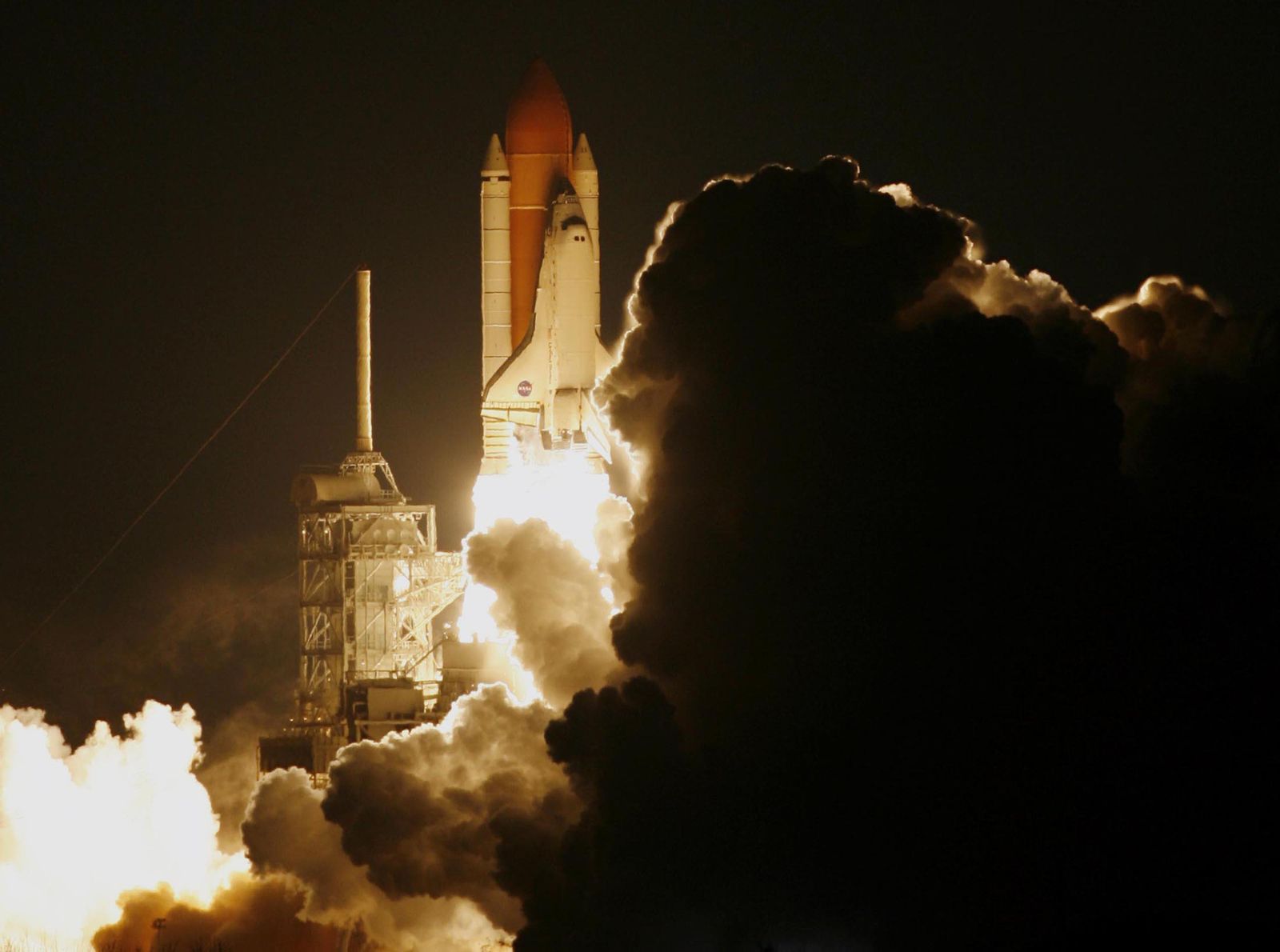
Apollo 12 had been flying for barely half a minute when it was struck by lightning, and then struck again. In the first 52 seconds of the mission, two electrical discharges ran through the vehicle, filled the command module with warning lights, and turned the stream of data reaching Mission Control into nonsense. The flight to the Moon was seconds old and already looked lost, until a controller in his twenties recognised a pattern almost no one else in the room understood and said, calmly, “Try SCE to Aux.”
It is one of the great saves in spaceflight, and it turned on a single piece of obscure knowledge.
The first minute
Apollo 12 launched on 14 November 1969 into wet, overcast Florida weather. About 36 seconds after lift-off, with the rocket a little over a mile up, lightning struck the vehicle and ran down its ionised exhaust trail to the ground. A second strike followed at around 52 seconds.
The surges threw the spacecraft into chaos. Three fuel cells dropped offline, the command module instrument panel lit up with caution and warning lights, the guidance platform lost its bearings, and the telemetry feeding Houston dissolved into gibberish. To the controllers watching their screens, the spacecraft had effectively gone dark in the worst possible moment, during powered ascent.
The pattern only one man recognised
At the electrical and environmental console sat John Aaron, an EECOM controller still in his twenties. He had seen this exact signature once before.
A year earlier, watching an unrelated test at Kennedy Space Center, Aaron had noticed the telemetry garble in a particular way, and rather than ignore it, he had chased the cause down to an obscure box called the Signal Conditioning Equipment, the system that turns raw electrical signals into the readable numbers controllers depend on. When the same scrambled pattern appeared on his screen during Apollo 12’s ascent, he knew what he was looking at.
“Try SCE to Aux”
His fix was to switch the Signal Conditioning Equipment to its auxiliary setting, so it would keep working on the reduced power the strikes had left behind. He passed the call up the chain: try SCE to Aux.
The instruction was so specialised that the flight director, the CAPCOM relaying it, and Commander Pete Conrad in the spacecraft had no idea what it meant. It was Alan Bean, the lunar module pilot and the crew member who knew the command module’s switches best, who found the small toggle and flipped it. The telemetry snapped back into order. The numbers were readable again, and they showed the spacecraft was, against all appearances, basically fine.
The fuel cells were brought back online, the guidance platform was realigned once in orbit, and Apollo 12 carried on to the Moon, where Conrad and Bean landed five days later.
Why one switch mattered
Without that recognition, the most likely outcome was an abort, the mission thrown away in its first minute over a fault that had not actually broken anything vital. What saved it was not a heroic improvisation invented on the spot, but a controller who had been curious about a minor anomaly a year earlier and bothered to understand it.
Aaron earned the nickname “steely-eyed missile man” for the call, about the highest compliment that world offers. The lasting lesson is quieter than the drama suggests: the save was set up long before the launch, by one person taking the trouble to learn how an unglamorous system worked, on the off chance it might one day matter. On Apollo 12, that day came 36 seconds after launch.
