
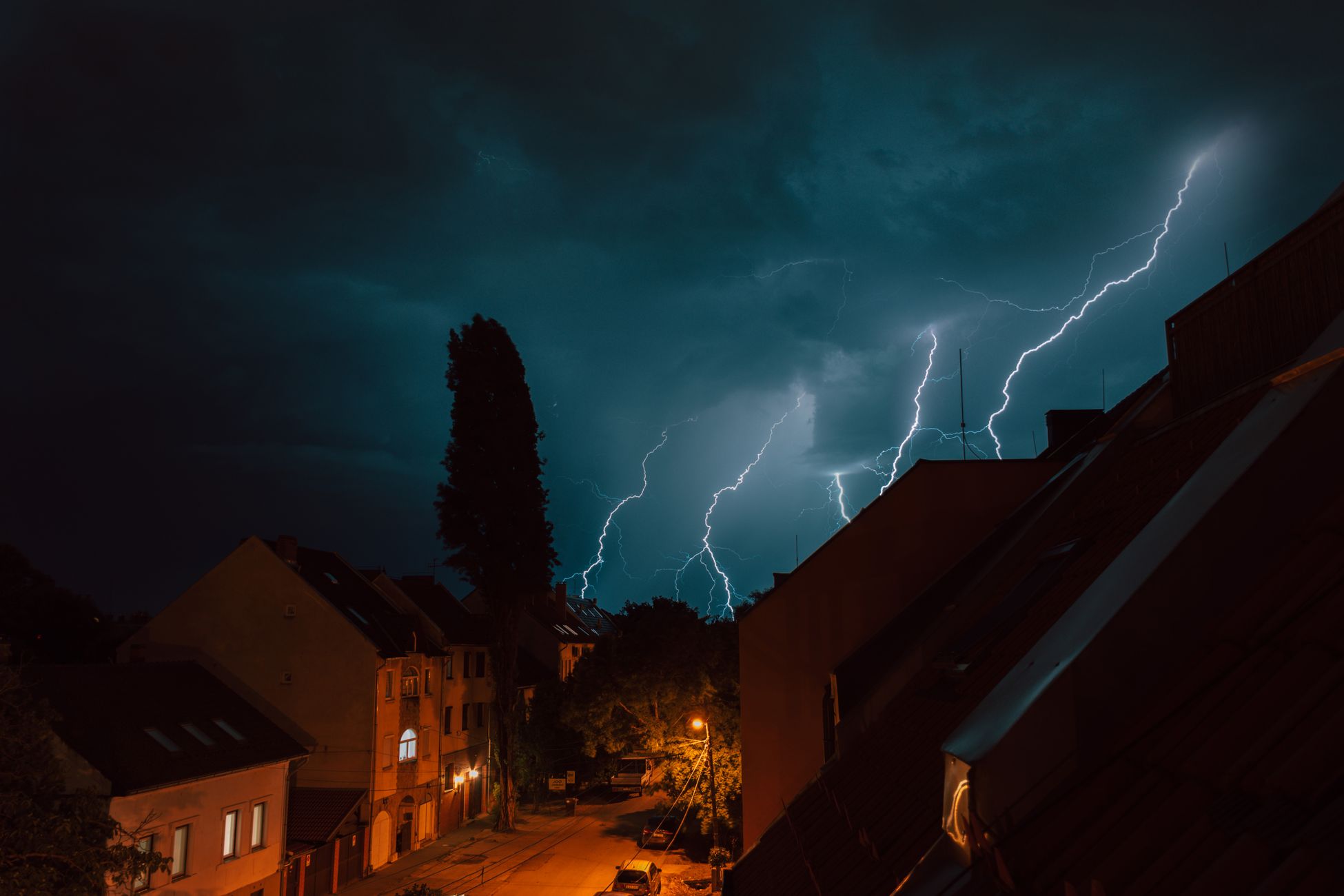
On the morning of March 13, 1989, the Hydro-Québec power grid collapsed in less than two minutes. A coronal mass ejection from the Sun had slammed into Earth’s magnetosphere the day before, and by early morning the rapidly shifting magnetic field over Quebec was pushing electric currents through the bedrock of the Canadian Shield. Those currents climbed into the long high-voltage transmission lines stretching from the James Bay hydro complex south toward Montreal, saturated the iron cores of static compensators at substations in the network, and tripped the whole system. Millions of people lost power for hours. Nobody was electrocuted by the Sun. The wires did it for the Sun.
That is the part of solar storms most people get wrong. The danger is not a beam of particles frying a phone in someone’s pocket. The danger is that Earth’s own infrastructure — every long, conductive thing humans have laid across the planet — behaves like a giant antenna when the geomagnetic field starts to twitch.
What actually reaches the ground
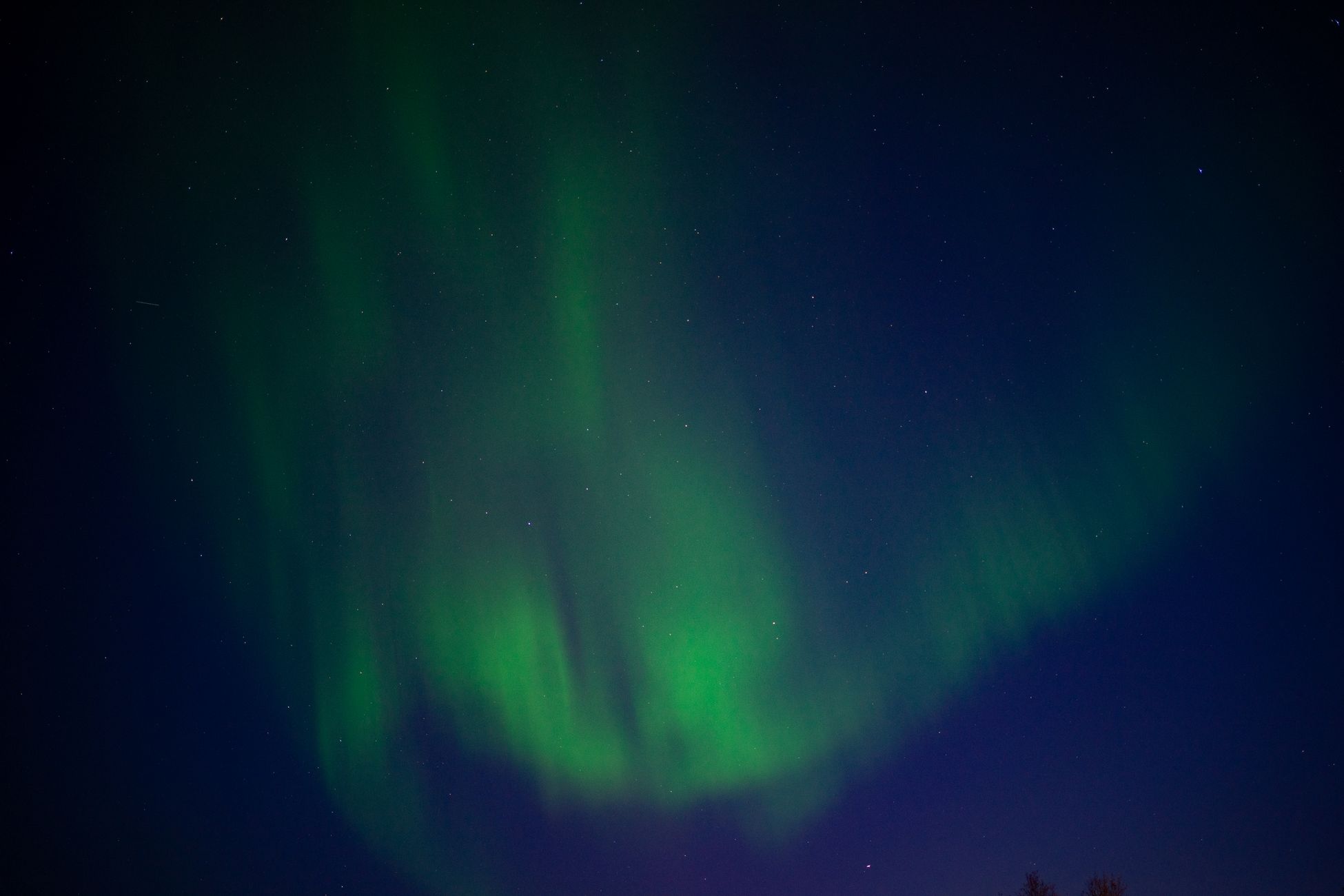
When a coronal mass ejection arrives, it does not punch through the atmosphere. The magnetosphere absorbs and deflects most of the charged particles, which is why aurorae light up the polar sky instead of cooking the people standing under them. What does reach the ground is the magnetic disturbance itself — a rapid variation in the strength and direction of Earth’s magnetic field, sometimes shifting by hundreds of nanotesla over a few minutes.
A changing magnetic field induces an electric field. That is Faraday’s law, the same principle that runs every electric generator on the planet. During a severe storm, the induced electric field at ground level can reach volts per kilometer. Over a short distance that is trivial. Over a 700-kilometer transmission line strung between two substations, it adds up to thousands of volts of potential difference between the ends of the wire — a slow, quasi-DC push that the alternating-current grid was never designed to handle.
The currents this induces are called geomagnetically induced currents, or GICs. They flow through whatever long conductor is available: high-voltage power lines, oil and gas pipelines, railway signaling cables, and the steel-armored undersea fiber-optic cables that carry the internet between continents.
Why long metal is the problem
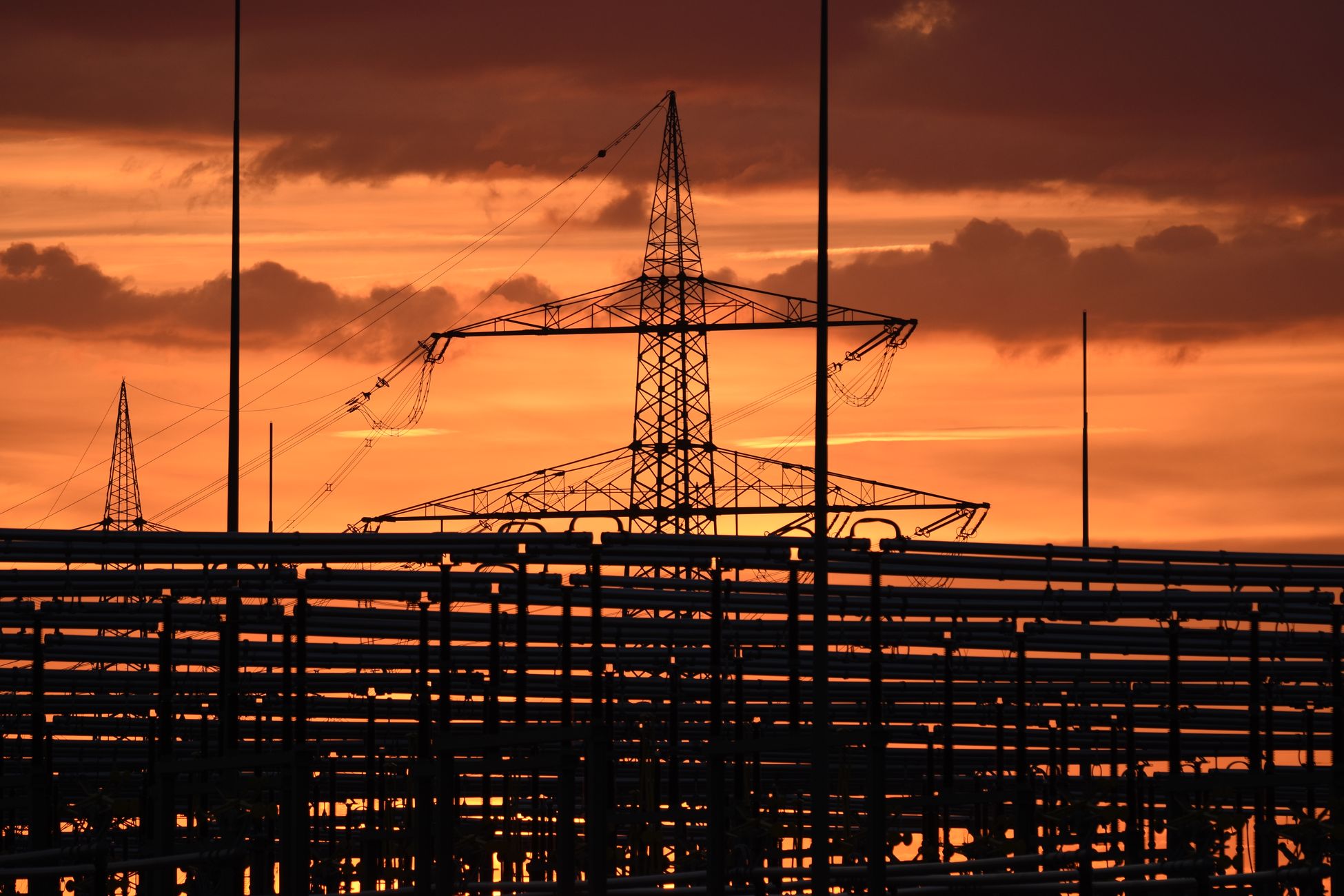
The geometry matters more than the metal. A kitchen toaster is made of the same kind of conductive material as a transmission tower, but it is fifteen centimeters long. The induced voltage across it during even a Carrington-class storm would be a fraction of a millivolt. A 1,000-kilometer pipeline running across Saskatchewan, by contrast, sits inside the same induced electric field but integrates it across its entire length. The longer the conductor and the more it runs in the direction of the induced field, the larger the current it carries.
That is why high-latitude, long-haul infrastructure is uniquely exposed. Norway’s grid, Finland’s railways, the trans-Alaska pipeline, the Hydro-Québec network — all run for hundreds of kilometers across regions where the auroral electrojet, a ribbon of current flowing in the upper atmosphere during storms, sits almost directly overhead. The geology underneath also matters: the ancient, electrically resistive bedrock of the Canadian Shield and the Scandinavian craton forces the induced ground currents up into whatever conductive thing happens to be lying on the surface. That conductive thing is usually a power line.
How a transformer dies
The damage inside a substation looks nothing like a lightning strike. GICs are quasi-DC — they flow in one direction for minutes at a time, slow compared to the 60-hertz alternating current the grid runs on. When that DC current passes through the windings of a large power transformer, it pushes the iron core into magnetic saturation on half of every AC cycle. The transformer starts drawing huge reactive currents from the grid, heating up, vibrating, and generating harmonics that ripple outward through the network.
In the worst cases, the core gets hot enough to char the insulating oil and the paper wrapping around the copper windings. Large transformers can be damaged from the inside in minutes. They are custom-built, often imported, and the replacement queue for a single high-voltage unit can run many months. Lose a dozen at once across a continent and the lights stay off for a long time.
The 1989 Quebec event killed sections of the network through exactly this cascade. A major railway storm in 1921 shorted out telegraph equipment and started fires in signal infrastructure. The 1859 Carrington Event sent currents through telegraph lines strong enough to shock operators and ignite paper — and that was on a planet whose entire electrical infrastructure consisted of telegraph wire.
The pipeline problem nobody talks about
Steel pipelines are not designed to carry electricity, but they do. Buried in soil, coated to prevent corrosion, a long pipeline acts as an enormous low-resistance conductor. GICs flowing through the pipe wall do not blow anything up, but they overwhelm the cathodic protection systems that prevent the steel from rusting. Operators have measured pipe-to-soil potentials swinging by tens of volts during severe storms, far outside the range the corrosion-monitoring equipment is calibrated for.
The trans-Alaska oil pipeline, over a thousand kilometers of welded steel running almost directly under the auroral oval, has been one of the most-studied examples for decades. Operators there log space-weather data the way refineries log barometric pressure.
The undersea cable question
The fiber-optic cables that carry the vast majority of intercontinental internet traffic are not, strictly speaking, electrical. The data travels as pulses of light. But the cables contain a copper or aluminum conductor running the full length of the cable, which delivers power to the optical repeaters spaced every several dozen kilometers along the seabed. That power conductor is, by definition, a transoceanic-scale antenna.
During a severe geomagnetic storm, induced voltages along a transatlantic cable can reach hundreds of volts. The repeater electronics are protected, but the shore-station power-feed equipment — the gear that pushes a constant high voltage from land into the cable — has to absorb the imbalance. Analysis has modeled how a Carrington-class storm could disconnect entire continents from the global internet for weeks while damaged cables and shore stations were replaced. The submarine cable industry has been quietly upgrading shore-end electronics ever since.
Why forecasting is hard
The Sun gives roughly 15 to 60 minutes of warning. A coronal mass ejection takes one to three days to cross the 150 million kilometers from the Sun to Earth, but the only way to know exactly how dangerous it will be is to measure the magnetic-field orientation of the cloud after it passes a spacecraft at the L1 Lagrange point, about 1.5 million kilometers upstream of Earth. That gives grid operators less than an hour to shed load, take transformers offline, and reroute power.
That is why the NOAA SOLAR-1 satellite now stationed at L1 matters. It joins instruments on spacecraft that have been the primary upstream sentinels for two decades. New machine-learning approaches, surveyed in a recent Frontiers research collection, are now being trained on decades of solar imagery to estimate which active regions are most likely to launch Earth-directed ejecta hours or days before they erupt.
What cities are starting to do
Grid operators have explored blocking devices that prevent DC currents from passing through transformer neutrals, the same way a one-way valve blocks reverse flow in a pipe. The South Island of New Zealand, which runs long high-voltage lines across a country sitting at a magnetic latitude similar to southern Canada, has become an unlikely test case for grid-hardening against space weather. Researchers at GNS Science have spent years mapping the electrical conductivity of the bedrock under the country’s transmission corridors, because the local geology determines how much of an induced ground current actually flows up into the wires.
Astronaut safety operates on a different logic — the Sun’s energetic protons are a direct radiation hazard above the atmosphere, which is why space-weather forecasters keep watch over the ISS and Artemis crews on a different timescale than they watch grids. For people on the ground, the threat model is purely about what the long metal is doing.
The strangeness of the threat
A solar storm severe enough to take down a continental grid would be invisible to almost everyone in the moments before it happened. The aurora would brighten. Cell phones would still work — for a while. The first sign for most people would be the lights going out, the refrigerator going quiet, the cell tower running down its backup battery over the next four hours and then falling silent.
The Sun did not reach down and touch any of it. The Sun rattled the magnetic field. The field induced a voltage. The voltage found the longest piece of metal it could, and rode it into the substation. Everything modern civilization runs on — the grid, the pipelines, the cables under the ocean — turns out to be a planetary-scale receiving antenna, tuned to a frequency the engineers who built it never thought to consider.
The next Carrington-class storm will arrive. The historical record suggests roughly one per 500 years, give or take. The July 2012 ejection that missed Earth by nine days was estimated to have been at least Carrington-class. Had it left the Sun a week earlier, the antennas would have been waiting.
