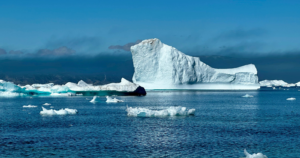
Science Most people alive today will live to see the Arctic Ocean lose its summer ice — for the first time since before our species left Africa, 115,000 years ago By Space Daily Editorial Team · Jun 18, 2026
Climate Science West Africa produces roughly 2/3 of the world's cocoa and lost up to 40% of its harvest across two seasons, which is why chocolate is now being grown in a lab in West Sacramento By Space Daily Editorial Team · Jun 11, 2026
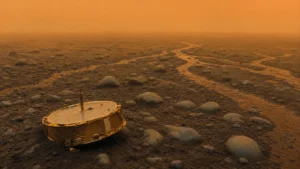
Moon Daily In January 2005, the Huygens probe parachuted for 147 minutes through Titan’s orange haze, landed on a cold plain scattered with ice pebbles, and kept transmitting from the surface of Saturn’s largest moon for 72 minutes before Cassini carried its signal out of view By Space Daily Editorial Team · Jun 10, 2026
Climate Science The town of Mawsynram in northeastern India receives roughly 11,872 millimetres of rain a year, so much that residents weave body-length shields called knups from bamboo and banana leaf to walk hands-free through downpours that can last weeks without pause. By Space Daily Editorial Team · Jun 9, 2026
Climate Science Centralia, Pennsylvania has burned underground since 1962, and the unsettling lesson for nuclear-winter models is that the sky can clear long before the fuel source stops burning By Space Daily Editorial Team · Jun 8, 2026
Climate Science A single cotton T-shirt requires approximately 2,700 litres of water to produce, the equivalent of one person's drinking water for two and a half years, and the global fashion industry now consumes approximately 79 billion cubic metres of fresh water annually, much of it drawn from regions already facing severe drought. By Kiran Journals · Jun 6, 2026
Science The icy surface of Europa is constantly crystallising and reforming in different places at different rates and the James Webb Space Telescope has only just caught it happening By Space Daily Editorial Team · Jun 5, 2026
Science In September 2023 a mega-tsunami in Greenland sent tremors around the entire planet for nine days and scientists have only just confirmed how By Space Daily Editorial Team · Jun 5, 2026
Climate Science Writing a single 100-word email with ChatGPT consumes approximately the volume of a standard bottle of water, the global infrastructure processing AI queries is projected to use the equivalent of half the United Kingdom's annual water withdrawal by 2027, and much of that water is being drawn from regions already experiencing severe drought. By Space Daily Editorial Team · Jun 3, 2026
Climate Science There is a Japanese word, mottainai, that carries the sense of regret over discarding something still useful, and a small mountain town of 1,500 people in southern Japan has spent the past twenty years building a municipal system around it, requiring residents to sort their household waste into 45 separate categories and achieving an 81 per cent recycling rate against a national average of 20 per cent. By Space Daily Editorial Team · May 29, 2026
Climate Science NOAA has placed an 82 per cent probability that El Niño will emerge in the central Pacific between May and July 2026, the climate state that in 1997-98 caused more than 20,000 deaths worldwide and approximately US$36 billion in damage, that in 2015-16 produced what was then the warmest year on record and the most extensive Amazon drought yet measured, and that has accompanied every one of the ten warmest years in the global temperature record, all of which have occurred since 2015 By Kiran Journals · May 27, 2026
Climate Science On 22 October 2017, a single lightning flash crossed five US states in 7.39 seconds, travelled 829 kilometres from Texas to near Kansas City, and produced more than 116 cloud-to-ground strikes along its path, an event approximately fifty times longer than a typical lightning bolt that was missed at the time and only identified through a 2024 reanalysis of archived satellite data. By Space Daily Editorial Team · May 26, 2026
Climate Science The Parker Solar Probe is still flying through the Sun's corona at 430,000 miles per hour, fast enough to cross the continental United States in about 20 seconds, because a 4.5-inch carbon-foam shield keeps the spacecraft in the shade By Space Daily Editorial Team · May 21, 2026
Climate Science The ozone layer is the only major environmental crisis humanity has actually solved, and it happened because the chemical industry quietly realised the replacement refrigerants were more profitable than the ones being banned By Space Daily Editorial Team · May 18, 2026
Climate Science The Parker Solar Probe is now moving at 430,000 miles per hour, fast enough to cross the continental United States in 20 seconds, and it survives skimming the Sun's corona because a four-and-a-half-inch slab of carbon foam stays at room temperature on the side facing 2,500-degree plasma. By Space Daily Editorial Team · May 17, 2026
Climate Science Abandoned coal mines may be releasing hidden carbon into the air, but researchers think the same drainage could also point toward a cheaper kind of climate fix By Space Daily Editorial Team · May 14, 2026