
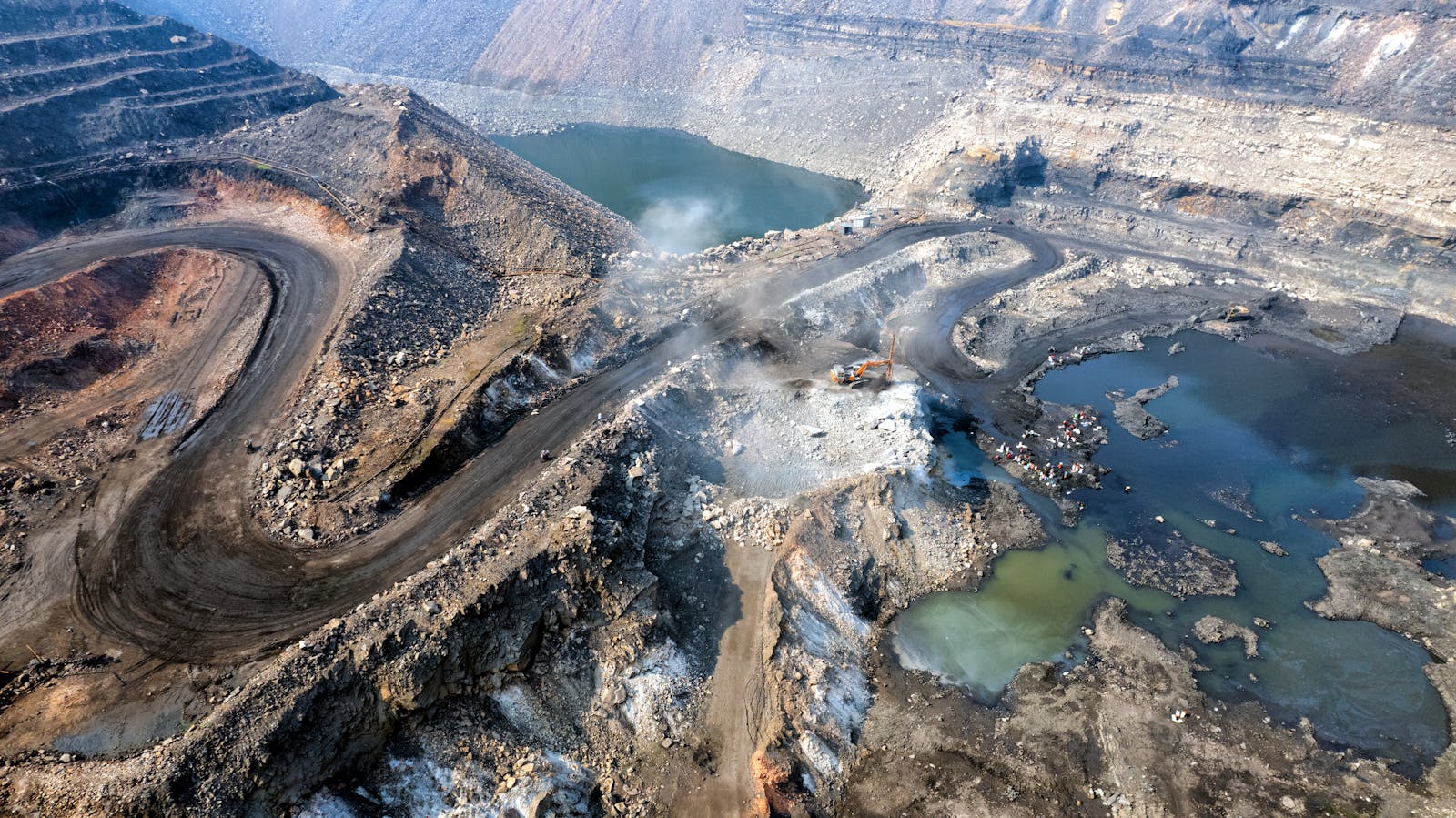
Abandoned coal mines are usually treated as a pollution problem from the past. New work suggests they may also be an overlooked carbon problem in the present.
Research summarized by the Geological Society of America describes mine drainage carrying dissolved carbon from bedrock into the open air, where it can degas as CO2. In one earlier study, West Virginia University geochemist Dr. Dorothy Vesper and collaborators found that drainage from just 140 abandoned coal mines in Pennsylvania added as much CO2 to the atmosphere each year as a small coal-fired power plant.
That does not mean old mines are a ready-made substitute for direct air capture. It means something more specific, and in some ways more useful: a major carbon pathway appears to have been sitting inside a remediation problem that climate accounting has barely touched.
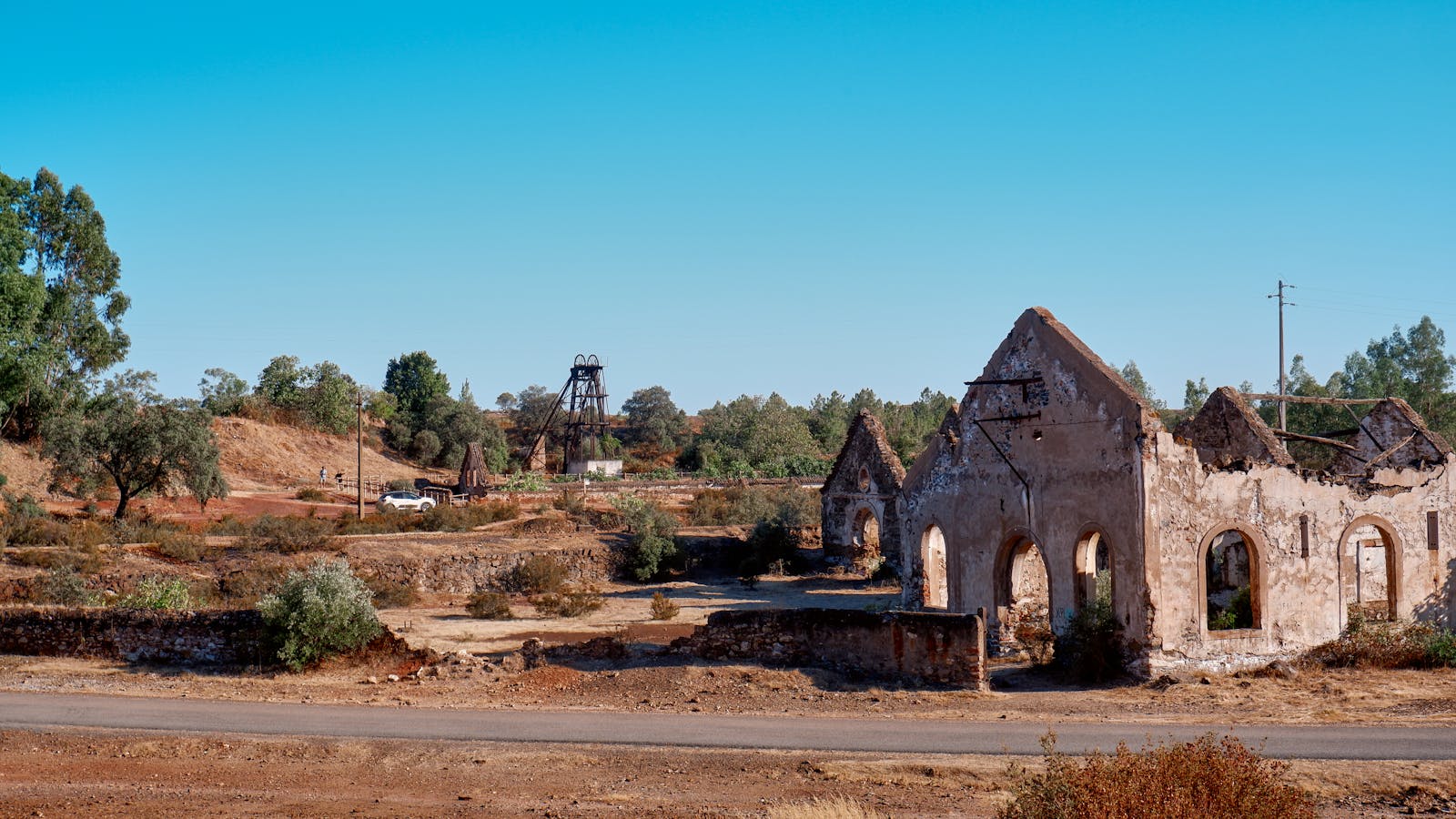
The overlooked carbon leak
Vesper did not set out to announce a new carbon-capture industry. She set out to measure what abandoned mine drainage was carrying.
The chemistry is blunt. Acidic mine water can dissolve carbonate rocks associated with coal seams. Those rocks contain ancient carbon. Once the drainage leaves the mine and reaches the surface, some of that dissolved carbon can convert to CO2 and escape into the atmosphere.
One reason this flux has been easy to miss is practical. Standard field instruments are not built for some of the concentrations Vesper encountered. The GSA summary says some mine drainage contains up to 1,000 times more CO2 than would be expected in normal water, forcing Vesper to use equipment designed for the beverage industry because it could handle unusually high CO2 levels.
That detail matters. A carbon source can be real, measurable, and still remain outside the normal frame of climate monitoring if the instruments and inventories were not built to look for it.
The possible fix is about preventing the release
The most interesting part of Vesper’s work is not that abandoned mines leak carbon. It is that some of the release may depend on how the water is handled after it leaves the mine.
In the GSA summary, Vesper suggested that small remediation design changes could make a difference, including keeping discharge underground in pipes and introducing it to treatment wetlands from below the surface. The logic is simple: if carbonate-rich water is kept from degassing into open air, less CO2 may reach the atmosphere.
That is a long way from proving a mine-drainage carbon-capture system at scale. But it is enough to make abandoned mine drainage look less like a narrow water-quality issue and more like a carbon-accounting blind spot.
Microbes may make the story bigger, but the evidence is still emerging
The broader science is moving quickly. Researchers are examining how microorganisms can accelerate mineral carbonation, the process by which CO2 is converted into solid mineral form. Concordia University described recent work on bacteria and algae as a possible route to lower-cost, more sustainable carbon capture.
Separate work in Nature Communications found that DNA viral communities in contaminated soils can influence microbial carbon fixation through auxiliary metabolic genes. That does not prove viruses in abandoned coal mines are sequestering carbon at useful scale. It does show that disturbed, contaminated environments can contain biological carbon pathways that are more active than older models assumed.
That distinction is important. The strongest version of this story is not that microbes have already solved carbon capture under abandoned coal mines. It is that mine drainage, microbes, minerals, and remediation design may be interacting in ways that deserve far more measurement than they have received.
The same underground infrastructure is already being used differently
Old coal workings are not just voids in the ground. They are infrastructure: mapped, excavated, water-filled, and often connected to communities that still live with the afterlife of mining.
In Gateshead, in northeast England, mine water is already being used as an energy asset. The Mining Remediation Authority says heat from mine water 150 meters beneath the town centre supplies a district heating network serving public buildings, offices, and hundreds of homes.
That example is not carbon capture. It is still instructive. It shows how abandoned mine systems can be reclassified from liabilities into working infrastructure when engineers, regulators, and local authorities decide to look at them differently.
The methane problem cannot be ignored
There is also a harder side to the ledger. Coal mines can release methane, a greenhouse gas far more powerful than CO2 over short timeframes. Any serious climate strategy for abandoned mines has to account for both gases.
In South Africa, researchers writing in The Conversation and republished by Polity found that the country lacks reliable, up-to-date records of methane emissions from coal mines. That is the same basic governance problem Vesper’s work points toward on the CO2 side: without inventories, measurement, and monitoring, policymakers are guessing at the scale of the problem.
An abandoned mine that reduces CO2 degassing but vents methane could still be a net climate liability. The opportunity is real only if the whole system is measured.
Pit lakes show how little is known
Abandoned mines can also become pit lakes, large water bodies that fill former excavations. A review in Frontiers in Microbiology found that microbial research on mine pit lakes is underrepresented compared with rivers, streams, and natural lakes.
That gap matters because these systems can behave very differently from one site to another. Some may support processes that help lock up carbon. Others may generate methane or create water-quality hazards. Without better data, abandoned mine landscapes remain a patchwork of assumptions.
Why direct air capture still matters to the comparison
The temptation is to turn this into a simple contest: nature versus machines, old mines versus direct air capture. The reality is messier.
Direct air capture remains expensive. IDTechEx wrote in 2025 that demonstrated DAC costs were still closer to US$1,000 per tonne of CO2, even as the industry works toward a US$100-per-tonne target.
Mine-drainage remediation is not doing the same job as DAC. It is not pulling diffuse CO2 from ambient air. It is potentially preventing a concentrated source of dissolved carbon from escaping, while also treating polluted water. That could make the economics attractive in specific places, but it does not make the technology proven, universal, or automatically superior.
The more useful comparison is not between finished systems. It is between funding cultures. Engineered carbon removal receives intense attention because it looks like a clean climate technology. Mine drainage sits in an older regulatory category: pollution, remediation, liability. Vesper’s work suggests those categories may be too narrow.
The quiet decades
The most striking part of the abandoned-mine story is the timeframe. These reactions can keep running decades after mining stops. Water moves through old workings. Carbonate rocks dissolve. CO2 can escape. Microbial communities shift and adapt. Treatment systems, where they exist, alter what reaches the air and what stays in water or mineral form.
No single study turns that into a climate solution. But the evidence is strong enough to justify a different question.
Instead of asking only how to cap, hide, or forget abandoned coal mines, researchers and regulators may need to ask what these systems are already doing to the carbon cycle, what they are leaking, and what careful remediation could stop. The answer may not replace engineered carbon capture. It may reveal a cheaper and more immediate climate task that has been running underfoot for decades.
