
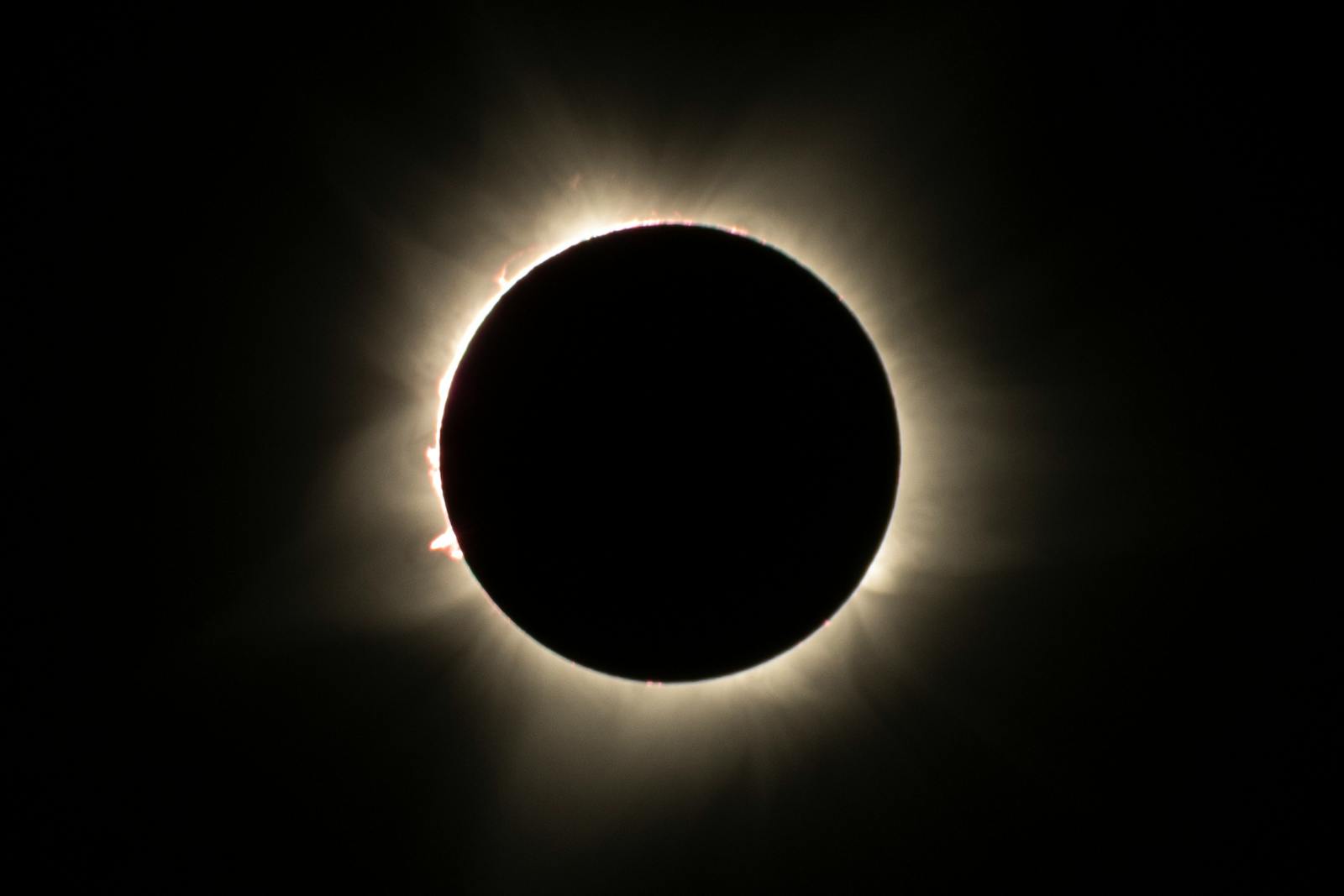
The Parker Solar Probe is currently orbiting the Sun at roughly 430,000 miles per hour, a velocity that would carry it from the Atlantic to the Pacific coast of the United States in about twenty seconds. At its closest approach the spacecraft skims within 3.8 million miles of the solar surface, plunging through the Sun’s corona, which reaches temperatures in the millions of degrees, while its heat shield surface reaches temperatures near 2,500 degrees Fahrenheit, and yet the instruments tucked behind its heat shield sit at roughly room temperature. The thing keeping a robot alive inside the corona of a star is a slab of carbon-composite foam four and a half inches thick.
That foam is the most extreme thermal engineering humans have ever flown.

The fastest object humans have ever built
During its 25th close pass on September 15, 2025, Parker again equaled its top heliocentric velocity of 430,000 miles per hour, or 687,000 kilometers per hour, a mark first set on December 24, 2024. For comparison, the International Space Station travels at around 17,500 mph, fast enough to circle the planet every 90 minutes. Parker is moving more than 24 times faster than that.
A bullet from a high-powered rifle leaves the barrel at about 2,000 mph. Parker is moving roughly 200 times faster than the bullet. If you fired the spacecraft from New York, it would be over Los Angeles before you could say Los Angeles.
The probe reaches that speed by falling. Each time it loops past Venus, the planet’s gravity bends and tightens its orbit, pulling perihelion closer to the Sun. By the time it reaches its closest approach, the Sun’s gravity well has accelerated it to a velocity that no chemical rocket could ever achieve directly. As SciTechDaily noted after the spacecraft’s 23rd encounter in March 2025, Parker has been repeatedly matching its own speed and proximity records at each new perihelion, holding the title of fastest human-made object in history.
Why the spacecraft does not vaporize
The trick is a deceptively simple piece of engineering called the Thermal Protection System, or TPS. It is a disc 8 feet wide and 4.5 inches thick, made from two sheets of carbon-carbon composite sandwiching a core of carbon foam that is 97 percent air by volume. The Sun-facing side is painted with a white ceramic coating to reflect as much light as possible.
The Sun-facing surface of the shield does reach roughly 2,500 degrees Fahrenheit during close passes. The instruments stacked behind it, including the cup-shaped Faraday particle detector and the magnetometer booms, hover near 85 degrees Fahrenheit. Across four and a half inches of carbon foam, the temperature drops by more than 2,400 degrees, as NASA’s own engineering breakdown describes.
That extraordinary gradient works because the corona, despite its searing temperature, is almost a vacuum. Temperature measures how fast individual particles are moving. Heat is the total energy those particles deliver to a surface. The corona’s particles are flying at enormous speeds, but there are so few of them per cubic centimeter that the actual heat load on the shield is manageable. A cook’s oven at 400 degrees will burn you instantly because it is full of dense, hot air. The corona at 2 million degrees will not, because it is nearly empty.
The shield is built to handle what does arrive: the intense radiation streaming from the photosphere below. Most of that energy is reflected. The rest is absorbed by the carbon-carbon face, conducted slowly through the foam, and radiated back out into space from the edges.
Touching a star
Parker launched in August 2018 on a Delta IV Heavy, carrying a small dedication plaque honoring Eugene Parker, the physicist who in 1958 predicted the existence of the solar wind. He was the first living scientist to have a NASA mission named after him. He lived to see his prediction confirmed by the spacecraft bearing his name, and died in 2022.
The probe’s mission is to answer questions that have nagged at solar physicists for six decades. Why is the corona hotter than the surface beneath it? What accelerates the solar wind to supersonic speeds? Where does the boundary between the Sun’s atmosphere and interplanetary space actually lie?
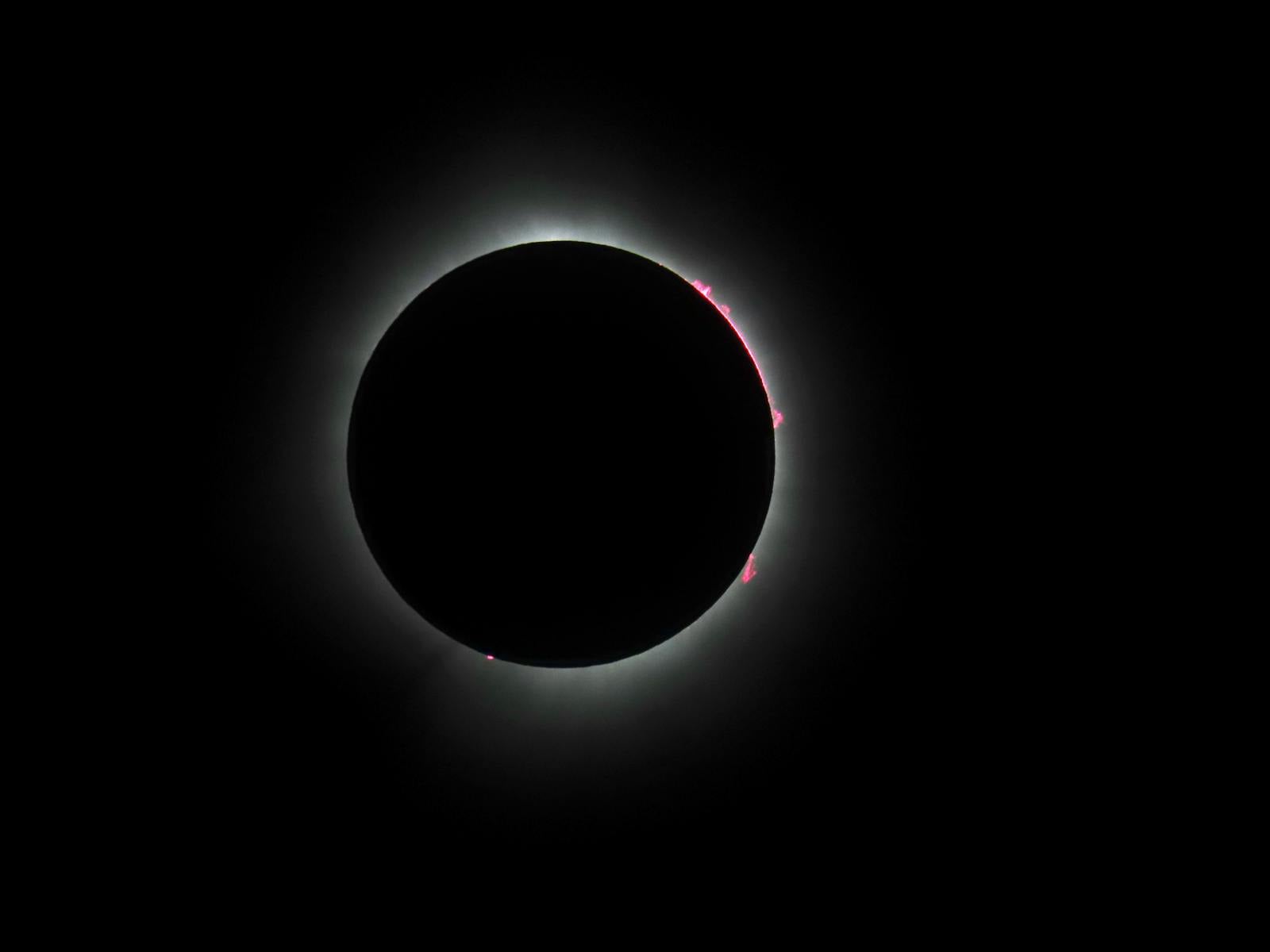
To answer them, the spacecraft has to go inside. In April 2021, during its eighth flyby, Parker became the first human-made object to cross the Alfvén critical surface, the boundary where the Sun’s magnetic field loses its grip on the plasma streaming outward. On the inside of that boundary, the spacecraft is technically inside the Sun’s atmosphere.
What it has already found
The data coming back is rewriting solar physics. Parker has observed magnetic structures called switchbacks, sudden S-shaped reversals in the magnetic field that ripple outward through the solar wind. A 2021 paper in Astronomy & Astrophysics reported the first direct evidence of magnetic reconnection at the boundaries of three switchbacks crossed by Parker on its first encounter, a finding that strengthened the case that these structures originate from reconnection events closer to the Sun rather than turbulence in the open solar wind.
Each close pass also gives physicists a chance to sample the plasma during different phases of the solar cycle. The Sun has been unusually active in 2026. On April 23 and 24, NASA’s Solar Dynamics Observatory recorded two strong X-class solar flares, an X2.4 followed by an X2.5, both erupting from the same active region within hours of each other. X-class flares are the strongest category, capable of disrupting radio communications and threatening satellites. Parker’s instruments, when geometry permits, can sample the plasma ejected by these eruptions while it is still close to its source.
The 25th flyby, in September 2025, coincided with this elevated solar cycle activity. As Space Daily reported, the probe completed its swing through perihelion in good health, with its instruments returning data through the Deep Space Network in the weeks that followed.
The engineering paranoia behind the shield
The TPS was built by the Johns Hopkins Applied Physics Laboratory after roughly a decade of materials testing. Engineers needed a substance that could survive direct sunlight 475 times more intense than what reaches Earth, withstand temperature swings of more than 2,000 degrees during each orbit, and weigh almost nothing. Mass is the tyrant of spaceflight. The entire shield weighs only 160 pounds.
Carbon-carbon composite was the only material that fit. The same family of materials lines the leading edges of the space shuttle’s wings and the throats of solid rocket motors. Parker’s version is purer and lighter, with a foam core that gives the shield most of its insulating power. The foam itself is mostly empty space, which is precisely why it works. Heat conducts poorly through vacuum.
Behind the shield, the spacecraft is essentially a small refrigerator-sized box bristling with antennas and instrument booms. The trick is geometry. As long as Parker keeps the shield pointed directly at the Sun, the body of the spacecraft remains in shadow. Lose that orientation for more than a few minutes, and components on the side facing the Sun would melt within seconds.
The probe’s autonomous guidance system constantly monitors small solar sensors arranged around the edge of the shield. If any of them detects sunlight leaking past, indicating the spacecraft has drifted off-axis, the system fires thrusters to correct the orientation before any instrument behind the shield can overheat. The correction has to happen on board, because the Sun is so close that radio signals from Earth take too long to be useful.
Solar wind and the cells that read this sentence
Why send a spacecraft to do this at all? The Sun’s atmosphere drives almost every space weather phenomenon that affects Earth. The solar wind, charged particles streaming outward at speeds between 250 and 750 kilometers per second, shapes the magnetic field around our planet, drives auroras, and during the strongest eruptions can knock out power grids and satellites. The 1859 Carrington Event, a coronal mass ejection that struck Earth before the modern electrical age, set telegraph stations on fire and produced auroras visible in the Caribbean. A similar event today would have catastrophic economic consequences.
Predicting space weather requires understanding what happens at the source. Models of solar wind acceleration built from Earth-based observations have been guesses constrained by data taken millions of miles downstream. Parker is the first instrument to measure the plasma where the acceleration actually happens.
There is something fitting about a probe named for the man who predicted the solar wind flying directly through the wind itself. Eugene Parker’s 1958 paper was rejected by both referees the journal sent it to, not on the math, which they could not fault, but on the idea itself, which conflicted with the accepted view that interplanetary space was a vacuum. The editor, Subrahmanyan Chandrasekhar, finding no errors in Parker’s work, overruled the rejection and published the paper anyway. Four years later, the Mariner 2 spacecraft confirmed the wind on its way to Venus.
What happens next
Parker completed the last of the seven Venus gravity assists in November 2024, locking the spacecraft into its final orbit. Each subsequent pass brings the probe to roughly the same perihelion distance. The next steps for the mission, in late 2026 and beyond, are formally under NASA review. The TPS continues to perform within specifications, the heat shield material apparently unaffected by repeated thermal cycling.
Eventually, the propellant for the orientation thrusters will run out. When that happens, the spacecraft will lose its ability to keep the shield pointed at the Sun. The rest will take seconds. The instruments will boil off, the antennas will melt, and the carbon shield will tumble alone through the corona, still intact, still doing what it was built to do, with nothing left behind it to protect.
Space Daily has explored the broader story of the Sun’s journey to Earth in a piece on how the warmth on your skin began its journey up to 100,000 years ago, bouncing through the solar interior before the 8-minute sprint across vacuum. Parker is the inverse trip, a small object made on Earth crossing those 93 million miles in the other direction, and finding, at the end, a star that has not yet finished being understood.
At 430,000 miles per hour, by the time you finished reading that last sentence, it has already traveled the length of three Manhattans.
