
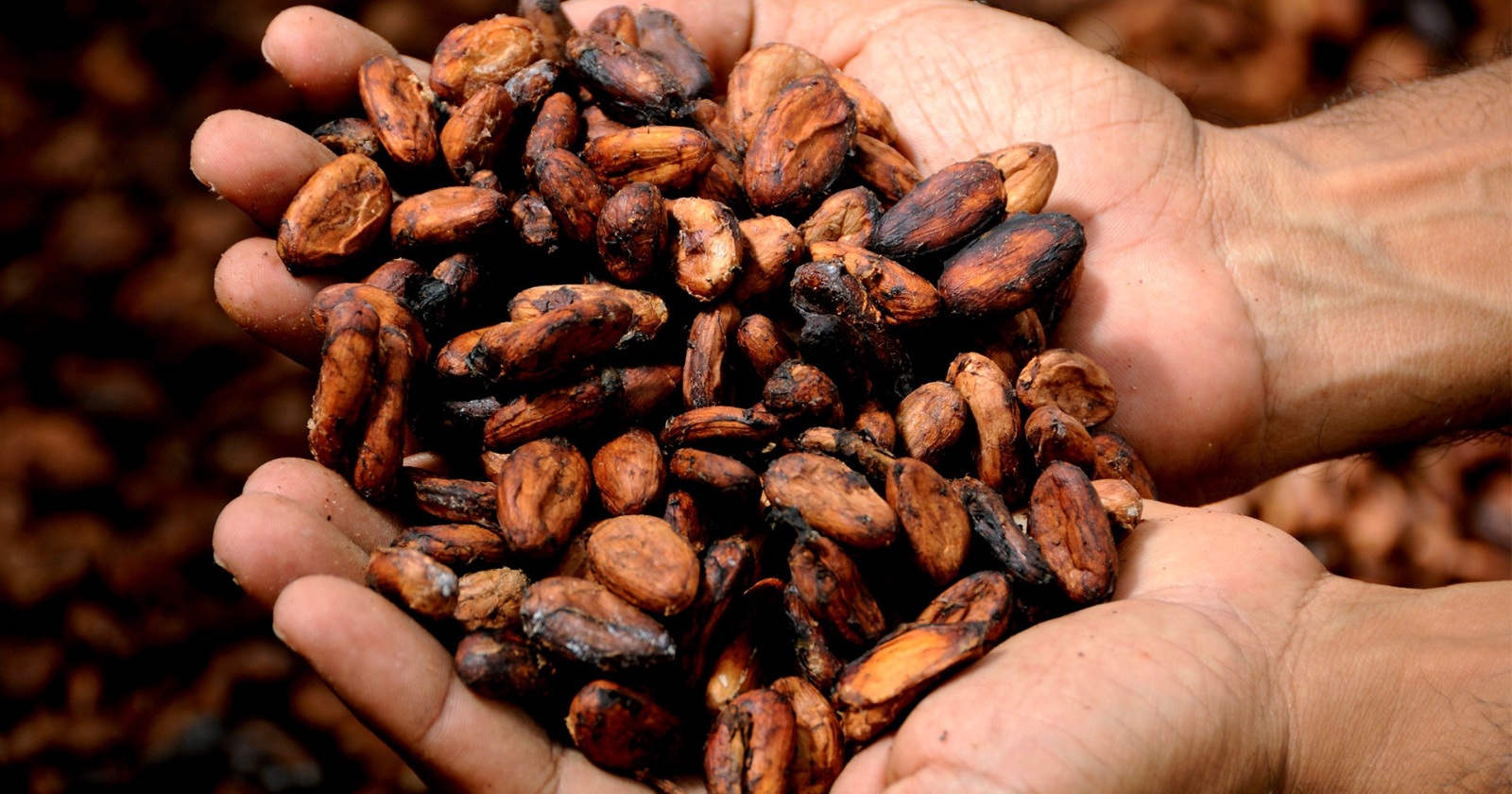
In a 12,000-square-foot facility in West Sacramento, a startup called California Cultured has been growing cocoa without soil, without trees, and without West Africa. The process uses plant cell culture: cocoa cells taken from a single cacao plant are placed in nutrient-rich bioreactors where they divide, mature, and can be harvested within three to four days, then fermented, dried, and processed into cocoa powder. Founded in 2020 by CEO Alan Perlstein and COO Harrison Yoon, the company is targeting commercial launch of its first products by the end of this year, pending regulatory clearance from the US Food and Drug Administration.
The timing matters. The two seasons prior to 2025 were among the worst in decades for the cocoa industry, and the supply shock they produced has given a sharper commercial logic to what was previously a long-horizon food technology bet.
What happened to the harvest
West Africa’s four principal cocoa-producing countries, the Ivory Coast, Ghana, Nigeria, and Cameroon, collectively account for roughly two-thirds to 70 per cent of global cocoa output, depending on the season and the measure. The 2023/24 growing season hit them simultaneously from two directions. Excessive rainfall followed by prolonged dry spells disrupted flowering and fruiting cycles in Ivory Coast and Ghana. Disease compounded the weather damage: Ghana’s Cocoa Board reported in 2024 that 81 per cent of its north-western crop was affected by the cacao swollen shoot virus (CSSV), a disease spread by mealybugs that kills infected trees over several years and has no cure. Ghana’s production, which reached over one million metric tonnes at its 2020/21 peak, fell to roughly half that figure.
The aggregate effect on West Africa over the 2023 to 2025 period has been estimated at up to 40 per cent of output, though the precise figure depends on which countries, which seasons, and which baseline are used. Global production fell roughly 13 per cent in the 2023/24 season alone compared to 2022/23, according to data from the International Cocoa Organisation. Futures prices on the London exchange reached a high of USD 11,530 per tonne in June 2024; the previous year they had averaged USD 3,182. By October 2025, prices had fallen back to around USD 4,000, and the 2024/25 harvest recovered partially, producing a small surplus. The cocoa crisis has not ended so much as it has eased, with prices still well above their decade-long average and the structural pressures still in place.
Those structural pressures are the background California Cultured has been preparing for since 2020, three years before the acute crisis began. The company is not a response to the bad harvests of 2023 and 2024; it is a bet that the underlying conditions, an agricultural system concentrated in a small number of climate-sensitive regions, dependent on aging trees and smallholder farmers, increasingly exposed to disease, was going to come under pressure at some point. The recent crisis has validated that bet more quickly than most projections anticipated.
What the process actually produces
California Cultured’s product is cocoa powder, not chocolate. The distinction is worth keeping. Conventional chocolate is made from cacao beans grown on trees, fermented, dried, roasted, and processed; the final product is a blend of cocoa solids, cocoa butter, sugar, and other ingredients. California Cultured’s process removes the first step from that chain. It cultures cocoa plant cells in bioreactors, harvests the resulting biomass, and processes it through fermentation and roasting in roughly the same manner as conventionally harvested beans. The output is a cocoa powder ingredient that can be used in chocolate manufacture by downstream producers.
The company says its cultured cocoa contains approximately 20 times the flavanol concentration of conventional cocoa powder. Flavanols are the compounds responsible for most of the health-related interest in dark chocolate; they are typically destroyed in large quantities during conventional processing. California Cultured argues that controlling the growth environment allows the concentration to be preserved. The powder also contains no detectable lead or cadmium, heavy metals that contaminate conventional cocoa through soil uptake and that have become a point of regulatory concern in some markets.
In 2025, the company scaled from laboratory shake flasks to large-format bioreactors, working through a partnership with biomanufacturing firm Pow.Bio. It has demonstrated proof of concept in 16,000-litre bioreactors and says its planned West Sacramento capacity will eventually reach 160,000 litres. Steve Stearns, the company’s head of strategy and business development, described the process to Green Queen in March: “We start with cocoa plant cells and grow them in controlled bioreactors, similar to fermentation, but with plant cells instead of microbes. Plant cells are the current only viable non-GM cellular agriculture products.”
The commercial picture
California Cultured has two significant commercial partnerships in place. The first is with Puratos, the Belgian food ingredients company, whose venture capital arm Sparkalis has been an early-stage investor. Puratos intends to offer a cell-based chocolate product to its professional customers in the US by the end of 2026 and describes it as the first cultured-cocoa chocolate for commercial use. The second is with Meiji, the Japanese confectionery company best known in the US for its Hello Panda and Chocorooms products; Meiji has been co-developing high-flavanol products with California Cultured also targeting US launch this year.
On the regulatory side, the company has self-affirmed its cocoa powder as Generally Recognised as Safe (GRAS) under US food law and has submitted a GRAS notice to the FDA. It describes this as the first such filing for cocoa powder produced through plant cell culture. A self-affirmed GRAS determination allows commercial sale in the US; the FDA GRAS notice process, which may result in a “no questions” letter, provides an additional layer of regulatory standing. The FDA had not responded to the notice as of the most recent reporting. California Cultured has raised USD 15.9 million to date and is currently raising a Series A3 round.
The cost question remains open. As of 2025, cell-based cocoa still cost substantially more than conventionally farmed cocoa, driven by the expense of culture media, bioreactor operation, and the absence of production scale. The company says its process is now price-competitive with supermarket-grade cocoa powder for certain applications, though it has not published detailed cost comparisons. Getting to parity with commodity cocoa at scale is a different challenge from demonstrating proof of concept, and it is the challenge that will determine whether plant cell culture becomes a supply-chain factor in the chocolate industry or remains a premium-ingredients niche.
Who else is working on this
California Cultured is not alone in the field. Celleste Bio, an Israeli startup, announced the first milk chocolate bars made with cell-cultured cocoa butter in April, through a partnership with Mondelēz International, which owns Cadbury. In a pilot-scale bioreactor, Celleste Bio says it is on track to produce over one tonne of cocoa butter annually in a 1,000-litre bioreactor. A number of other companies are pursuing non-cocoa alternatives entirely, including Nukoko and ChoViva, which use fermented fava beans and sunflower seeds, respectively, to produce chocolate-flavoured products without cocoa.
The cell culture route and the alternatives route address different market positions. Cell-based cocoa is positioned as a drop-in replacement for conventional cocoa, chemically compatible with existing chocolate manufacturing processes. Cocoa alternatives require reformulation and, in most cases, a product that tastes similar but is not legally or compositionally chocolate. Both are early-stage commercial, and both are being developed against a background of continued uncertainty about West African supply.
What to watch next
The first indicator of whether California Cultured’s commercial launch materialises on schedule will be the FDA’s response to its GRAS notice, and the initial availability of Puratos and Meiji products in US retail channels. The company has said these launches are targeted for the second half of 2026; nothing has been confirmed as of this writing.
Long-term, the trajectory of West African cocoa production is the structural variable that shapes the market case for every alternative. The 2025/26 season is projected to see output fall again by around 10 per cent across the major producing countries, according to Reuters reporting from July 2025. A full recovery would compress the commercial case for cell-cultured cocoa; continued stagnation would sharpen it. The cause of the problem, a combination of climate volatility, aging plantations, and disease that does not respond to any single intervention, is unlikely to resolve quickly. That is the bet California Cultured made in 2020, and it has not yet been proven wrong.
