
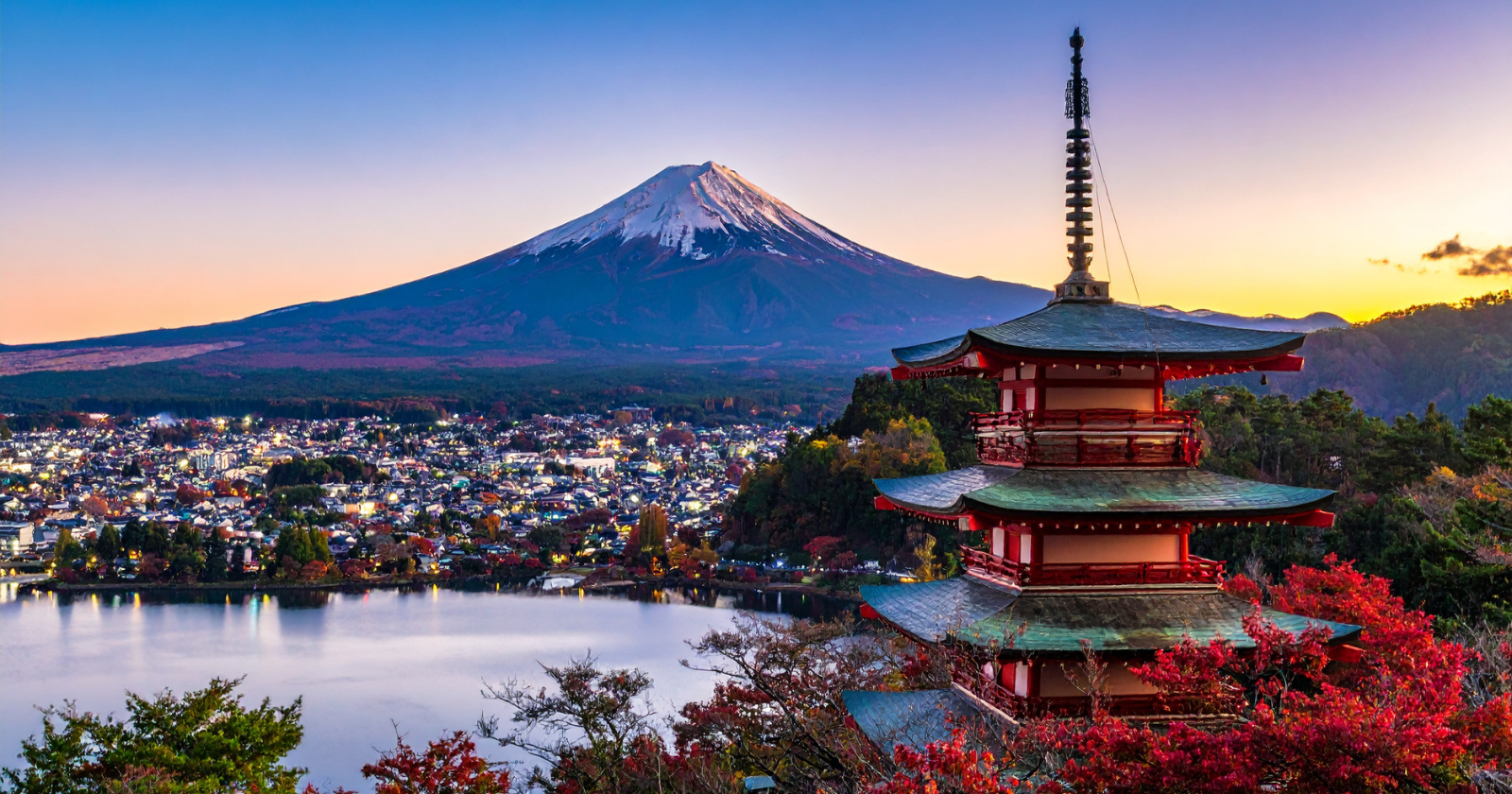
The town is called Kamikatsu. It sits in the mountains of Shikoku, the smallest and least populated of the four main Japanese islands, about an hour’s drive inland from the prefectural capital of Tokushima. Eighty-five per cent of its land is forest. Its population, by the most recent census, is approximately 1,500 people, distributed across 55 small hamlets at elevations ranging from 100 to 800 metres.
For most of its history, Kamikatsu disposed of its household waste in the same way as most rural Japanese towns, by burning it in open-air incinerators. In the late 1990s the burning began to produce measurable health effects on the population, and in 2001 a new national emissions law forced the closure of the town’s incinerator on the grounds that it could not meet the new dioxin standards. The town did not have the budget to build a compliant replacement. It also did not have anywhere to send its waste.
What it did next was unusual. In 2003 the town council made what was, at the time, the first formal municipal zero-waste declaration in Japan, committing to send no household waste to incineration or landfill by 2020. The deadline came and went. The town has not reached zero. It has reached 81 per cent.
What mottainai actually means
The word mottainai appears in the archaic form mottainashi in Japanese dictionaries dating to the thirteenth century. Its earliest documented usages are in the Genpei Jōsuiki and the Taiheiki, both medieval war chronicles. The compound is built from mottai, a Buddhist term that referred to the proper state, essence, or inherent dignity of a thing, and nai, the standard Japanese negator. The literal sense is “without its rightful value” or “absent its essential dignity.” The colloquial English rendering most commonly used is “what a waste.”
The concept has dual religious roots in Japanese tradition. From Zen Buddhism it inherits the principle of frugality, the monastic injunction not to take more than one needs, and the cosmological principle of interconnectedness, the idea that no thing exists in isolation from the network of causes and conditions that produced it. From Shinto it inherits the belief that objects, including inanimate ones, possess kami, the indwelling spirit that requires recognition and respect. To discard something carelessly under either tradition is not only impractical but, in a sense neither tradition treats as metaphor, disrespectful to the object itself.
In modern Japanese, mottainai functions both as an adjective and as a standalone exclamation. It can describe the wastage of food, water, possessions, time, money, or talent. The Kenyan environmentalist and Nobel Peace Prize laureate Wangari Maathai, who learned the term from Japanese counterparts in the mid-2000s, championed it internationally as a framework that adds a fourth R, Respect, to the familiar three of Reduce, Reuse, and Recycle. The framing has since circulated through sustainability literature in dozens of languages.
It is also, as a number of cultural critics inside Japan have noted, a prescriptive ideal rather than a description of how contemporary Japan actually behaves. Japan is currently among the largest plastic-waste-per-capita producers in the world, ranks second globally for single-use packaging consumption, and has a food-waste problem that the national government has been working to address for two decades. Mottainai is the philosophical commitment. The behavioural reality is more complicated.
How the system works
The Zero Waste Center, the building at the centre of the Kamikatsu system, was completed in 2020 on the site of the demolished incinerator. Designed by the architect Hiroshi Nakamura, the building viewed from above forms the shape of a question mark. The choice was deliberate. Nakamura, in the public statements accompanying the building’s opening, set out a series of questions the design was meant to provoke in the visitor: why do we buy what we buy, why do we throw away what we throw away, why do we continue to manufacture things that cannot be unmade.
The building has no garbage trucks attached to it. There is no door-to-door collection in Kamikatsu, because the 55 hamlets are too dispersed across the mountains for collection to be economical. Residents bring their waste to the centre themselves, having already done the first stage of sorting at home, and complete the second stage at the centre by placing each component in the bin that corresponds to its category.
The current system runs to 45 sub-categories organised under 13 main categories. Metals are sorted into five types. Plastics into six. Paper into nine. Glass is sorted by colour. Steel and aluminium are kept separate. Aerosol cans are separate from both. Each bin at the centre carries a sign indicating what the material it contains will eventually become and whether recycling that specific material currently earns revenue for the town or costs it money. Aluminium earns. Most plastics cost. The signs make the economics of the practice visible to the people doing it, which converts an abstract environmental gesture into something with legible practical stakes.
Adjacent to the sorting area is the Kuru-Kuru Shop, whose name translates roughly as “round and round.” It is a free thrift store. Residents leave items they no longer need and take items left by others. The floor is made from donated glass chips that the centre processed for the purpose. In a typical month the shop moves nearly 500 kilograms of furniture, glassware, maternity clothing, children’s toys, and tools through the community without any of it becoming waste. Beside the shop sits Hotel WHY, a four-room guesthouse built from reclaimed cedar, doors, and windows. Visitors who stay there receive six sorting bins for their room. Soap bars are cut to the appropriate size at check-in to prevent the half-bar that hotel guests typically leave behind.
The system requires every resident to rinse a single plastic bottle, peel its label off, separate the cap, and place each component into a separate one of forty-five bins, every time, before the bottle ever leaves the house. This short video we came across goes through what that practice looks like in the building it happens in, the people who do it every morning, and what twenty years of doing it together has produced in a town that, against all demographic logic for rural Japan, has started attracting young people from Tokyo and Osaka rather than losing them.
The 2003 declaration and what followed
The expansion of the sorting categories was gradual. Kamikatsu began with nine categories in 1997, increased to 22 the following year, reached 35 categories by the time the incinerator was shut down in 2001, and arrived at the current 45 categories in 2016. According to data from the Japanese Ministry of the Environment, summarised in coverage by Reasons to be Cheerful, the town’s recycling rate rose from 58.6 per cent in 2008 to 81 per cent in 2020, a figure now four times the Japanese national average and roughly thirty times the equivalent figure for the United States.
The implementation was not smooth. The initial expansion of sorting categories provoked substantial local resistance, particularly among older residents who found the new requirements onerous and the rationale unclear. The town did not respond with stricter enforcement. It responded by stationing local monitors at the centre whose role was to guide rather than to police, by making the economic implications of each category visible on the bin signs, and by relying on the social dynamics of a community small enough that no one’s participation, or non-participation, could go unnoticed.
The cultural underpinning, in the published reflections of the people who have run the programme, has been mottainai itself. The framework did not create the recycling system. The recycling system gave a daily, materially specific practice to a cultural intuition that already existed. The older residents of the town, the population most likely on demographic grounds to resist behavioural change, became the most reliable participants because the practice asked them to operationalise a value they had been raised in.
The 19 per cent that remained
The 2020 deadline arrived and Kamikatsu had not reached zero. The 19-percentage-point shortfall against the original target turned out to consist of a specific category of materials. A 2023 peer-reviewed analysis by Tobita and colleagues, published as a two-decade retrospective on the Kamikatsu programme, identified the remaining waste stream as consisting almost entirely of products that cannot, with currently available technology, be separated into their component materials and recovered. Disposable nappies. Sanitary products. Single-use heat packs. Silica gel packets sealed inside snack packaging. The materials that resist the recycling system at this point are not the result of resident carelessness. They are the result of manufacturing decisions made long before the products reach anyone’s bin.
The town’s response, in 2021, was to issue a revised zero-waste declaration with a new target year of 2030 and a new emphasis. The original declaration had been addressed to residents. The revised declaration is addressed to manufacturers. The argument, as set out by the Zero Waste Academy that has administered the programme since 2003, is that consumer-led recycling has reached its mathematical ceiling at 81 per cent for the current product universe, and that further progress depends on changing what is manufactured upstream rather than what is sorted downstream. The town has added a fourth R to its operating framework, distinct from the Maathai version: not Respect but Responsibility, with the responsibility specifically located in the design and packaging decisions made by manufacturers.
Several major Japanese companies, including the beverage producer Suntory, have begun research partnerships with the Zero Waste Academy on packaging that can be more completely separated and recovered. Whether the manufacturer-side argument will travel through the supply chains of companies that operate at industrial scale outside the social dynamics of a 1,500-person mountain town remains, in the language of the 2023 retrospective, an open empirical question.
The unexpected development of the past five years has nothing to do with manufacturing. In a town that, like most of rural Japan, has been losing population to the major cities for sixty years, a small but steady trickle of young people in their twenties and thirties from Tokyo, Osaka, and further afield have begun moving toward Kamikatsu rather than away from it. They work at the Zero Waste Centre. They run a craft brewery that uses the peel of locally grown citrus that would otherwise have been composted. They farm chinampa-style raised beds, make gelato, manage the Kuru-Kuru shop, and live in renovated traditional houses that the town’s population decline has made available. They have not, in aggregate, reversed the town’s demographic decline. The decline has slowed.
The values the town built around its waste turned out to produce, in a small but observable way, a reason to come.
What a mountain town of 1,500 people on the fourth largest island of Japan can teach a global population of eight billion that mostly prefers not to think about its own waste is still, as the question-mark shape of the central building openly acknowledges, an open question. The 81 per cent rate suggests there is more available to consumer-led recycling than the rest of the developed world has been able to extract. The 19 per cent residue suggests the structural limit of consumer-led recycling is now visible. The demographic shift suggests that municipalities built around a coherent set of values can attract human capital that municipalities built around mere efficiency cannot.
The system, on the evidence of twenty years of operation, works.
What it implies about how the rest of the world might design its own systems is the question the building is asking, and the answer, the people who have spent twenty years building it would be the first to say, has not yet been written.
