When Zhang Chenxing, who holds a PhD from MIT, co-founded Mega Engine Technology in…
Roughly two years after it opened its doors, a Xi'an commercial startup called Mega Engine Technology has announced that a single high-pressure oxygen-rich…
Editorial Team
The Space Daily Editorial Team is the publication’s general news desk across Space and Missions, Universe, Earth and Life, Science and Engineering, and Human Factors. Current articles under this byline are commissioned, edited and approved under Space Daily’s editorial standards.

Roughly two years after it opened its doors, a Xi'an commercial startup called Mega Engine Technology has announced that a single high-pressure oxygen-rich…
May 31, 2026

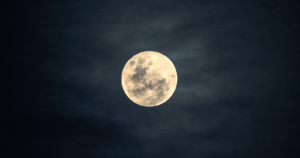
The leading account of where the Moon came from is a collision. Early in the Solar System's history, a young planet roughly the size of Mars, given the name Theia, is thought to have struck the proto-Earth a glancing blow.
May 31, 2026

Magnetic reversals are real and common over geological time, but they do not run on a neat schedule.
May 31, 2026

In 1995, geophysicist Bruce Luyendyk proposed calling the submerged landmass around New Zealand a single name: Zealandia. Twenty-two years later, a team led by Nick Mortimer formally confirmed it as Earth's eighth continent, 94 percent of it hidden beneath the South Pacific.
May 31, 2026

New Zealand and New Caledonia sit on the only large peaks of Zealandia, a submerged continent of 5 million square kilometres, 94 percent of which lies under the Pacific.
May 31, 2026

A rainbow looks like an object in the sky. It appears to have a definite location: starting somewhere over the trees, arcing across the field, ending somewhere near the horizon.
May 31, 2026

Nick Mortimer's team at GNS Science spent close to twenty years dredging granite and basalt from the Tasman seabed before formally naming Zealandia in 2017, a 4.9-million-square-kilometre continent that is 94 percent underwater and had been hiding on every ocean map since the invention of sonar.
May 31, 2026

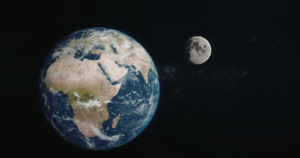
Earth's spin is slowing, the day is getting longer, and the Moon is drifting outward at about 3.8 centimetres a year, a figure measured by bouncing lasers off the reflectors the Apollo missions left on the surface.
May 31, 2026

The most cited global estimate puts the number of trees on Earth at about three trillion.
May 31, 2026

The Apollo tracks, first pressed into the lunar surface in 1969, will almost certainly still be visible in some form a million years from now.
May 31, 2026

Tyrannosaurus rex lived between roughly 68 and 66 million years ago. Stegosaurus lived around 150 million years ago.
May 31, 2026

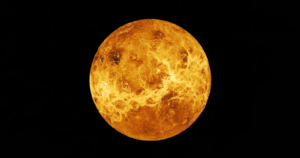
Venus takes about 243 Earth days to turn once on its axis. It takes about 225 Earth days to circle the Sun.
May 31, 2026

In July 1518, a woman named Frau Troffea stepped into a Strasbourg street and began to dance. Within a month roughly 400 townspeople had joined her, and dozens died from exhaustion before the outbreak ended on its own.
May 31, 2026

Since the 1950s, more than 600 dogs are estimated to have leapt from the same stretch of parapet on Scotland's Overtoun Bridge. A behavioural study by Dr David Sands eventually traced the pattern to American mink nesting in the stonework below.
May 31, 2026

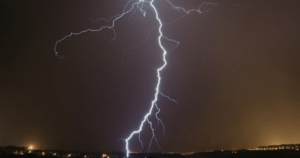
The US National Oceanic and Atmospheric Administration puts the temperature of a lightning channel at about 30,000 degrees Celsius, and states plainly that this is roughly five times hotter than the surface of the Sun, which sits near 5,500 degrees.
May 31, 2026

The story is everywhere: NASA, faced with the challenge of writing in space, spent millions of taxpayer dollars engineering a special pen, while the canny Soviets simply handed their cosmonauts a pencil.
May 31, 2026