
Space, science, and the human mind. Since 1995.
Space Daily Editorial Team
Editorial Team

Space Daily Editorial Team

Editorial Team

The Space Daily Editorial Team produces content across our two editorial pillars: space industry news and Mind & Meaning. We cover launches, missions, satellites, defense, and the technology of getting humans to space, alongside the psychology of ambition, isolation, and meaning under extremes. Articles reflect our team's collective editorial process, source verification, drafting, technical review, and editing, rather than a single writer's work. Space Daily takes editorial responsibility for content under this byline. For more on how we work, see our editorial policy.

Science

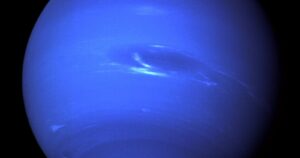
Only one spacecraft has ever visited Uranus or Neptune: Voyager 2, which flew past Uranus in 1986 and Neptune in 1989. Nearly four decades later, no mission has returned, leaving many of the biggest questions those flybys raised — about the planets’ interiors, strange magnetic fields, rings, and moons — still unresolved.

Voyager 2 remains the only spacecraft to have visited Uranus and Neptune, leaving many ice-giant questions to be answered by a future orbiter or probe.

Science

A bowhead whale can live for more than 200 years, yet it appears unusually resistant to cancer — and its genome carries genetic changes that may help explain why. Researchers have found signs of enhanced DNA repair in bowhead cells, turning one of the Arctic’s oldest mammals into a serious model for understanding aging itself.

Bowhead whales can live beyond 200 years, and genome and cell studies point to DNA repair as one possible clue to their unusual cancer resistance.

Science

For decades, marine biologists have followed a lone whale in the North Pacific known as “52 Blue” because it sings at a frequency of 52 hertz — far higher than the great baleen whales it swims among — meaning that for its entire life it has been calling out into the dark in a voice that, as far as anyone knows, no other whale has ever answered

The whale known as 52 Blue is famous for a call around 52 hertz, but the science is more careful than the myth of the loneliest whale.

Earth News

When an iceberg roughly the size of Chicago broke away from Antarctica’s George VI Ice Shelf in January 2025, researchers diverted their ship to the newly exposed seafloor — and found a hidden world of sponges, anemones, sea spiders and octopuses that may have been thriving in darkness for hundreds of years.

On 13 January 2025, an iceberg named A-84 broke away from Antarctica's George VI Ice Shelf, opening a section of seafloor that had been sealed beneath floating ice.